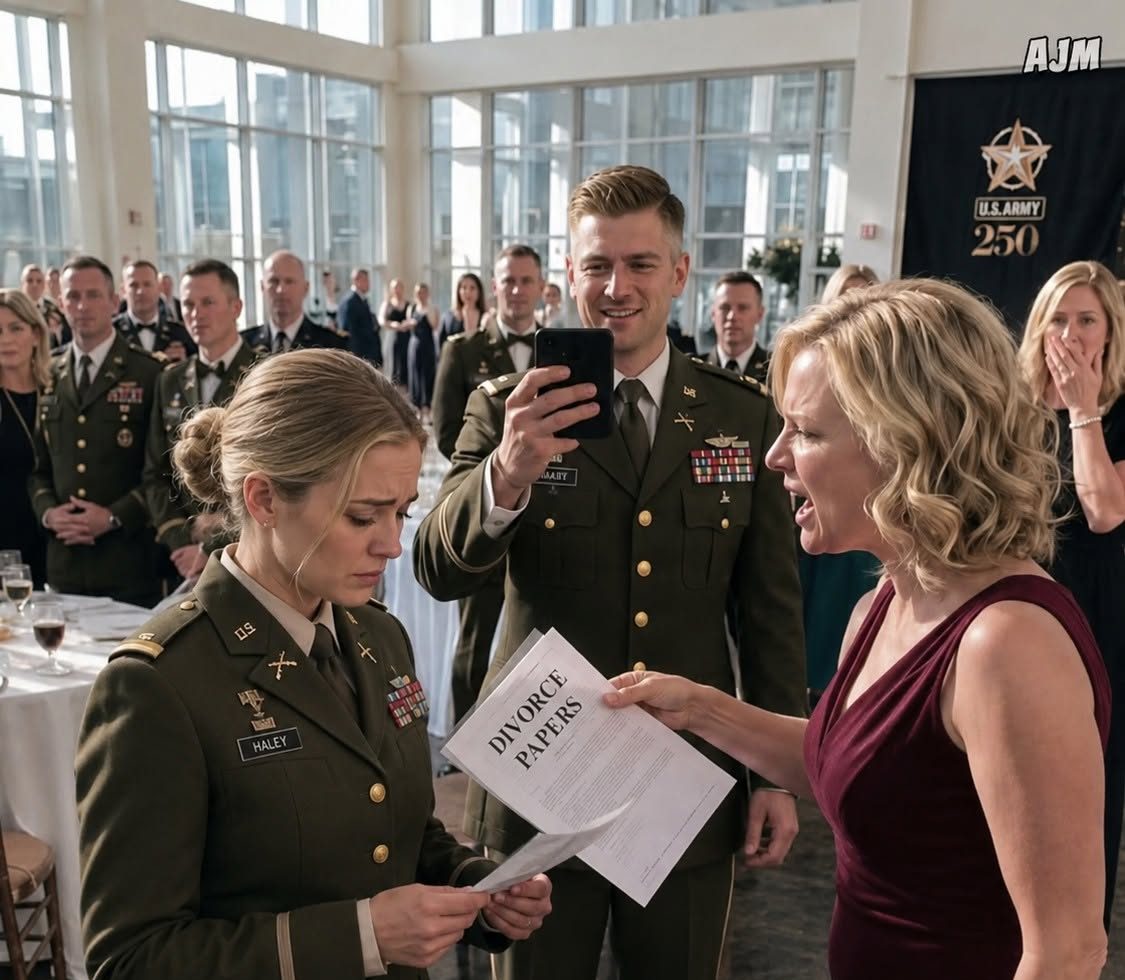
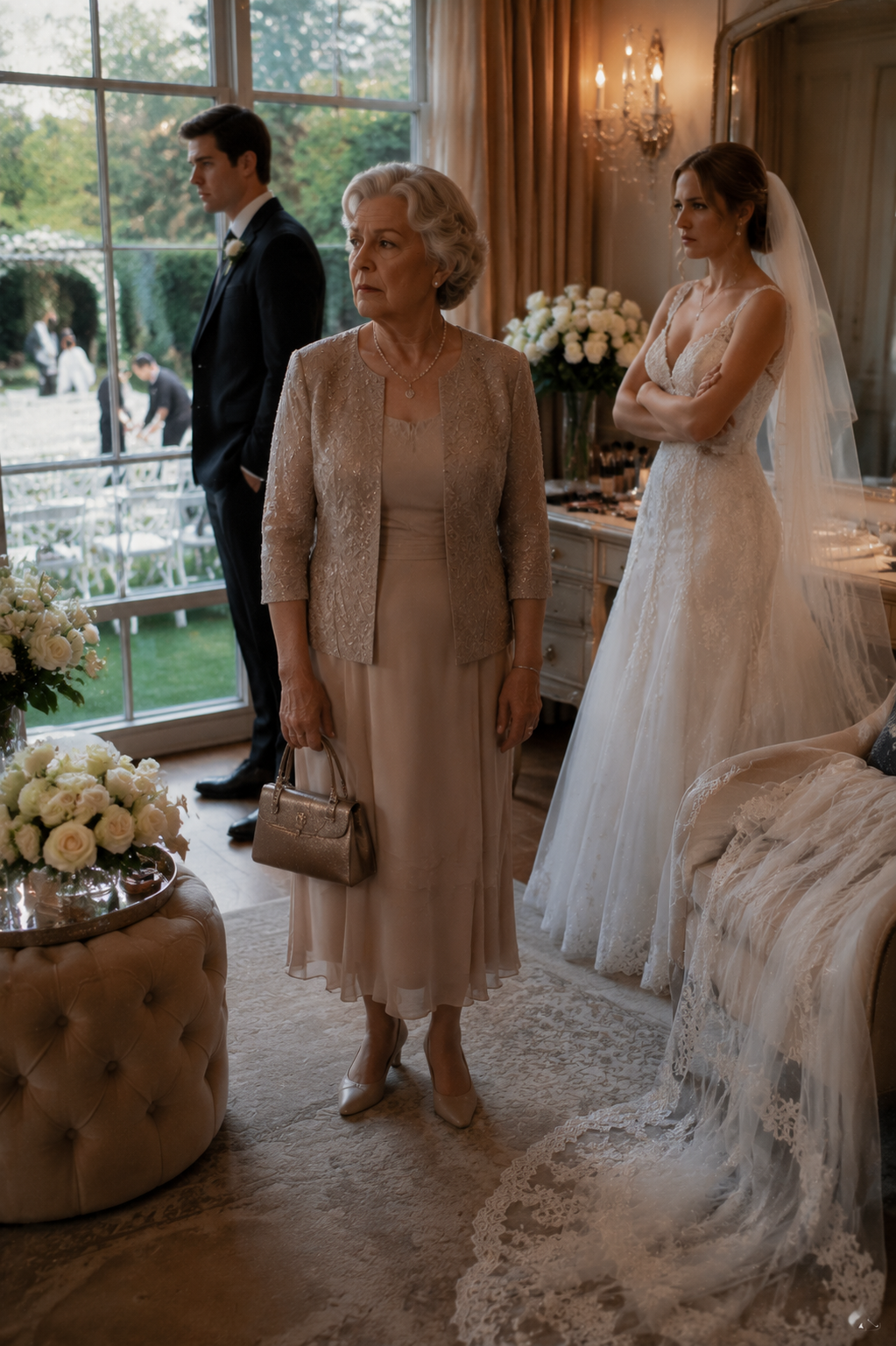
My daughter-in-law threw a full glass of red punch across my cream blouse ten minutes before our family portrait and said,
“Good. Now you have a reason not to be in it.”
Fourteen relatives stood around watching.
My forty-six-year-old son was only a few feet away.
But instead of defending me, David looked at my ruined blouse and said,
“Mom, maybe you should go clean up while we take the picture.”
Then the photographer lowered his camera.
“We’re not taking the main portrait without her.”
Lauren’s confident smile disappeared.
My name is Helen.
I’m seventy-one years old.
And until that afternoon, I had spent years convincing myself that the small humiliations didn’t matter.
Christmas plans were made without me.
Family vacations were discussed in front of me without an invitation.
At Thanksgiving, I was usually handed the phone so I could take everyone else’s picture.
Whenever it hurt, I reminded myself that David had a wife and children now.
He needed his own life.
His own space.
What I refused to admit was that “space” had slowly become another word for removing me.
The red punch ran cold beneath my collar.
Lauren lowered the empty glass.
She didn’t apologize.
“Did you do that deliberately?” I asked.
She didn’t even bother lying.
“You’ve been making today difficult from the beginning.”
I stared at her.
I had arrived forty minutes early.
Carried flowers inside.
Fixed a cousin’s loose hem.
And brought the lemon cake my granddaughter Sophie had specifically asked me to make.
“What exactly have I done?”
Lauren finally said it.
“Not everything has to include you.”
I looked at David.
For one foolish second, I still hoped there was some line his wife could cross that would make him stand beside his mother.
Instead, he rubbed his forehead.
“We’re already running behind.”
Lauren turned toward the photographer.
“Just take the picture.”
Then she looked at me.
“She can clean herself up.”
David quietly agreed.
“We can take the big family shot while Mom changes.”
The big family shot.
Without me.
Without the woman who had raised him alone after his father died when David was seven.
I had spent almost forty years refusing to make my son feel indebted to me for that sacrifice.
Children shouldn’t grow up believing their mother’s hardships are bills they must repay.
But standing there with red punch dripping from my blouse, I wondered whether I had made being taken for granted too easy.
Then the photographer spoke.
“We can wait.”
His name was Michael.
Until that moment, he had remained professionally quiet.
Lauren snapped,
“No, we can’t. We only have this room for another forty minutes.”
Michael didn’t lift his camera.
“Then we have forty minutes.”
Lauren stared at him.
“I’m paying for this session.”
Michael’s answer was immediate.
“No, you aren’t.”
Silence.
Lauren’s face changed.
“What?”
“Your daughter hired me.”
Everyone looked around.
Sophie wasn’t there.
Michael continued.
“She gave me very specific instructions about the main portrait.”
Lauren folded her arms.
“What instructions?”
“That nobody takes it until Sophie returns.”
Then he looked toward me.
“And especially not without Mrs. Helen.”
I felt something shift inside my chest.
Sophie had disappeared almost fifteen minutes earlier after saying she needed something from her car.
Lauren grabbed her phone.
“Where is she?”
David looked equally confused.
Apparently, he had assumed this was simply a professional family portrait Sophie wanted for her birthday.
But I suddenly remembered something my granddaughter had told me three days earlier.
“Grandma, please wear something light.”
I had laughed.
“Why?”
“Trust me.”
I hadn’t questioned it.
Sophie had always loved photographs.
As a little girl, she would pull the old albums from my shelves and sit beside me for hours.
She laughed at David’s ridiculous eighties hair.
Asked who every distant cousin was.
Wanted to know the story behind every Christmas, birthday, and summer vacation.
Once, she noticed something else.
“Grandma, why aren’t you in very many pictures?”
I smiled.
“Because Grandma was usually behind the cam
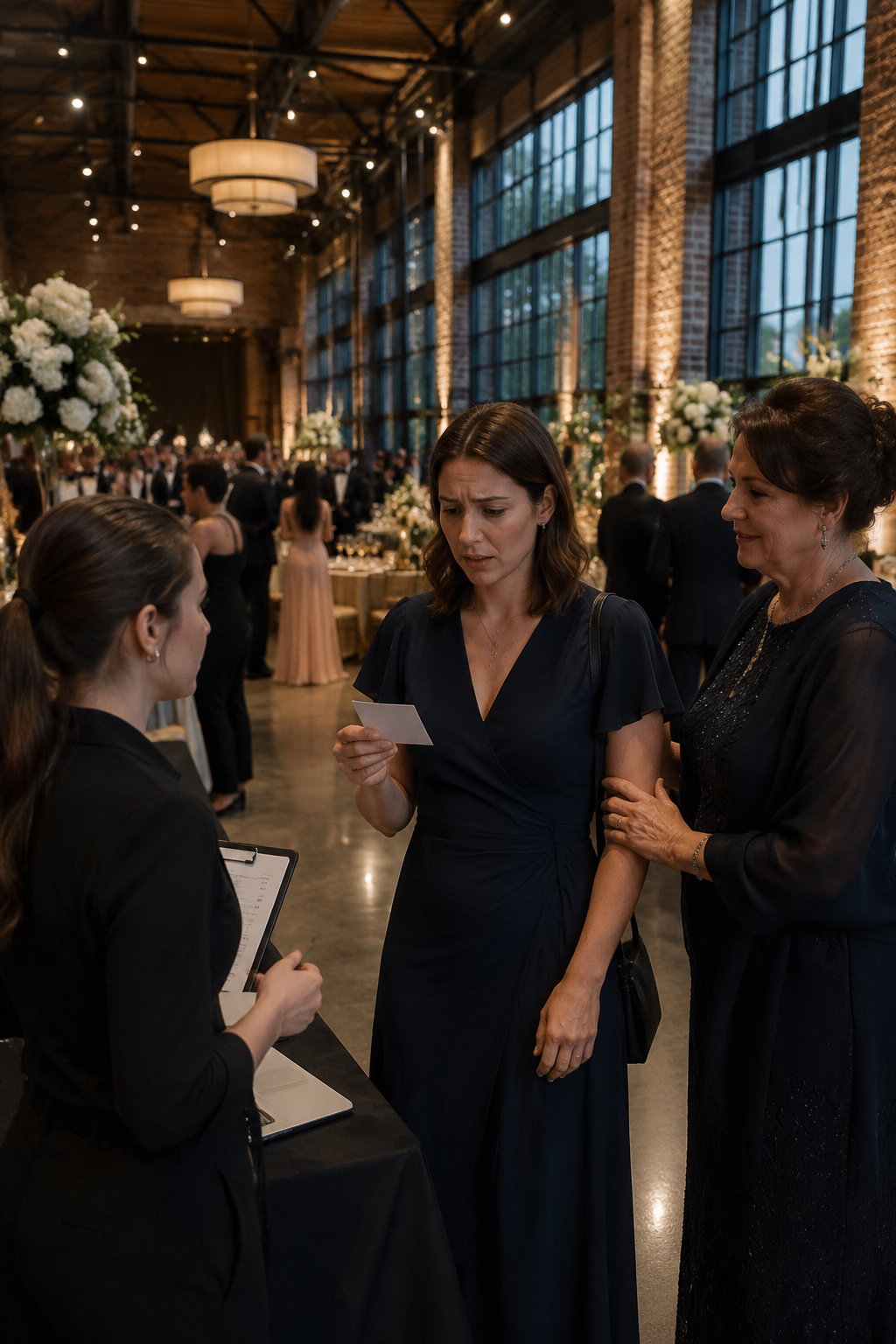
At the time, neither of us thought much about it.
Now Michael was refusing to photograph the family without me.
Sophie was missing.
And Lauren suddenly looked far more nervous than she had minutes earlier.
Before I could ask another question, headlights swept across the tall garden-room windows.
A car door slammed outside.
Quick footsteps came through the hallway.
Then Sophie appeared in the doorway.
She was carrying a large framed portrait in both hands.
Her eyes found me immediately.
Then the red stain covering my cream blouse.
Then the empty punch glass beside her mother.
The warmth disappeared from her face.
“What happened to Grandma?”
Nobody answered.
Lauren finally shrugged.
“The punch got spilled.”
Sophie stared at her.
“Did you throw it on her?”
Lauren hesitated.
Then folded her arms.
“Yes, but she kept inserting herself into everything. I just wanted one family photograph without every extended relative crowding into it.”
Sophie went completely still.
“Grandma is not an extended relative.”
Lauren rolled her eyes.
“Why are you making such a big deal about one photograph?”
Sophie didn’t answer.
Instead, she carefully turned the frame around.
My breath caught.
The photograph was nearly forty years old.
I recognized the cheap porch immediately.
The little boy sitting on the railing.
And the exhausted thirty-two-year-old widow standing beside him.
David and me.
Eleven months after his father died.
I hadn’t seen that photograph in decades.
But Sophie had restored it.
And beneath the picture was a small brass plaque.
Five words were engraved across it.
THE WOMAN WHO STARTED OUR FAMILY.
Nobody spoke.
Sophie looked at the red stain covering my blouse.
Then at her mother.
And in that moment, I finally understood.
The family portrait Lauren had tried so hard to remove me from—
had never been planned the way Lauren thought it had.
Sophie held the restored portrait against her chest.
Then she looked at Michael.
“Can you show them the layout?”
Lauren frowned.
“What layout?”
Michael reached into his camera bag and pulled out a printed sheet.
He handed it to Sophie.
My granddaughter unfolded it on the long table beside the windows.
Across the top was written:
HARRIS FAMILY LEGACY PORTRAIT — FINAL COMPOSITION
Lauren stared.
David moved closer.
So did I.
At the center of the sketch was one seated figure.
Me.
Behind my chair stood David.
Beside him, Sophie and her younger brother, Ethan.
Then Lauren.
Then the rest of the family spreading outward by generation.
Fourteen relatives.
One family.
One center.
Lauren’s face tightened.
“You designed this?”
Sophie nodded.
“Yes.”
“For my birthday?”
“For Grandma’s seventy-first.”
I blinked.
“My birthday was three months ago.”
“I know.”
Sophie smiled at me.
“You wouldn’t let anyone make a fuss.”
A few relatives laughed softly.
That was true.
I had spent my birthday at home making soup for a neighbor recovering from surgery.
Sophie continued.
“So this wasn’t really a birthday portrait for me.”
“It was supposed to be a surprise for you.”
My throat tightened.
Lauren stared at the layout.
“Then why didn’t anyone tell me?”
Sophie looked at her.
“Because I wanted it to happen without Grandma having to ask to be included.”
Silence.
That sentence hit somewhere deep.
I looked away.
Lauren’s voice sharpened.
“So everyone lied to me?”
“No.”
Sophie’s answer came immediately.
“I told you I hired a photographer for a family portrait.”
“That was true.”
“You just assumed you knew what family meant.”
The room went still.
Lauren’s face reddened.
David whispered:
“Sophie.”
She turned to him.
“What?”
His expression was pained.
“Maybe we should take a minute.”
My granddaughter stared at her father.
Then at my ruined blouse.
“No.”
He flinched.
She continued.
“Grandma has been taking a minute for years.”
Nobody moved.
I felt something in my chest break open.
Not because Sophie was angry.
Because she had noticed.
All of it.
The holidays.
The missing invitations.
The camera always in my hands.
The little humiliations I had dismissed as unimportant.
Sophie looked around the room.
“Does anyone know when the last full family picture with Grandma in it was taken?”
No one answered.
She opened her phone.
“I do.”
She scrolled.
“Thanksgiving six years ago.”
My sister Judith whispered:
“That can’t be right.”
Sophie looked at her.
“It is.”
She held up the screen.
“After that, Grandma is either missing or in one corner.”
“Or she took the picture.”
She swiped again.
“Christmas five years ago.”
“Grandma took it.”
“Easter four years ago.”
“Grandma took it.”
“Ethan’s graduation.”
“Grandma took it.”
“Dad’s forty-fifth birthday.”
“Grandma took it.”
She kept scrolling.
Every photograph felt like an accusation.
Not against one person.
Against a habit.
A family had slowly learned to let the oldest woman present disappear behind the camera.
And I had helped them.
Because it was easier than saying:
I would like to be remembered too.
Lauren crossed her arms.
“That doesn’t mean I was trying to erase her.”
Sophie looked at her.
“No.”
“But throwing punch on her blouse ten minutes before the picture does.”
Lauren’s mouth opened.
Nothing came.
David finally stepped forward.
“Mom.”
I looked at him.
His eyes had changed.
Not enough yet.
But something.
“I’m sorry.”
I stared.
“For what?”
He swallowed.
“For what happened.”
“That’s vague.”
His face tightened.
Sophie looked at him.
He understood.
“I’m sorry I told you to go clean up while we took the portrait.”
My throat tightened.
“I’m sorry I didn’t stop Lauren.”
I waited.
“I’m sorry I looked at your blouse instead of asking if you were okay.”
Silence.
“And I’m sorry I was willing to take the picture without you.”
That one hurt.
I nodded slowly.
“Thank you.”
Lauren stared at him.
“You’re seriously doing this right now?”
David turned toward her.
“Yes.”
Her expression sharpened.
“In front of everyone?”
He looked around.
“You did it in front of everyone.”
Lauren went still.
It was the first time I had heard my son say something to her that cost him comfort.
I noticed.
So did Sophie.
Lauren laughed bitterly.
“This is ridiculous.”
Michael spoke from near the camera.
“No.”
Everyone looked at him.
He had said very little.
Now his voice was calm.
“This is actually why I stopped the portrait.”
Lauren stared.
“You’re a photographer.”
“Yes.”
“Not a therapist.”
“No.”
He nodded toward me.
“But I’ve photographed families for twenty-eight years.”
“And one thing I learned a long time ago is that people regret who they leave out more than they regret who wore the wrong shirt.”
Silence.
He continued.
“A stain can be edited.”
“An absence is harder.”
My eyes filled.
Lauren looked away.
Sophie walked toward me.
“Grandma.”
“Yes?”
“I brought another blouse.”
I stared.
“What?”
She smiled slightly.
“I know you.”
“That explains nothing.”
“You spill things.”
A few people laughed.
Even I did.
She continued.
“And because I wanted you wearing cream.”
She pointed toward a garment bag draped across a chair near the doorway.
I had not noticed it.
Inside was another blouse.
Soft ivory silk.
My size.
I looked at Sophie.
“You planned everything.”
“Almost.”
Her eyes flicked toward her mother.
“Not everything.”
Lauren’s jaw tightened.
I touched the blouse.
Then looked at the red stain on the one I wore.
For a second, I considered refusing.
Going home.
Letting the afternoon die where it stood.
That would have been understandable.
Maybe even justified.
But then I looked at the old restored portrait.
Thirty-two-year-old me.
Exhausted.
Widowed less than a year.
David seven years old.
My hand resting on his shoulder.
Back then, I had no idea how frightened I looked.
No idea how young.
No idea Sophie would someday see that picture and decide I belonged at the center of another one.
I picked up the garment bag.
“I’ll change.”
Lauren exhaled.
Perhaps she thought that meant the conflict was over.
It wasn’t.
I looked at her.
“And then we’ll decide who belongs in the photograph.”
Her face changed.
I walked toward the adjoining powder room.
Sophie followed.
Inside, she helped me unbutton the stained blouse.
My hands were shaking.
She noticed.
“Grandma.”
“I’m fine.”
“No.”
She looked directly at me.
“You don’t have to say that to me.”
My eyes filled.
I sat on the small bench.
Sophie knelt in front of me.
“I’m sorry.”
“For what?”
“For not saying something sooner.”
I touched her cheek.
“You are nineteen.”
“Eighteen.”
“Even worse.”
She smiled through tears.
“You are not responsible for fixing adults.”
“I know.”
“Do you?”
She hesitated.
“No.”
I laughed softly.
Then my face crumpled.
She wrapped her arms around me.
I whispered:
“I thought if I stayed easy to love, nobody would feel burdened by me.”
Sophie pulled back.
“What?”
I looked down at my stained stockings.
“After your grandfather died, I became very careful.”
“I didn’t want your father thinking he had to take care of me.”
“I didn’t want you kids feeling obligated.”
“So I became helpful.”
“Flexible.”
“Available.”
“Then when I started getting left out…”
I stopped.
Sophie waited.
“I told myself it was proof I had succeeded.”
“That your father had his own life.”
“That he didn’t need me.”
Her eyes filled.
“But not needing someone isn’t the same as not wanting them.”
I looked at her.
“No.”
“I know that now.”
She squeezed my hands.
“I want you.”
That broke me.
I cried into an ivory blouse I had not even put on yet.
Ten minutes later, we returned.
Everyone was still there.
Nobody had taken a picture.
That mattered.
Michael looked at me.
“Ready?”
I glanced at Lauren.
She stood near the edge of the group.
Arms folded.
Face stiff.
I looked at Sophie.
Then David.
Then the family layout.
“Yes.”
Michael began positioning everyone.
He put the chair at the center.
I sat.
David stood behind me.
Then Sophie.
Ethan.
Judith.
Cousins.
Aunts.
Uncles.
Lauren remained several feet away.
Michael looked at her.
“Mrs. Harris?”
She stared.
“What?”
“Your position is here.”
He pointed beside David.
Lauren laughed once.
“You still want me in it?”
The question surprised me.
Everyone looked at me.
I realized the decision had somehow become mine.
I could have said no.
Maybe part of me wanted to.
But family photographs are not verdicts.
They document what existed.
Even complicated things.
I looked at Lauren.
“Yes.”
She blinked.
“You’re David’s wife.”
“Sophie and Ethan’s mother.”
“You belong in the family portrait.”
Her face changed.
Then I added:
“But belonging does not give you the right to decide that I don’t.”
Silence.
Lauren swallowed.
Then slowly walked into position.
Michael raised his camera.
“Everyone look here.”
I did.
The first shutter clicked.
Then another.
And another.
For once, I was not holding the camera.
I was not standing in the back.
I was not missing.
At the center of the frame sat a seventy-one-year-old widow in an ivory blouse.
Her son behind her.
Grandchildren beside her.
Family extending outward.
Not because I was the most important person there.
Because I was part of the story.
That should never have required proof.
After the session, the room emptied slowly.
Some relatives hugged me.
Others apologized in awkward half-sentences.
Judith admitted she had noticed how often I was asked to take pictures but had never thought much about it.
My cousin Robert said:
“I thought you preferred being behind the camera.”
“So did I,” I said.
That was partly true.
We often become accustomed to the roles people give us.
Then mistake familiarity for choice.
Eventually only four of us remained.
Me.
David.
Lauren.
Sophie.
Michael packed his equipment quietly.
Lauren stood near the garden-room windows.
Finally, she turned.
“Helen.”
I waited.
She looked at the floor.
“I shouldn’t have thrown the punch.”
“No.”
“I was angry.”
“I know.”
“You kept correcting details.”
I stared.
“What details?”
“The seating.”
“You asked if Aunt Judith could sit near the restroom because of her knee.”
“The flowers.”
“I moved one vase because it blocked Ethan’s face.”
“The cake.”
“Sophie asked me to bring it.”
Lauren’s face tightened.
I continued.
“Those were not attempts to control your event.”
She looked away.
“It always feels like you’re there.”
I stared at her.
She realized how strange that sounded.
I waited.
She tried again.
“You have history with everyone.”
“You know the stories.”
“You know what David liked as a child.”
“You know what the kids looked like when they were babies.”
“You know all the recipes.”
“All the traditions.”
Her eyes filled with angry tears.
“And sometimes I feel like I walked into a family where everything important already happened before me.”
I said nothing.
There it was.
Not justification.
But something underneath the cruelty.
Lauren looked at Sophie’s restored portrait.
“You’re everywhere.”
I looked at it too.
Thirty-two-year-old me.
Thin.
Tired.
Trying to smile.
“I wasn’t everywhere.”
“I was surviving.”
She looked at me.
“I raised David alone because my husband died.”
“I didn’t create those memories to compete with you.”
“I created them because life kept happening.”
Her face softened slightly.
I continued.
“You could have added yourself.”
“You never needed to erase me to belong.”
Lauren started crying.
David looked devastated.
He whispered:
“Why didn’t you ever tell me you felt that way?”
She turned on him.
“Because every time I said your mother was too involved, you defended her.”
I looked at David.
He looked confused.
“You told me Mom was criticizing you.”
“Interfering.”
“Undermining you.”
Lauren’s face changed.
“I said she was too involved.”
“No.”
“You said she disrespected you.”
Sophie slowly looked between them.
I felt cold.
This was not just about punch.
There had been years of interpretation between my son and his wife that I had never known existed.
Lauren wiped her face.
“Maybe I exaggerated.”
David stared.
“How much?”
She shook her head.
“David.”
“How much?”
Silence.
He looked at me.
“Mom, did you tell Lauren she shouldn’t go back to work after Ethan was born?”
I blinked.
“What?”
Lauren closed her eyes.
David stared at her.
“You told me she said that.”
“I said she made me feel that way.”
“No.”
“You told me she said mothers who leave babies with daycare regret it.”
I stood completely still.
“I never said that.”
David’s face drained.
He looked at Lauren.
“What else?”
She whispered:
“This is not the place.”
Sophie said:
“Apparently nowhere has been the place.”
Lauren glared at her.
“Sophie.”
“No.”
My granddaughter’s voice shook.
“You threw punch on Grandma because you wanted her out of a picture I planned for her.”
“I think we’re past protecting the mood.”
David pulled out a chair.
“Sit down.”
Lauren stared.
“What?”
“Please.”
She sat.
So did he.
I remained standing.
David looked at his wife.
“What else did you tell me Mom said?”
Lauren started crying again.
At first, the answers came slowly.
That I had called her irresponsible with money.
I hadn’t.
That I thought Sophie’s grades had fallen because Lauren worked too much.
I hadn’t.
That I felt David married beneath him.
Never.
That I believed Lauren spent too much.
I had once asked David whether they were comfortable after he mentioned refinancing.
That had become criticism.
That I complained they visited her mother more.
I had never said that either.
Each story had a thread of something real.
A question.
A look.
A neutral sentence.
Then Lauren added motive.
Judgment.
Meaning.
And David believed her.
Not every time.
But enough.
I looked at my son.
“Why didn’t you ask me?”
His face collapsed.
“I don’t know.”
“Yes, you do.”
He rubbed his forehead.
“Because I didn’t want conflict.”
I laughed once.
“Whose?”
He looked at me.
“At home.”
There it was.
He had protected the easier relationship to repair.
He could disappoint me because I forgave.
He could not disappoint Lauren without consequences at home.
I whispered:
“So you chose where to place the hurt.”
His eyes filled.
“Yes.”
That hurt more than the punch.
I sat.
Nobody spoke.
Then Sophie said something very quietly.
“Dad, Grandma stopped coming to things because of that.”
David looked at her.
“What?”
“You complained after Christmas last year that Grandma was distant.”
“I know.”
“Mom told her you wanted more space.”
His head turned toward Lauren.
“What?”
Lauren whispered:
“I thought we did.”
David stared.
“I never said that.”
“You said having everyone over was stressful.”
“That did not mean Mom.”
I felt dizzy.
Sophie looked at me.
“Grandma, is that why you stopped coming on Sundays?”
I nodded.
“Lauren said David needed weekends for his immediate family.”
David covered his face.
“Oh God.”
Lauren whispered:
“I was trying to create boundaries.”
I looked at her.
“Boundaries are things you set around yourself.”
“You built them around me and told everyone David asked for them.”
She cried harder.
No one comforted her.
That sounds cruel.
It wasn’t.
Sometimes immediate comfort interrupts accountability.
Michael finished packing his camera.
Then approached me.
“I have everything I need.”
“Thank you.”
He hesitated.
“I’ll send Sophie proofs first.”
“Good.”
Then he looked at my blouse.
“The stain on the first outfit?”
“Yes?”
“I photographed one frame before you changed.”
I stared.
“When?”
“After Sophie arrived.”
“I didn’t notice.”
“No one did.”
“Why?”
He thought about it.
“Because someday you may want to remember what happened before the good picture.”
I did not understand then.
I would later.
He left.
Sophie went home with Judith that evening.
Her choice.
She said she needed space.
I understood.
David drove me home.
Lauren stayed behind.
The ride was quiet.
Halfway there, David pulled into a church parking lot.
He turned off the engine.
Then started crying.
Not politely.
Not quietly.
The way adults cry when they have run out of ways to preserve how they see themselves.
I sat beside him.
He finally said:
“I failed you.”
I looked out the windshield.
“Yes.”
He flinched.
I continued.
“You want me to tell you that you didn’t.”
“I do.”
“I know.”
“But you did.”
He covered his face.
“I’m sorry.”
“I believe you.”
“Does that mean you forgive me?”
“No.”
He looked at me.
“Not yet.”
His face broke again.
I touched his arm.
“David, forgiveness is not something you request before understanding what happened.”
He nodded.
“I believed her over you.”
“Often.”
“I let you disappear.”
“Yes.”
“And today I told you to clean yourself up so we could take a family picture without you.”
“Yes.”
He cried.
I sat beside him.
Not fixing it.
That was new for both of us.
The next morning, I woke with a strange clarity.
I went through my photo albums.
Forty years.
Birthdays.
Christmases.
Vacations.
School plays.
Graduations.
Weddings.
I made two piles.
Pictures I was in.
Pictures I had taken.
The second pile was almost three times larger.
That by itself was not abuse.
It was simply data.
But it made me notice something.
After Lauren joined the family, my appearances declined sharply.
At first because I volunteered.
Later because nobody asked me to step in.
Then because sometimes I was not invited.
It had happened slowly enough to feel natural.
That afternoon, Sophie came over.
She found the albums covering my dining table.
“Oh wow.”
“I did research.”
“That is terrifying.”
I smiled.
She sat.
We went through them together.
At one point, she found a Christmas photo from nine years earlier.
I was standing in the kitchen doorway.
Half visible.
Apron on.
Everyone else at the table.
Sophie touched it.
“Grandma.”
“Yes?”
“You were there.”
“I know.”
“But not really.”
My throat tightened.
“No.”
She looked at me.
“That’s why I planned the portrait.”
I waited.
She continued.
“I started noticing when I was fourteen.”
“You always made sure everyone had food.”
“Gifts.”
“Seats.”
“Then when pictures happened, you stepped back.”
“I thought you didn’t like pictures.”
“So I asked you once.”
“You said, ‘I just want everyone else to look nice.’”
I smiled sadly.
“That sounds like me.”
“It does.”
Sophie looked down.
“Then I started wondering who was making sure you were there.”
I cried.
She held my hand.
The family portrait proofs arrived two weeks later.
Michael had taken thirty-seven frames.
In most, everyone looked good.
But one photograph stopped me.
Not the formal one.
The frame Michael had mentioned.
I was still wearing the cream blouse stained red.
Sophie had just entered holding the restored portrait.
Everyone was looking at it.
Lauren stood near the punch bowl.
David looked confused.
And I was staring at the old photograph of myself.
Two versions of me in one image.
Thirty-two-year-old widow.
Seventy-one-year-old widow.
Both standing beside family.
Both looking tired.
Michael had titled the proof:
Before.
The final formal portrait was titled:
Still Here.
I bought both.
Sophie objected.
“I paid for the photographer.”
“So?”
“It’s my gift.”
“Then consider the frames my contribution.”
She rolled her eyes.
Genetics.
David and Lauren separated three months later.
Not because I asked.
I did not.
Their marriage had problems that existed far beyond me.
The revelations from the portrait session simply removed a layer of denial.
They entered counseling first.
David began individual therapy.
So did Lauren.
Sophie did too.
The therapist told her something I was grateful for:
“You are allowed to love both parents without becoming evidence for either one.”
That sentence gave her relief.
David came to see me every Sunday.
Not automatically.
He called first.
Sometimes I said yes.
Sometimes I had plans.
The first time I told him I was busy, he sounded surprised.
“With what?”
“Lunch.”
“With who?”
I laughed.
“Your interrogation privileges have been suspended.”
He laughed too.
That mattered.
Our relationship began becoming adult in a way it had never been.
Mother and son.
Not rescuer and boy.
Not forgiving parent and conflict-avoidant child.
One Sunday, David arrived with a notebook.
He sat at my table.
“I made a list.”
I stared.
“That is usually bad news.”
He smiled weakly.
“It’s every time I can remember choosing silence.”
My chest tightened.
He had written thirteen incidents.
Thanksgiving three years earlier, when Lauren mocked my old sedan.
Christmas, when she told me my sweater looked like “retirement-home curtains.”
A birthday dinner where she joked I repeated stories because no one listened the first time.
A vacation conversation where she said someone my age would probably prefer staying home anyway.
Each one.
David remembered.
That was almost worse.
“You noticed.”
“Yes.”
“And did nothing.”
“Yes.”
I closed the notebook.
“I don’t need you to punish yourself.”
“I know.”
“Then why write them?”
“Because I spent years telling myself I didn’t notice.”
He looked at me.
“I did.”
“I just decided none of them were bad enough to start a fight.”
My eyes filled.
“And who paid for that decision?”
“You.”
“Yes.”
He nodded.
“I’m sorry.”
That apology mattered.
Specific.
No defense.
No request that I make him feel better.
I forgave him that day.
Not because everything was repaired.
Because repair had finally become his work too.
Lauren and David eventually divorced.
It took fourteen months.
No dramatic courtroom war.
No attempts to use Sophie or Ethan as weapons.
By then, both children were old enough to speak for themselves.
Lauren moved into a townhouse.
David stayed in the family home for two years, then sold it.
That surprised me.
“Too many ghosts?” I asked.
He smiled.
“Too many assumptions.”
He bought something smaller.
The first Thanksgiving he hosted there, he invited me six weeks early.
“Mom?”
“Yes?”
“Thanksgiving here.”
“Are you asking or telling?”
“Asking.”
“Good.”
He laughed.
“Would you come?”
“Yes.”
“And?”
“And what?”
“Would you bring lemon cake?”
“There it is.”
We both laughed.
Lauren was not there.
She had Thanksgiving with Sophie the next day and Ethan later.
Families can continue after changing shape.
The first few years were awkward.
Then less so.
Three years after the punch incident, Lauren wrote me a letter.
I left it unopened for four days.
Then read it.
The first sentence surprised me.
I have spent three years trying to understand why I needed you to be smaller.
I kept reading.
She admitted she had resented my history with David.
My easy connection with Sophie.
The way relatives asked me for recipes.
The way I remembered everyone’s birthdays.
She admitted that rather than build her own traditions, she began treating mine as competition.
Then came the sentence that mattered:
I turned normal parts of your identity into evidence that you were interfering, because if David believed you were the problem, I never had to admit I was jealous.
I stopped reading.
Later:
The punch was deliberate. I wanted your blouse ruined because Sophie had spent days talking about the portrait, and I knew you would be in the center. I hated that more than I understood at the time.
My stomach turned.
Even years later.
But she did not soften it.
Did not call it an accident.
Did not call herself stressed.
Did not tell me I had provoked her.
At the end:
You do not owe me forgiveness. I am writing because you deserved the truth from me at least once.
I folded the letter.
Put it away.
I did not respond for six months.
Then I sent one note.
I appreciate your honesty. I hope you continue becoming someone who no longer needs another person to disappear in order to feel visible.
She never replied.
That was fine.
Years passed.
Sophie married at twenty-nine.
Months before the wedding, she called.
“Grandma.”
“Yes?”
“I have a photo question.”
“Dangerous.”
She laughed.
“I want a four-generation portrait.”
I went quiet.
“Who?”
“You.”
“Dad.”
“Me.”
“And the baby if he cooperates.”
Sophie was seven months pregnant.
I laughed.
“That seems ambitious.”
“And Mom.”
I paused.
Lauren.
Sophie waited.
“Are you okay with that?”
I thought about it.
By then, Lauren and I had seen each other at graduations, birthdays, holidays involving Sophie and Ethan.
Civil.
Respectful.
Never close.
Enough.
“Yes.”
Sophie exhaled.
“Thank you.”
Then:
“But Grandma?”
“Yes?”
“You’re in the center.”
I smiled.
“Still bossy.”
“Learned from the woman who started our family.”
At the wedding, Michael photographed us again.
He had gray hair now.
So did everyone, apparently.
Lauren stood beside Sophie.
David behind me.
Sophie’s husband holding their newborn son.
Four generations.
One complicated family.
Before the shutter clicked, Lauren leaned toward me.
Very quietly.
“Your blouse is safe.”
I looked at her.
She was nervous.
Not joking cruelly.
Trying.
I smiled.
“Good.”
Michael raised the camera.
This time, nobody had to be told where I belonged.
At seventy-eight, I moved from the house where I had raised David.
My choice.
That mattered.
The stairs had become annoying.
The yard too large.
I bought a smaller home near Sophie.
David offered to help pack.
I said yes.
While emptying a hallway cabinet, he found an old camera.
The one I had used through most of his childhood.
He held it up.
“Mom.”
I smiled.
“That thing survived everything.”
He turned it over.
Then looked at me.
“You really were always behind the camera.”
“Yes.”
He stared at it.
“I’m sorry.”
I touched his arm.
“We already did that part.”
“I know.”
He smiled.
“Still.”
He gave the camera to Sophie.
She had it restored.
Then placed it on a shelf beneath the family portrait.
The formal one.
The one titled Still Here.
At eighty-one, I attended Ethan’s wedding.
A young cousin handed me a phone.
“Mrs. Harris, could you take one?”
I looked at the phone.
Then at the group.
For half a second, the old reflex returned.
Of course.
I would take the picture.
Then Sophie appeared beside me.
“Nope.”
The cousin looked confused.
Sophie took the phone from his hand.
“Grandma goes in the picture.”
I laughed.
“Sophie.”
“No exceptions.”
So I stepped in.
Not center.
I did not need the center anymore.
I just needed a place.
There is a difference.
Someone else pressed the button.
Later that night, David sat beside me.
He had gray hair now.
Lines around his eyes.
He looked more like his father every year.
“Mom?”
“Yes?”
“Do you ever think about that portrait day?”
“Sometimes.”
“What part?”
I looked across the reception room.
Sophie dancing.
Ethan laughing.
Lauren talking with a cousin.
No tension.
Just history.
“The punch?”
David asked.
“No.”
“Sophie’s restored photo?”
“Sometimes.”
“Then what?”
I thought about it.
“You.”
His face changed.
“What about me?”
“The moment you told me to go clean up while everyone else took the picture.”
He looked down.
“I still hate that.”
“I don’t.”
He stared at me.
“I hated it then.”
“But it taught me something.”
“What?”
“That I had spent too long waiting for other people to confirm I belonged.”
His eyes filled.
I continued.
“I knew what I had done for this family.”
“I knew what I meant to people.”
“But because I didn’t want to seem needy, I let myself become optional.”
“No one should have treated me that way.”
“But I also should have stopped cooperating with my own disappearance.”
David took my hand.
“You never have to disappear for me again.”
I squeezed his fingers.
“I know.”
That was the gift.
Not eternal guilt.
Change.
When I turned eighty-four, Sophie gave me a new version of the restored portrait.
The old photograph of thirty-two-year-old me and seven-year-old David.
She had scanned it professionally.
Repaired every scratch.
On the back, instead of the old brass plaque, she had written something by hand.
She did not start our family because she suffered for it.
She started it because she stayed.
I read those words several times.
Then cried.
That was more accurate.
For years, people praised women like me for sacrifice.
Raised a son alone.
Worked.
Managed bills.
Held holidays together.
Took the pictures.
Baked the cakes.
Stepped aside.
But sacrifice can become a dangerous identity if everyone starts believing your role is always to give up the chair.
Give up the invitation.
Give up the picture.
Give up the right to be hurt.
That afternoon, Lauren thought ruining my blouse would make removing me easy.
She believed the photograph would simply go on without me.
And if Michael had not stopped it—
if Sophie had not returned—
if I had gone quietly to the bathroom—
maybe it would have.
That was the frightening part.
Not that one woman tried to exclude me.
That the family had become practiced enough at my absence for the exclusion to feel almost normal.
Sophie broke that habit.
Michael saw it.
David finally confronted it.
Lauren eventually understood what she had been doing.
And I stopped helping everyone pretend it was harmless.
People later loved the story of the punch.
The ruined cream blouse.
The photographer refusing to shoot.
Sophie walking in with the forty-year-old portrait.
The brass plaque.
THE WOMAN WHO STARTED OUR FAMILY.
But the real lesson was never about being the woman who started anything.
It was about being allowed to remain part of what came afterward.
Children grow up.
They marry.
Families expand.
Traditions change.
New people join.
Older people step back in some ways.
That is life.
But stepping back should not mean being erased.
And making room for someone new should never require removing someone who was already there.
The final portrait hung in my home for years.
Eventually, Sophie inherited it.
She hung it in her own hallway.
Underneath, she placed the old restored photograph.
Thirty-two-year-old Helen.
Seventy-one-year-old Helen.
Two images separated by nearly forty years.
In the first, I had just survived losing my husband.
In the second, I had finally stopped accepting losing myself.
And every time I looked at those photographs, I remembered the same thing.
I spent decades making sure everyone else was in the picture.
It took me until seventy-one to understand that I deserved to be in it too.