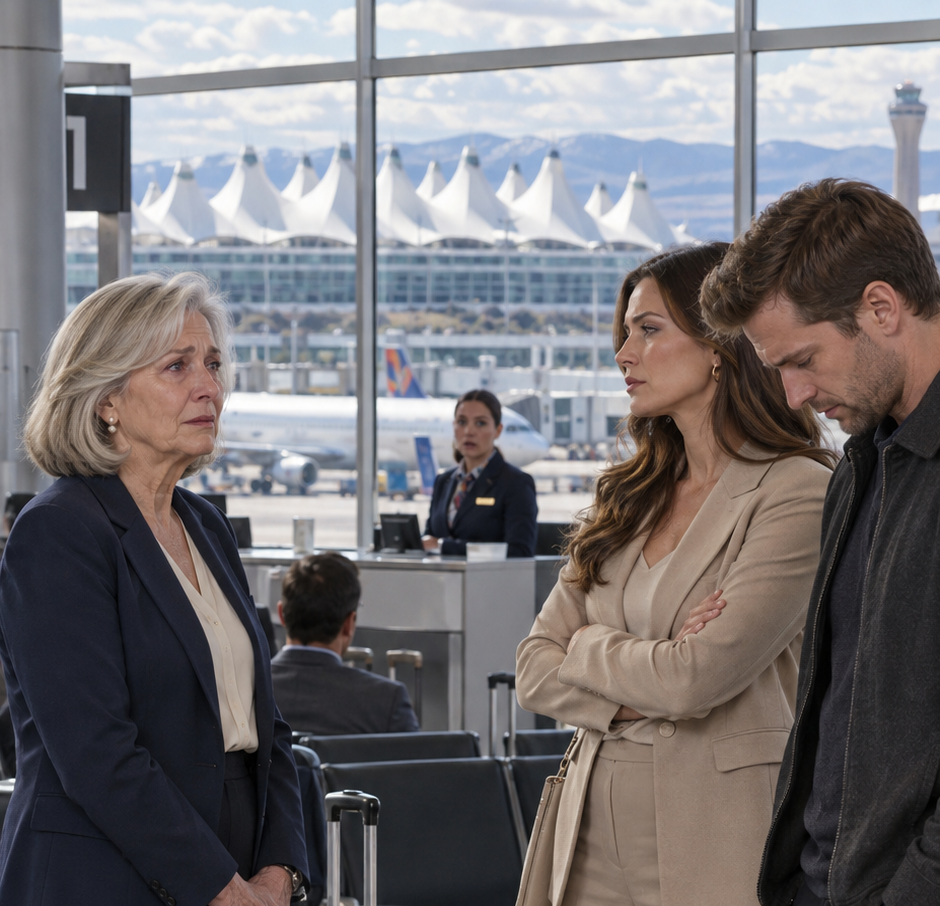
My daughter-in-law looked me straight in the face at the gate in Denver and said, loudly enough for strangers to hearMy daughter-in-law looked me straight in the face at the gate in Denver and said, loudly enough for strangers to hear.352My daughter-in-law looked me straight in the face at the gate in Denver and said, loudly enough for strangers to hear
AT THE DENVER AIRPORT, MY DAUGHTER-IN-LAW SAID I DIDN’T PAY—UNTIL I TOOK BACK THE VACATION I FUNDED
PART 1: THE WOMAN WHO THOUGHT I WAS IN HER WAY
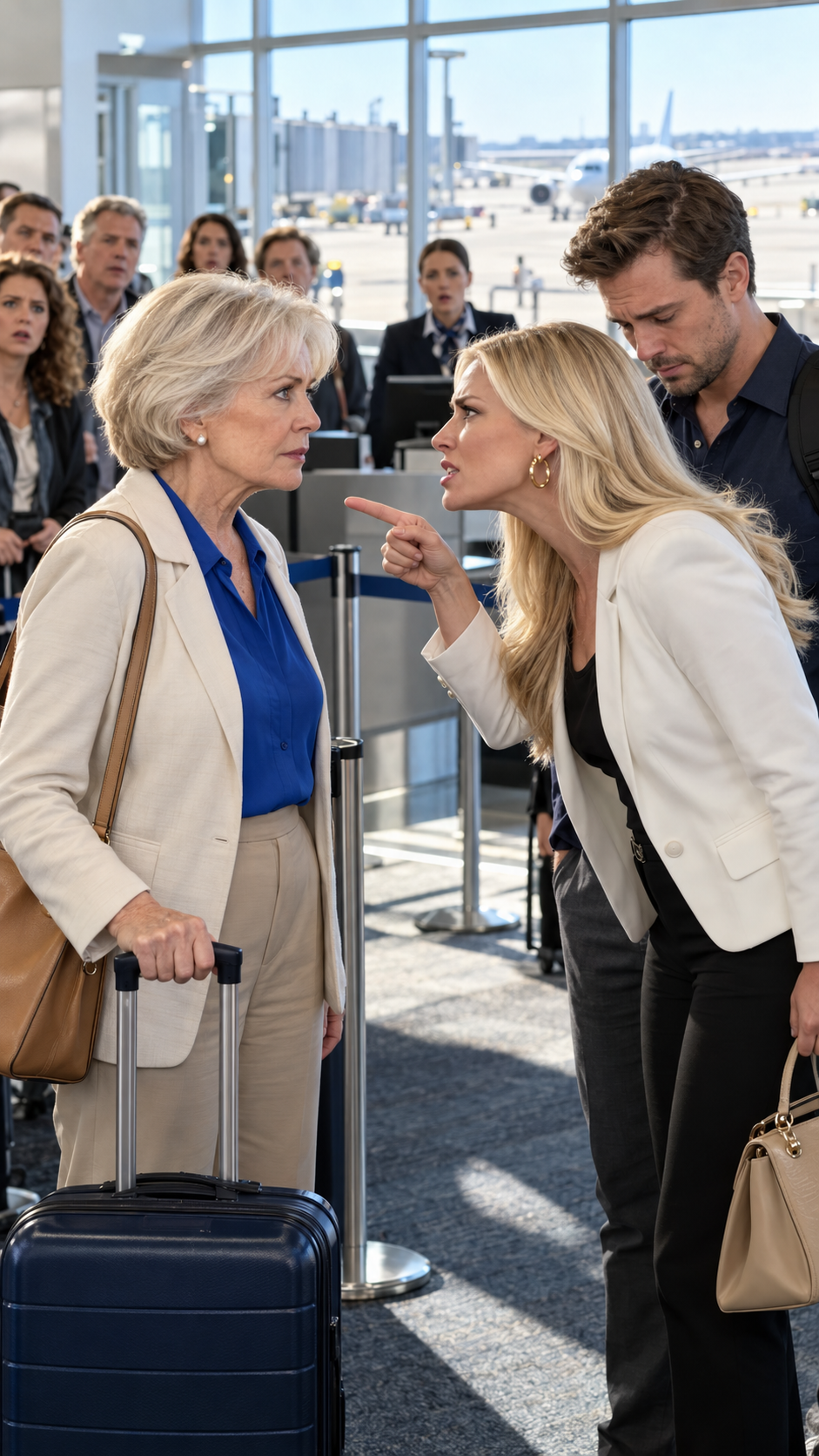
My daughter-in-law looked me straight in the face at the gate in Denver and said, loudly enough for strangers to hear,
“Stay out of our way, Carol. You didn’t pay for this trip.”
My fingers tightened around the handle of my carry-on.
For a few seconds, Denver International Airport seemed to become strangely quiet, even though it wasn’t.
Suitcase wheels still rattled across the polished floor.
A child was crying three gates down.
An announcement about a delayed flight crackled overhead.
Someone behind me was tearing open a bag of chips.
But all I could hear was Amber.
You didn’t pay for this trip.
The gate agent looked up.
A man sitting near the charging station glanced in our direction.
And my son Bradley lowered his eyes.
That was the moment that hurt the most.
Not Amber’s voice.
Not the public humiliation.
My son knew the truth.
He knew exactly who had paid.
The first-class tickets.
The resort in Cabo.
The private airport transfer.
The luggage fees.
The upgraded room.
Every dollar had come from me.
Nearly twelve thousand of them.
And yet Bradley stood beside his wife and said nothing.
I looked at him for several seconds.
He rubbed the back of his neck.
“Mom,” he murmured, “can we not do this here?”
That sentence changed something inside me.
Because I realized he wasn’t asking Amber not to humiliate me.
He was asking me not to respond.
There is a difference.
A very painful one.
My name is Carol Jensen. I was sixty-eight years old that morning.
I had spent most of my life believing that keeping a family together required patience. Compromise. Forgiveness.
My husband Tom used to tell me that kindness was a strength only as long as you remembered it was yours to give.
I had forgotten that last part.
Until the airport.
Tom had been gone nine years by then.
He died on a Thursday afternoon so ordinary that I still hated Thursdays for a long time afterward.
There had been no diagnosis hanging over us. No hospital bed in our living room. No final weeks where we got to say all the things people imagine they will say when death gives them warning.
That morning, he complained about the thermostat.
At lunch, he called me because he had forgotten whether we needed milk.
By evening, I was standing beneath fluorescent hospital lights while a doctor explained that my husband of thirty-six years was gone.
Bradley had been thirty-one then.
He drove to the hospital so fast I was surprised he made it safely.
When he found me, he wrapped both arms around me and held me while I cried into his coat.
For years afterward, we were close in a way grief sometimes makes people close.
Sunday dinner.
Tuesday coffee.
Phone calls just because.
He helped me change smoke detector batteries even when I told him I could do it myself.
I kept frozen lasagna in my freezer because he liked taking one home after long weeks at work.
We talked about Tom constantly at first.
Then occasionally.
Then with smiles instead of tears.
Tom had been a mechanical engineer.
He believed in careful decisions, properly maintained equipment, and never paying interest if you could avoid it.
He drove the same pickup for seventeen years.
He kept receipts in labeled folders.
He had a retirement spreadsheet so detailed that after he died, our accountant stared at it and said, “Your husband planned for everything.”
Not everything.
But enough.
Tom left me secure.
The house outside Denver was almost paid off. There was insurance. Retirement savings. His pension.
I wasn’t rich.
But I wasn’t afraid of the future.
Inside the top drawer of Tom’s desk, I found a handwritten letter after the funeral.
I had read it so many times the folds were soft.
Live, Carol.
That was how it began.
He told me not to spend the rest of my life merely preserving what we had built.
Travel.
Eat well.
Help Bradley if he truly needs it.
Laugh without feeling guilty.
Be happy for both of us.
For years, I tried to honor that.
Then Bradley met Amber.
He met her at a technology conference in Austin four years before the airport incident.
The first time he mentioned her, I could hear excitement in his voice.
“Mom, she’s incredible.”
That was enough for me to want to love her.
When he brought her to my house for dinner, I cooked everything Bradley liked.
Roast chicken.
Mashed potatoes.
Green beans with almonds.
Apple pie.
Amber arrived wearing a fitted black dress and heels too delicate for the February ice on my walkway.
She was beautiful.
Not merely pretty.
Polished.
Her blonde hair looked professionally styled. Her nails were perfect. Her coat probably cost more than the first car Tom and I bought together.
She hugged me lightly and said, “Bradley has told me so much about you.”
“I hope some of it was flattering.”
She smiled.
“Mostly.”
At the time, I laughed.
Looking back, I sometimes wonder how many warnings we dismiss because we are desperate for them not to be warnings.
During dinner, Amber asked about Tom.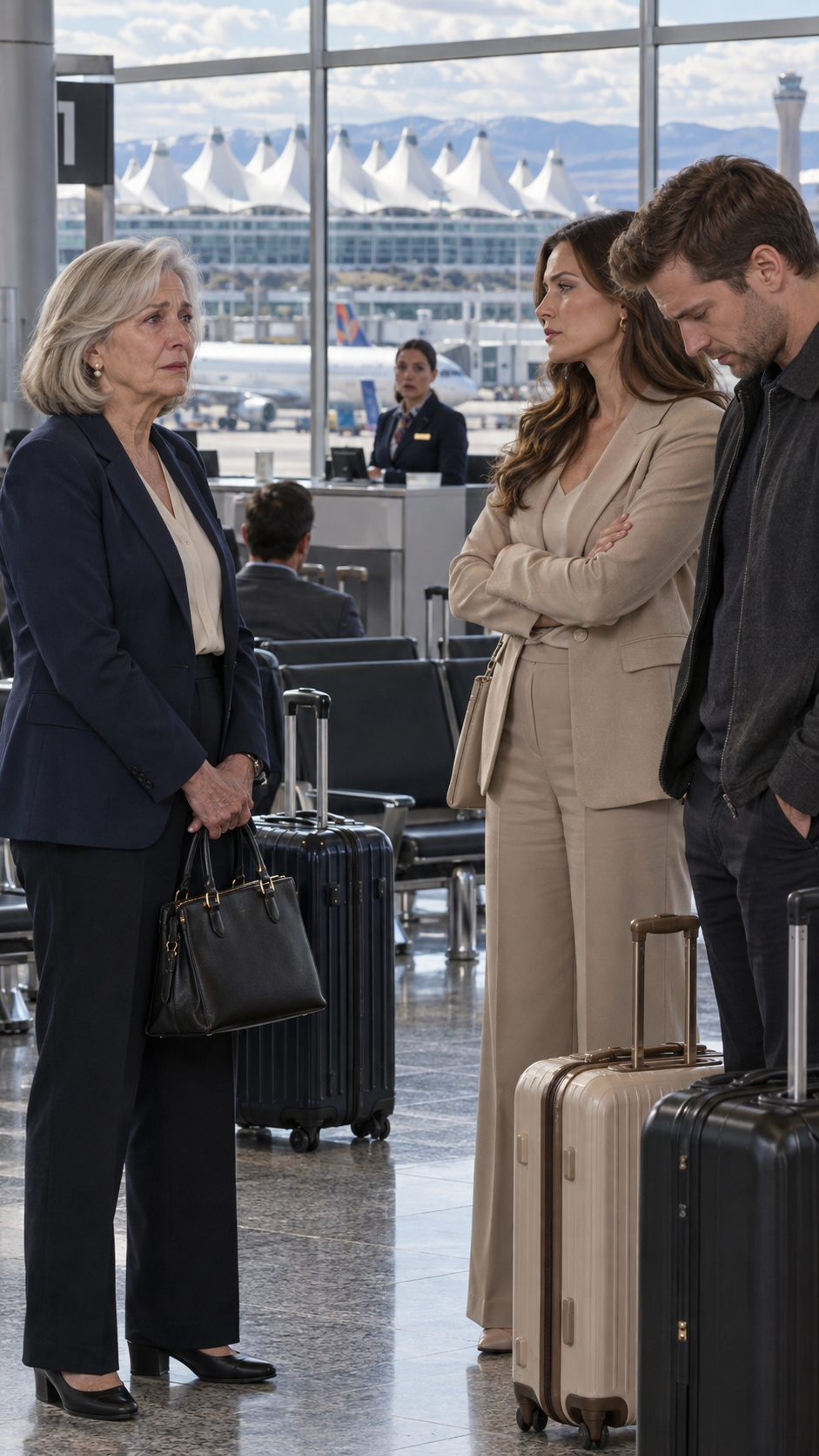
She listened when I spoke.
She complimented my home.
She told me my pie was “dangerously good.”
I wanted to believe my uneasiness was unfair.
But I noticed little things.
Her eyes traveled around the room while I talked.
The china cabinet.
The artwork.
The furniture.
The photographs.
She asked how long I had owned the house.
Whether Denver property values had risen much.
Whether Tom had retired before he passed.
Whether Bradley would eventually inherit the house.
She laughed when she asked that last question.
I laughed too.
I also noticed the way she spoke to the waitress when we went out for dinner two weeks later.
Amber’s steak arrived medium instead of medium rare.
She didn’t shout.
Amber was too controlled for shouting in restaurants.
Instead, she smiled at the waitress and said, “I’m sure this is good enough for some people, but when a customer gives a specific temperature, it’s usually because they understand what they ordered.”
The waitress apologized.
Amber handed the plate back without looking at her.
Her smile disappeared the second the waitress walked away.
That became familiar.
Amber could switch warmth on and off like a lamp.
When Bradley proposed a year later, I told myself what mothers have probably told themselves for centuries.
He loves her.
That must be enough.
Their engagement party was the first time I stopped being able to pretend completely.
Bradley asked if they could hold it at my house.
“Amber wants something intimate,” he said.
Intimate turned out to mean forty guests.
I spent two weeks preparing.
I ordered flowers.
Borrowed extra folding tables.
Cooked trays of food.
Hung string lights in the backyard.
My neighbor helped me move furniture.
Amber arrived almost two hours late.
She stepped through the front door wearing white silk while her friends filmed her entrance on their phones.
She kissed Bradley.
Posed near the flowers.
Complimented the lighting.
Then walked past me to greet someone else.
No thank-you.
Near the end of the evening, several older relatives were still waiting to speak to her because she had spent most of the party taking photographs with friends.
I quietly mentioned it.
“Some of the family has been waiting to congratulate you.”
Amber turned toward me.
“Carol,” she said, smiling in a way that didn’t reach her eyes, “people wait for important things.”
I stared at her.
She turned away.
Later, while washing serving dishes alone in my kitchen, I told myself she was overwhelmed.
Young.
Excited.
Maybe embarrassed.
I could explain almost anything if I tried hard enough.
That became a problem.
Their wedding cost around forty thousand dollars.
I contributed fifteen thousand.
They didn’t ask directly.
Bradley mentioned the venue was more expensive than expected, and I offered.
I wanted his wedding day to feel beautiful, especially because Tom wouldn’t be there.
The venue was west of Denver.
Glass walls.
Mountain views.
White flowers everywhere.
Amber wanted champagne towers and a photographer who made us stand outside in freezing weather because the sunset was the right shade of gold.
Her parents contributed almost nothing.
I learned later they lived beneath a mountain of debt disguised by luxury cars and club memberships.
At the reception, Amber’s mother squeezed my arm near the bar.
“This is all so generous of you, Carol.”
I smiled.
“We wanted them to have a wonderful day.”
She nodded toward Bradley.
“We always knew he married well.”
Something about the sentence bothered me.
Bradley had the stable job.
Bradley had savings.
Bradley had learned from his father to live within his means.
Amber was the one who believed a handbag could become necessary if enough celebrities carried it.
Still, I said nothing.
I was becoming very good at saying nothing.
After they married, Bradley began disappearing from my life one polite excuse at a time.
Sunday dinner became occasional dinner.
Tuesday coffee disappeared entirely.
Phone calls got shorter.
“We’re slammed this week.”
“Amber made plans.”
“We need couple time.”
“She wants better boundaries.”
Whenever they did come over, Amber treated my home as if she had accidentally wandered into an exhibit about outdated domestic life.
One evening, she watched me place pot roast on the table.
“You know meal delivery kits exist now, right?”
I looked at her.
She smiled.
“You don’t have to cook from scratch like it’s 1950.”
Bradley stared at his plate.
I waited for him to say something.
He didn’t.
That silence hurt more than the comment.
My son had once been twelve years old and stepped between me and an angry neighbor because the man raised his voice.
Now he watched his wife cut at me with tiny, precise blades and behaved as though noticing the blood would create the problem.
Then, in January, Bradley called.
It was a Tuesday evening.
My book club was due at seven. Lemon bars were cooling on the kitchen counter.
When his name appeared on my phone, I answered immediately.
“Hi, sweetheart.”
“Mom, can I ask you something?”
His voice sounded tired.
He told me he and Amber had been working constantly.
They needed to get away.
They needed to “reconnect.”
There was a resort in Cabo San Lucas they had been watching online.
All-inclusive.
Oceanfront.
Beautiful.
“But it’s expensive,” he said.
“How expensive?”
“With flights? Probably close to eight thousand.”
I was quiet.
Then he added, “With the wedding debt and Amber’s car payment, it’s just not smart for us right now.”
I looked through the kitchen window at snow resting along the fence.
Tom’s letter came into my mind.
Help Bradley if he truly needs it.
Maybe my son didn’t need a luxury vacation.
But he sounded exhausted.
And I missed him.
“I’ll pay for it.”
“Mom—”
“I mean it.”
“You don’t have to do that.”
“I know.”
He went silent.
Then he said something I didn’t expect.
“Would you want to come?”
My heart lifted so quickly I almost felt embarrassed by it.
I imagined breakfast beside the ocean.
Walking on the beach.
Maybe talking to Bradley without Amber checking the time.
Maybe even finding some peace with my daughter-in-law.
“I’d love to,” I said. “But only if Amber is comfortable.”
“I’ll ask her.”
He called back three hours later.
“She’s fine with it.”
His voice had changed.
Flat.
Careful.
I should have heard the truth.
Instead, I booked the vacation.
Amber insisted economy seats were unbearable for a four-hour flight.
So I bought first class.
Tom had trained me never to choose the cheapest fare if cancellation might become necessary. I selected fully refundable tickets.
I booked the resort.
An upgraded suite for Bradley and Amber.
A smaller ocean-view room for myself.
Private transportation.
Lounge access.
By the time Amber added a few requests, the total came to just under twelve thousand dollars.
I stared at the charge on my credit card statement.
Then I thought of Bradley.
Family, I told myself.
The six weeks before departure should have been fun.
Instead, Amber made one thing clear.
She wanted my money on the vacation.
She did not want me.
She created a group chat called “CBO Squad.”
Nearly everything she posted divided the trip into two categories.
Things for Bradley and Amber.
Things for Carol.
“We’re doing the couples massage at noon.”
“Carol, there’s a senior yoga class you might like.”
“We booked the sunset cruise. It runs late, so it probably isn’t your kind of thing.”
“We have dinner reservations at the seafood restaurant. It’s pretty upscale, but I’m sure the casual place has plenty of options for you.”
I was sixty-eight.
Not ninety-eight.
I had traveled through Europe with Tom.
I owned cocktail dresses.
I knew which fork to use.
But Amber had invented a version of me in her head—a slow old widow who should be grateful to sit quietly on the edge of her marriage.
Bradley sent private apologies.
“She doesn’t mean it like that.”
“She’s stressed.”
“She gets weird about trips.”
After the fourth apology, I stared at my phone for a long time.
Then I wrote:
If you have to keep explaining that someone didn’t mean to be cruel, maybe you should consider whether they did.
I never sent it.
The night before our flight, I barely slept.
My suitcase sat open at the foot of my bed.
Inside were linen pants, two sundresses, swimsuits, sandals and a straw hat Tom bought me years earlier in Santa Fe.
His photograph sat on the nightstand.
“What do I do?” I whispered.
His smile in the picture remained frozen.
“Our boy has changed.”
I swallowed.
Then I corrected myself.
“Or maybe he’s lost.”
Three times, I considered canceling my portion.
Three times, I stopped myself.
I still believed the ocean might fix something.
At four in the morning, my alarm rang.
By five fifteen, I was at Denver International Airport.
Bradley and Amber arrived twenty minutes later.
Amber had three designer suitcases.
Bradley was dragging two of them.
“Morning, Mom.”
He hugged me with one arm.
Amber looked at me.
“You’re early.”
“I prefer having extra time.”
“Of course you do.”
At check-in, Amber’s third suitcase was overweight and triggered an additional fee.
She turned toward me without hesitation.
“Carol, can you get that? Since you paid for the flights anyway.”
The ticket agent looked between us.
Something warm and humiliating crept up my neck.
I paid.
At security, TSA found full-size bottles of perfume and skin cream in Amber’s carry-on.
“You can’t take these through,” the officer told her.
Amber blinked.
“That perfume costs four hundred dollars.”
“It’s over the liquid limit.”
“It’s La Mer.”
The officer did not appear impressed.
Bradley whispered, “Amber, just throw it out.”
She glared at him.
Then dumped everything into the disposal bin.
For the next twenty minutes, she said nothing.
Her silence wasn’t peaceful.
It felt like weather rolling over the mountains.
And none of us knew yet where the storm would break.
PART 2: TWELVE THOUSAND DOLLARS TO BE TREATED LIKE A BURDEN
After security, we went to the airline lounge.
Or at least, I thought we were going to the lounge together.
I had paid for all three passes.
Amber walked ahead with Bradley while I stopped to refill my water bottle.
By the time I reached the entrance, they were already inside.
Bradley had texted me.
We grabbed a table. Come find us.
No offer to wait.
No question about where I was.
I found them near the windows.
Amber had spread her handbag across the third chair.
“Is anyone sitting here?” I asked.
She looked at the bag.
“Oh.”
She moved it slowly.
I sat.
Bradley brought me coffee.
I thanked him.
Amber was scrolling through photos on her phone.
“I cannot believe TSA made me throw that perfume away,” she said.
Bradley sighed.
“We talked about the liquid rule.”
“I travel all the time.”
Bradley looked at me.
Neither of us said anything.
Amber glanced over.
“What?”
“Nothing.”
She narrowed her eyes.
The word hung there.
She knew we were sharing a thought, and she hated being outside it.
Ten minutes later, she announced that she and Bradley were going to walk around.
“You coming?” Bradley asked me.
Amber answered before I could.
“I thought Carol wanted to relax.”
I almost laughed.
I had said no such thing.
“I’m perfectly capable of walking through an airport.”
Amber’s mouth tightened.
“Obviously.”
We left the lounge.
For nearly half an hour, I followed while Amber stopped at shops.
She examined sunglasses.
Shoes.
Travel accessories.
At one point she held up a silk scarf.
“Isn’t this gorgeous?”
“It is.”
She turned to Bradley.
“You should get it for me.”
He checked the price.
“Two hundred and eighty dollars?”
“It’s vacation.”
He looked uncomfortable.
Amber put the scarf down harder than necessary.
I said nothing.
When we reached the gate, boarding was still forty minutes away.
I sat beside the window.
Outside, the runway gleamed beneath the morning sun.
For the first time all day, I felt a flicker of excitement.
In a few hours, there would be ocean.
Warm air.
Palm trees.
Maybe things would improve once we left Denver.
Maybe.
That word kept costing me money.
I opened a paperback.
Bradley sat two chairs away.
Amber stood in front of him, whispering.
I wasn’t trying to listen.
Then I heard my name.
“Carol doesn’t need to be with us every second.”
Bradley kept his voice low.
“She hasn’t asked to be.”
“She keeps following us.”
“She’s traveling with us.”
“Because you invited her.”
“She paid for the trip.”
Amber’s face sharpened.
I looked down at my book.
For one small, shameful moment, I felt grateful.
Bradley had said it.
He had defended reality.
Then Amber answered.
“She offered. That doesn’t mean she gets to turn this into some weird family vacation.”
My eyes stopped moving across the page.
Bradley said something I couldn’t hear.
Amber shook her head.
“I agreed because you said she would mostly do her own thing.”
My chest tightened.
There it was.
The truth I should have understood six weeks earlier.
She had never agreed to travel with me.
She had agreed to let me pay.
I closed the book.
Bradley noticed.
His expression changed immediately.
“Mom—”
“I’m going to get some water.”
I stood.
My legs felt steady even though the rest of me did not.
At a kiosk near the gate, I bought a bottle of water I didn’t need.
The young cashier smiled at me.
“Vacation?”
I looked down at my straw hat hanging from my bag.
“Supposedly.”
He laughed because he thought I was joking.
I walked back slowly.
I should have confronted them then.
I didn’t.
Old habits are powerful.
I sat down and told myself I could survive one week.
I would have my own room.
I could eat alone.
Read.
Swim.
Watch sunsets.
I didn’t need Amber’s permission to enjoy Cabo.
Then boarding began.
First-class passengers were called.
Amber’s mood changed immediately.
She stood straighter and put on the smile she wore when strangers were watching.
“Finally.”
We joined the priority line.
I was directly behind them.
The gate agent scanned Amber’s boarding pass.
Then Bradley’s.
Amber turned toward him.
“When we get there, I want to go straight to the room. No stopping.”
Bradley nodded.
“I know.”
“I’m serious. I don’t want to spend the first hour waiting around while your mother organizes everything.”
I stared at her back.
“Amber.”
She turned.
“What?”
“I arranged the transfer. The driver will be waiting for all three of us.”
Her expression hardened.
“We can manage transportation.”
“I already paid for it.”
She gave a short laugh.
“That’s exactly what I mean.”
“What does that mean?”
Bradley stepped closer.
“Mom, let’s just board.”
But something in me had finally stopped cooperating.
“No. I’d like to know.”
People were moving around us.
A gate agent gestured to the passengers behind me to wait.
Amber lowered her voice at first.
“You keep inserting yourself into everything.”
“I booked the transfer.”
“Yes, Carol. Because you insisted on controlling the entire vacation.”
I stared at her.
“I booked what Bradley asked me to book.”
“You always do that.”
“Do what?”
“Make everything about what you’ve done for us.”
Bradley’s face had gone pale.
“Amber.”
But she had momentum now.
Months of contempt were finally being spoken without disguise.
“You paid for some things because you wanted to come. Fine. But this is our vacation.”
“Some things?”
“Yes.”
The gate agent glanced at me.
I could feel people watching.
I asked very quietly, “Who paid for the flights?”
Amber rolled her eyes.
“Oh, my God.”
“Who paid for the hotel?”
“Carol, don’t.”
“Who paid for the transfer?”
She stepped closer.
“Stay out of our way.”
Then came the sentence.
The one I would hear in my head for weeks.
“You didn’t pay for this trip.”
I looked at Bradley.
He knew.
She knew he knew.
“Bradley?”
His eyes moved toward the floor.
“Mom, can we not do this here?”
Something inside me became completely still.
There are moments when anger arrives hot.
This wasn’t one of them.
I became calm.
So calm that later I would almost frighten myself remembering it.
I looked at Amber.
“Okay.”
She blinked.
“Okay?”
“You’re right.”
Bradley looked up.
I reached into my shoulder bag and took out my phone.
Amber gave a small satisfied smile, as though I had finally learned my place.
I stepped out of the boarding lane.
The gate agent asked, “Ma’am, are you still traveling?”
I looked at her name tag.
Denise.
“Not on this reservation.”
Bradley stared at me.
“What does that mean?”
I opened the airline app.
The reservation sat directly on the home screen.
Three passengers.
Three refundable first-class tickets.
Denver to Cabo San Lucas.
Return seven days later.
Purchased with my card.
Tom had always said, “Pay attention to the cancellation rules before you pay attention to the seat.”
At the time, I thought that was just one more practical habit.
Now it felt like he had reached across nine years and placed a hand on my shoulder.
I tapped the reservation.
Amber’s smile disappeared.
“Carol.”
I selected Cancel Trip.
A warning appeared.
Cancel all passengers?
Refund to original method of payment.
My thumb hovered over the button.
Bradley stepped toward me.
“Mom, what are you doing?”
I looked him in the eyes.
“For once, I’m staying out of your way.”
Then I tapped Confirm.
PART 3: IF I DIDN’T PAY, THEY DIDN’T NEED MY MONEY
For a second, nobody moved.
My phone processed the request.
Then the screen changed.
Reservation canceled.
Refund processing to original payment method.
Bradley’s face went blank.
Amber stared at me.
“You did not just do that.”
I slipped my phone into my bag.
“I believe I did.”
“You canceled our tickets?”
“I canceled the tickets I purchased.”
“We’re boarding!”
“Not anymore.”
Amber turned toward the gate agent.
“This is ridiculous. Tell her she can’t do that.”
Denise looked at her computer.
Then at me.
Then back at Amber.
“The reservation has been canceled.”
Amber’s voice rose.
“Put it back.”
“I can’t restore a canceled reservation. You would need to purchase new tickets based on current availability.”
“How much?”
Denise typed.
I watched Amber’s face while the number appeared.
“Last-minute first class is significantly higher.”
“We don’t need first class,” Bradley said quickly.
Amber shot him a look.
Denise checked again.
“There are three seats remaining in economy on this flight. Otherwise, the next available routing leaves this afternoon with a connection.”
“How much for two?” Bradley asked.
She told him.
I won’t repeat the number because it isn’t important.
What mattered was the way Amber immediately looked at me.
Not at Bradley.
At me.
The reflex was so automatic she didn’t even realize what it revealed.
I raised my eyebrows.
Her lips parted.
“Carol.”
“No.”
“We can talk about this.”
“We already did.”
“You’re seriously going to ruin our vacation over an argument?”
I felt something almost like sadness.
“You told me I didn’t pay for it.”
“You know what I meant.”
“No, Amber. I don’t.”
She glanced around.
People were watching openly now.
Her humiliation mattered to her far more than mine had.
“I meant you don’t get to act like you own us because you offered to help.”
“I don’t own you.”
“Then stop controlling everything.”
“I am.”
Her face changed.
Bradley closed his eyes briefly.
I looked at him.
“You were standing there.”
“Mom—”
“You knew who paid.”
“I know.”
“You let her tell me I was lying.”
“I didn’t say you were lying.”
“No. You just made sure you didn’t say she was.”
That landed.
He looked as though I had slapped him.
I had no satisfaction in it.
Only exhaustion.
My phone buzzed.
A refund email.
I opened another booking confirmation.
The resort.
Seven nights.
Two rooms.
All-inclusive.
I had booked directly through the resort under my account with my card guaranteeing the reservation.
The cancellation deadline had passed the previous evening.
For a moment, my confidence flickered.
Then I read the terms carefully.
Cancellation after the deadline meant a one-night penalty per room.
The remaining balance would be returned.
I had known that before booking.
I had simply forgotten.
I called the resort.
Amber watched me.
“What are you doing?”
I held up one finger.
A reservations representative answered.
I gave my confirmation number.
“Yes,” I said. “I need to cancel both rooms.”
Amber lunged closer.
Bradley caught her arm.
“You cannot be serious.”
I turned away.
The representative confirmed the penalty.
“That’s fine.”
“Mrs. Jensen, would you like me to cancel the transportation associated with the reservation as well?”
“Yes, please.”
Amber made a sound somewhere between disbelief and rage.
The representative continued.
“I also see two spa treatments and a dinner package attached.”
“Cancel anything charged to my card.”
“Certainly.”
“Thank you.”
I hung up.
My hands were trembling now.
The calm was still there, but my body had finally begun catching up.
Amber stared at me.
“You’re insane.”
“No.”
“You just threw away thousands of dollars.”
“I lost cancellation fees.”
“For what? To punish us?”
I looked at her.
“No. To stop rewarding you.”
Her cheeks flushed.
Bradley sat down.
People had begun boarding again around us.
A family passed toward the jet bridge.
A businessman glanced at the scene and deliberately looked away.
Denise quietly motioned the next passengers forward.
Amber turned to Bradley.
“Fix this.”
He looked up.
“How?”
“Buy the tickets.”
“With what?”
“With your card.”
“I don’t have a five-thousand-dollar limit sitting open.”
Her voice dropped.
“Then use the emergency card.”
“It’s almost maxed.”
The words came out before he could stop them.
Amber froze.
I looked at my son.
He avoided my eyes.
There was more financial trouble than he had told me.
I had suspected it.
I hadn’t known.
Amber recovered quickly.
She pulled her own wallet from her handbag.
“Fine.”
She opened her airline app.
Bradley leaned toward her.
“Amber.”
“What?”
“Don’t.”
“I’m not missing this trip.”
“You just heard the hotel is canceled.”
“We’ll book another hotel.”
“With what?”
“My card.”
She typed angrily.
Then stopped.
Typed again.
Her face changed.
Bradley whispered, “What?”
“Nothing.”
“Amber.”
She locked the phone.
“Fraud protection.”
I knew that expression.
Not fraud protection.
Declined.
I didn’t say it.
I didn’t need to.
She called the card company and walked several yards away.
Her voice was sharp at first.
Then quieter.
Then pleading.
Bradley sat beside me.
Neither of us spoke for almost a minute.
Finally, he said, “Mom, this got out of hand.”
I laughed once.
Not because anything was funny.
“This?”
He rubbed his face.
“She shouldn’t have said that.”
“No.”
“I know.”
“She shouldn’t have told me to stay out of the way on a vacation I paid for.”
“I know.”
“She shouldn’t have spent six weeks treating me like luggage.”
His jaw tightened.
“I know.”
“And you shouldn’t have watched.”
That was the one he couldn’t answer.
My son stared at the carpet.
I studied him.
He looked older than thirty-nine.
There were faint shadows beneath his eyes.
His shoulders were rounded.
I realized I had been so focused on Amber’s cruelty that I had ignored what Bradley’s constant surrender was doing to him.
That did not excuse him.
But it made me sad.
“I heard you talking earlier,” I said.
He looked up.
“When?”
“At the gate.”
His face drained.
I continued.
“I heard Amber say she agreed to let me come because you told her I would mostly stay out of your way.”
“Mom—”
“Was that true?”
He said nothing.
That was an answer.
I felt the last little bit of hope I had carried to the airport collapse.
“You knew she didn’t want me there.”
“She didn’t want anybody there.”
“But she wanted my credit card.”
“That’s not fair.”
I stared at him.
He looked away.
After a moment, he whispered, “It’s not completely unfair.”
Amber came back.
Her expression told me the card company had not magically solved her problem.
She stopped in front of us.
“This is unbelievable.”
I stood.
“What is?”
“You.”
“No. The unbelievable part is that you thought you could tell the person funding your vacation that she was in your way and expect the money to keep flowing.”
“I never asked you to pay.”
That sentence almost impressed me.
“You let me.”
“You offered.”
“Yes.”
“So you can’t hold it over our heads later.”
“I’m not holding anything over your head. I took it back.”
Her mouth fell open.
Bradley stood.
“Can everybody just calm down?”
I looked at him.
“No.”
He blinked.
I had rarely said no to my son that way.
“I have been calm for four years.”
He lowered his hands.
I continued.
“I was calm at the engagement party.”
Amber rolled her eyes.
“I was calm when your wife insulted me at my own dinner table. I was calm when she treated my money like something she deserved. I was calm every time you told me she was stressed instead of telling her she was rude.”
“Carol, you are making yourself the victim.”
Amber’s voice had become cold again.
I faced her.
“No. You did that. I’m just refusing the role now.”
The gate agent announced final boarding.
The door would close soon.
The sound made all three of us turn.
For six weeks, that flight had represented a chance to repair something.
Now it was simply a plane leaving without us.
Bradley watched the final passengers disappear down the jet bridge.
Amber’s eyes filled with furious tears.
She whispered, “You ruined everything.”
I picked up my carry-on.
“No.”
Then I looked at my son.
“I just stopped paying for it.”
PART 4: THE TRUTH FOLLOWED US HOME
Getting our luggage back took almost two hours.
Because our checked bags had been tagged for an international flight, airline staff had to locate them before the aircraft departed.
Amber spent most of that time twenty feet away from me.
She called someone—I assumed her mother—and spoke in a furious whisper.
I caught pieces.
Humiliated.
Controlling.
Vindictive.
Vacation destroyed.
I didn’t hear the phrase nearly twelve thousand dollars.
Interesting omission.
Bradley stayed between us physically but not emotionally.
He seemed hollowed out.
When the luggage finally appeared, he grabbed two of Amber’s bags without being asked.
Old habits.
I retrieved mine.
Outside the terminal, sunlight flashed against cars pulling through passenger pickup.
The Colorado air was cool.
I took out my phone.
Bradley looked at me.
“What are you doing?”
“Calling a ride home.”
“I’ll drive you.”
“No.”
“Mom.”
“I came separately. I’ll leave separately.”
Amber gave a bitter laugh.
“Of course. Dramatic to the end.”
I turned toward her.
“You told me to stay out of your way.”
Her expression tightened.
“I’m respecting your boundary.”
My ride arrived seven minutes later.
Before I got into the car, Bradley touched my arm.
“Mom, please.”
I looked down at his hand.
Then at his face.
“I love you.”
His eyes reddened.
“But loving you cannot keep meaning that I let your wife humiliate me while I pay for the privilege.”
He swallowed.
“I’ll call you.”
I nodded.
Then I got into the car.
During the ride home, I expected to cry.
I didn’t.
Denver moved past the window.
Freeway signs.
Warehouses.
Traffic.
The familiar outline of the mountains.
I felt strangely empty.
When I reached my house, I carried the suitcase upstairs and placed it at the foot of my bed exactly where it had been the night before.
The straw hat was still attached to the handle.
I sat beside it.
That was when I cried.
Not because Cabo was gone.
Not because of the money.
I cried because, somewhere between Tom’s death and that airport gate, I had become afraid that asking my son to respect me might cost me my son.
And because of that fear, I had accepted things I would never have accepted from anyone else.
The realization hurt.
I took Tom’s letter from my desk.
The paper shook in my hands.
Help Bradley if he truly needs it.
I stared at that sentence.
For years, I had focused on the word help.
That afternoon, I noticed the rest.
If he truly needs it.
A vacation was not need.
Avoiding consequences was not need.
Protecting him from the financial choices he and Amber made was not need.
Allowing him to remain silent while his wife treated me badly was certainly not help.
My phone rang at four thirty.
Bradley.
I let it ring.
He called again.
Then a third time.
I answered.
“Hi.”
His voice was tight.
“Can we talk?”
“We are talking.”
“Mom.”
“What do you need to say?”
He exhaled.
“Amber is furious.”
“I assumed.”
“She feels like you embarrassed her publicly.”
I closed my eyes.
“She screamed at me in an airport that I hadn’t paid for a trip I funded.”
“I know.”
“And she’s embarrassed?”
“I’m not saying it makes sense.”
“No. You’re saying what you’ve said for years. Her feelings are urgent. Mine are inconvenient.”
Silence.
“That’s not fair.”
“Isn’t it?”
He didn’t answer.
I waited.
Finally, he said, “Canceling everything was extreme.”
“Why?”
“Because it was already paid for.”
“By me.”
“I know.”
“Do you?”
“Yes.”
“Then explain something.”
He was quiet.
“If Amber genuinely believed I had no right to be involved because I hadn’t paid, why was she upset when I canceled what I supposedly hadn’t paid for?”
Nothing.
I continued.
“Why didn’t either of you simply buy new tickets and continue your vacation?”
His silence changed.
Less defensive.
More ashamed.
“You know why,” he said.
“I want you to say it.”
“Because we can’t afford it.”
There it was.
I leaned back in my chair.
“Then perhaps the person paying deserved basic respect.”
Bradley’s voice cracked slightly.
“I never wanted you disrespected.”
“But you accepted it.”
“I was trying to keep peace.”
“No, Bradley. You were transferring the conflict to me.”
He went silent.
I had been thinking about that all afternoon.
Every time Amber insulted me, there were two possible outcomes.
He could confront her and deal with her anger.
Or I could absorb the insult and everybody could keep moving.
He had chosen the second option again and again.
It was easier for him.
Not for me.
“Your wife was difficult,” I said. “So you asked your mother to become smaller.”
His breathing was audible through the phone.
“That’s not what I meant to do.”
“I believe you.”
It was true.
I didn’t think Bradley woke each morning wondering how he could hurt me.
That almost made it worse.
He had hurt me through cowardice, not intention.
And cowardice can become a habit if nobody forces you to look at it.
“Mom, what happens now?”
I knew what he meant.
Not with the vacation.
With us.
“I don’t know.”
“Are you done with me?”
My eyes filled.
“No.”
“Then tell me how to fix this.”
“You start by not asking me to fix it for you.”
Another silence.
I continued.
“Your marriage is yours. Your finances are yours. Your relationship with me is yours too. I’m not going to compete with Amber, and I’m not going to pay for access to my own son.”
“I never thought you were.”
“Then prove it.”
“How?”
“When someone is cruel to me, stop explaining them to me.”
He inhaled slowly.
“When you want to see me, call because you want to see me. Not because you need something.”
“Okay.”
“And I am not paying for another luxury expense for either of you.”
He didn’t argue.
That mattered.
“I understand.”
We ended the call after a few more quiet sentences.
Amber contacted me the next morning.
Not with an apology.
With an accusation.
Her message was long.
She said I had manipulated Bradley.
She said I used money as a weapon.
She said I had never respected their marriage.
She said inviting myself on the trip had been inappropriate.
I read the message twice.
Then I wrote a response.
I deleted it.
Wrote another.
Deleted that too.
Finally, I sent four sentences.
You are entitled to boundaries in your marriage.
You are not entitled to my money.
You are entitled to dislike me.
You are not entitled to insult me while expecting me to finance you.
Her reply came almost immediately.
Unbelievable.
I did not answer.
Three days passed.
Then a week.
Bradley did not call.
That hurt.
I reminded myself that boundaries sometimes feel like abandonment when you are used to being overavailable.
I went to book club.
I made lemon bars.
I walked every morning.
I called an old friend named Diane and told her the whole story.
When I finished, she said, “Carol, I’m going to ask you something, and you’re going to hate me for it.”
“I probably won’t.”
“When was the last time Bradley did something for you that required him to disappoint Amber?”
I opened my mouth.
Then closed it.
I couldn’t think of one.
Diane didn’t say I told you so.
She didn’t have to.
Two weeks after the airport, my doorbell rang on a Sunday afternoon.
I looked through the front window.
Bradley was standing on the porch.
Alone.
For a moment, I didn’t move.
Then I opened the door.
He looked terrible.
Unshaven.
Tired.
“Can I come in?”
I stepped aside.
He walked into the house and stopped in the hallway.
His eyes landed on a framed photograph of Tom.
I saw his throat move.
“Coffee?” I asked.
“Please.”
We sat at the kitchen table.
For several minutes, neither of us spoke.
Finally, Bradley put both hands around his mug.
“I owe you an apology.”
I waited.
Not because I wanted to punish him.
Because I needed to hear whether the apology was actually his.
He looked at me.
“I knew Amber didn’t want you on the trip.”
I felt the old pain stir.
“She told me she wouldn’t go if you came.”
“Then why did she?”
“Because I told her you probably wouldn’t pay if you weren’t included.”
I stared at him.
He closed his eyes.
“I know.”
The confession was worse than what I had imagined.
“So you used my invitation as leverage.”
“Yes.”
“And then told me she was excited I was coming.”
He nodded.
My fingers tightened around the mug.
“Why?”
“Because I wanted the trip.”
The honesty stunned me.
He looked ashamed.
“I wanted it too. I was burned out. We were fighting constantly about money. Amber kept saying if we could get away, things would feel normal again.”
I looked at him.
“And you thought I could buy normal for you.”
His eyes filled.
“Yes.”
That answer hurt.
But it was finally true.
Bradley rubbed both hands over his face.
“I kept telling myself I wasn’t using you because you offered.”
The same defense Amber had made.
He saw my expression.
“I know how that sounds now.”
“What happened after the airport?”
He laughed softly without humor.
“We fought for about six hours.”
I said nothing.
“She blamed me for not stopping you.”
“That doesn’t surprise me.”
“She said I should have forced you to reinstate everything.”
“How?”
“I don’t know. I asked her that.”
A faint, sad smile crossed his face.
It disappeared quickly.
“Then we started fighting about money.”
I waited.
“The wedding debt is worse than I told you.”
I felt concern rise automatically.
Then I reminded myself to listen instead of rescue.
“How bad?”
“Bad enough that we have to change things.”
“And are you?”
“I am.”
The wording caught my attention.
Not we.
I am.
Bradley looked down.
“Amber thinks the problem is temporary. She wants me to take money out of retirement.”
“What do you think?”
“I think Dad would haunt me.”
Despite everything, I laughed.
Bradley did too.
For the first time in months, I heard my son in that laugh.
Then his expression became serious.
“I told her no.”
“How did she take that?”
“Exactly how you think.”
I sipped my coffee.
Bradley continued.
“I also told her she had to apologize to you.”
I did not react.
“She refused.”
“I’m not surprised.”
“She said you owed her an apology.”
“For canceling the vacation?”
“For humiliating her.”
I looked at him.
“And what did you say?”
He swallowed.
“I said she humiliated you first.”
Something in my chest loosened.
Not healed.
Not forgiven.
But loosened.
It was the sentence I had needed from him at the airport.
Two weeks late.
Still necessary.
Bradley stared into his coffee.
“I don’t know what happens with us.”
He meant his marriage.
“I’m sorry.”
“I’m not asking you to tell me to leave her.”
“Good.”
He looked surprised.
“That’s your decision.”
He nodded.
“I just know I can’t keep living like everything is a test of loyalty.”
I thought about the past four years.
Amber hadn’t simply wanted Bradley to love her.
She had wanted every other relationship to become proof that he loved her less.
That kind of competition has no finish line.
“Your father and I disagreed plenty,” I said.
Bradley smiled faintly.
“I remember.”
“He hated that yellow paint I chose for the kitchen.”
“It was awful.”
“Thank you very much.”
He laughed.
I smiled.
“But Tom never asked me to prove I loved him by treating someone else badly.”
Bradley became quiet.
“I think I forgot what normal looks like.”
“Then maybe you need time to remember.”
He nodded.
Before leaving, he stood in the hallway looking at his father’s photograph again.
“Do you still have Dad’s letter?”
“Yes.”
“Can I read it?”
I hesitated.
Then retrieved it.
He sat alone in the living room while I went upstairs.
When I came down, he was crying.
Not dramatically.
Just quietly.
He handed the letter back.
“I miss him.”
“So do I.”
He hugged me.
For a few seconds, I held my son the way I had held him when he was a child.
But when he left, I did not give him money.
That was important too.
PART 5: THE VACATION I FINALLY TOOK FOR MYSELF
The refund from the airline appeared on my card nine days after the canceled trip.
The resort refund came later, minus the cancellation fees.
I lost money.
Not as much as Amber claimed.
Enough to sting.
Strangely, I didn’t regret a dollar of it.
Those fees cost less than continuing the life I had been living.
Bradley and Amber entered marriage counseling.
I know because Bradley told me, not because I asked.
For a while, he came over every Sunday.
Sometimes Amber came too.
At first, she refused.
Then, about six weeks after the airport, she appeared beside him at my front door.
Her posture was stiff.
Bradley looked nervous.
I invited them in.
We sat in the living room.
Amber’s apology was not perfect.
Real apologies rarely sound like movie speeches.
She didn’t suddenly become warm.
She didn’t confess that I had been right about everything.
She said she had felt judged by me from the beginning.
I told her there had been moments when I probably had judged her.
She said she felt Bradley compared her to me.
That surprised me.
She said every time he praised how careful his father had been with money or how organized I was, she heard criticism of herself.
I listened.
Then she said, “But that doesn’t excuse what I said.”
I waited.
She looked directly at me.
“Telling you that you didn’t pay for the trip was cruel. I knew you did. I was angry, and I wanted to make you feel small.”
That was the first thing Amber had ever said to me that felt completely honest.
It hurt.
But it also mattered.
“Thank you for saying that.”
She nodded.
“I’m sorry.”
I accepted the apology.
I did not hand her my credit card.
Those are different things.
Their marriage remained complicated.
Maybe it always will be.
I stopped trying to manage it.
That was one of the greatest changes the airport gave me.
Bradley had to become responsible for Bradley.
Amber had to become responsible for Amber.
And I had to become responsible for Carol.
Three months after the canceled Cabo trip, Diane came over for coffee.
She sat at my kitchen table and pointed at my laptop.
“What are you looking at?”
“Flights.”
“To where?”
I turned the screen.
Cabo San Lucas.
Her eyebrows lifted.
“You’re kidding.”
“No.”
She grinned.
“Good.”
I had rebooked the same resort.
One room.
Oceanfront.
Seven nights.
I used part of the refunded money.
This time, I bought one ticket.
Economy plus.
Tom would have approved.
Diane asked if I wanted company.
I thought about it.
Then shook my head.
“I think I need to do this one alone.”
She smiled.
“Then bring sunscreen.”
The morning I returned to Denver International Airport, I expected bad memories to hit me.
They didn’t.
I parked.
Checked my suitcase.
Went through security.
Bought coffee.
No one criticized how early I arrived.
No one rolled their eyes when I asked a question.
No one made me feel like my presence required an apology.
At the gate, I sat beside the window.
For a moment, I looked at the exact area where Amber had told me I hadn’t paid.
I remembered my son lowering his eyes.
I remembered tapping Cancel.
I remembered how terrified I had been that choosing dignity would destroy my family.
It hadn’t.
It had simply forced the truth into the room.
My phone buzzed.
A message from Bradley.
Have a great trip, Mom. Dad would be proud of you.
I stared at the words until they blurred.
Then I typed:
I think he’d tell me to wear sunscreen.
Bradley replied immediately.
He absolutely would.
I smiled.
When my boarding group was called, I stood.
The woman behind me offered to help lift my carry-on.
“I’ve got it,” I told her.
And I did.
Hours later, I stepped out of the Cabo airport into warm air.
The sunlight felt different from Colorado.
Softer.
Saltier.
Palm trees moved in the wind beyond the road.
At the resort, I checked into my room and opened the balcony doors.
The ocean stretched blue and enormous beneath me.
For a long time, I simply stood there.
That evening, I wore the dress Amber had once implied was too elegant for me.
I made a reservation at the seafood restaurant.
The upscale one.
The hostess led me to a table outside.
“Just one tonight?” she asked.
For years, that question would have made me feel embarrassed.
Just one.
As though one person were an incomplete party.
I smiled.
“Yes.”
She handed me the menu.
The sun began lowering over the water.
I ordered grilled fish and a glass of white wine.
After dinner, I walked along the beach.
I wore the straw hat Tom had bought me in Santa Fe.
The sand was cool beneath my feet.
Couples passed.
Families passed.
A group of women my age laughed near the water.
I thought about Tom’s letter.
Live, Carol.
For years, I had interpreted living as giving.
Giving money.
Giving patience.
Giving second chances.
Giving explanations.
Giving people room to behave badly because I loved them.
But standing beside the Pacific that evening, I understood something my husband probably understood long before I did.
Love does not require you to disappear.
Helping someone does not mean financing their entitlement.
Peace purchased with your dignity is not peace.
And being needed is not the same as being valued.
I still loved Bradley.
I hoped his marriage survived if it could become healthy.
I hoped Amber learned that respect could not be purchased, demanded or performed.
I hoped we all became better after what happened.
But their choices were no longer mine to carry.
The next morning, I woke before sunrise.
I made coffee and walked onto the balcony.
The ocean was dark blue, slowly turning silver.
My phone rested inside the room.
For once, I didn’t reach for it.
I stood there barefoot in the morning air and watched the horizon brighten.
Three months earlier, I had believed Amber had taken my vacation away from me.
She hadn’t.
She had only shown me who I had become while trying too hard to stay welcome in my son’s life.
At Denver International Airport, my daughter-in-law told me I hadn’t paid for the vacation.
So I stopped paying.
Not only for the flights.
Not only for the hotel.
I stopped paying for approval.
I stopped paying for access.
I stopped paying for silence.
And when I finally did, I discovered something worth far more than the twelve thousand dollars I almost spent.
I was never in their way.
I had simply forgotten how to stand in my own.
My son put his hand around my throat because I refused to sign one page.352
My son put his hand around my throat because I refused to sign one page. MY SON PUT HIS HAND AROUND MY THROAT FOR ONE SIGNATURE. BY MORNING, I LEARNED I WASN’T THE FIRST MOTHER THEY HAD DONE THIS TO. PART 1: THE PAGE I WOULD NOT SIGN My son put his hand around my throat because I refused to sign one page. For three or four terrifying seconds, I stared into the face of the boy I had once worked two…
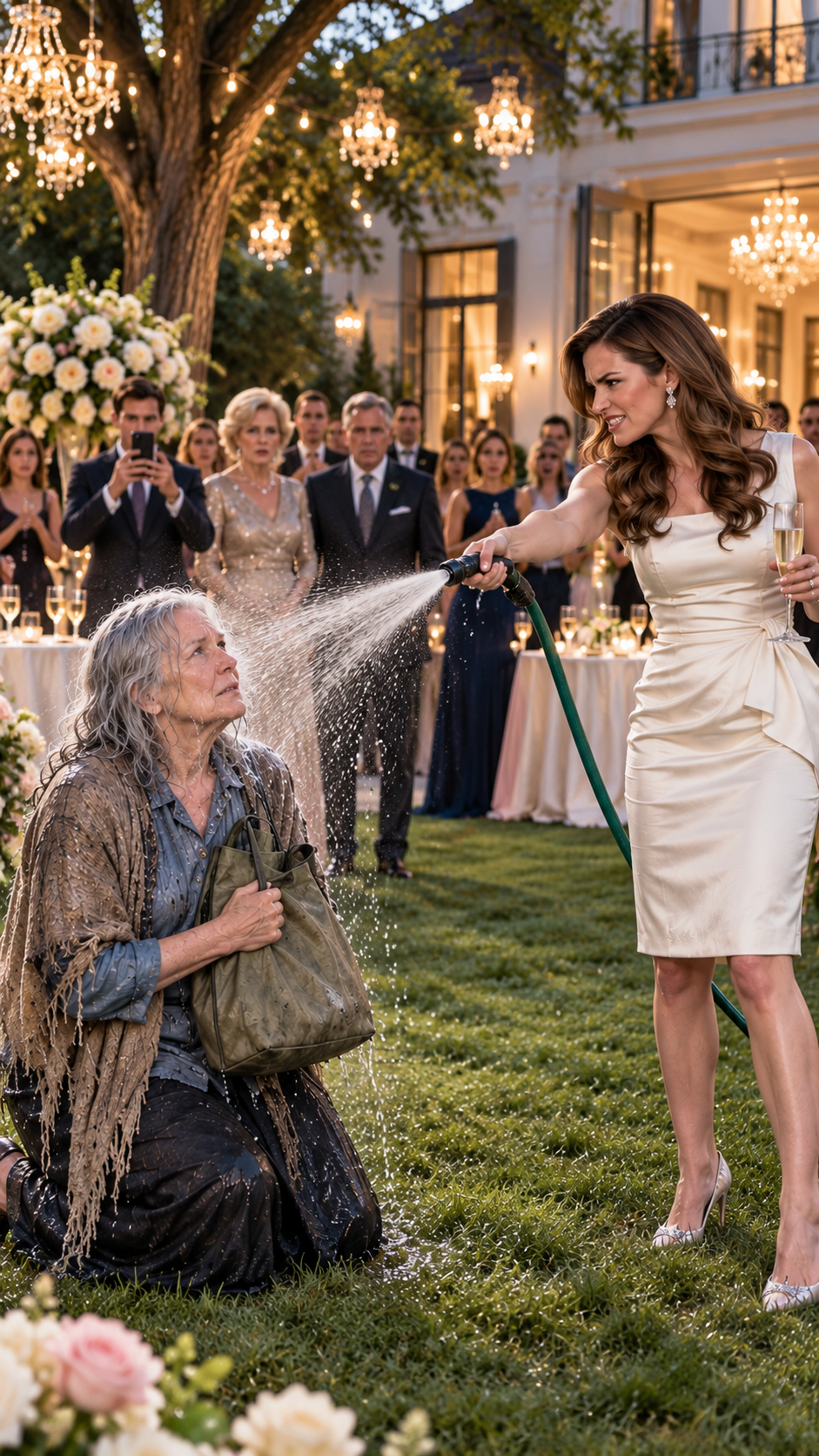
SHE THOUGHT SHE WAS HOSING DOWN A BEGGAR AT HER ENGAGEMENT PARTY. BY NIGHTFALL, THE WOMAN SHE HUMILIATED WOULD EXPOSE WHY THE WEDDING HAD BEEN PLANNED BEFORE ETHAN EVER FELL IN LOVE.352
SHE THOUGHT SHE WAS HOSING DOWN A BEGGAR AT HER ENGAGEMENT PARTY. BY NIGHTFALL, THE WOMAN SHE HUMILIATED WOULD EXPOSE WHY THE WEDDING HAD BEEN PLANNED BEFORE ETHAN EVER FELL IN LOVE. PART 2 — WHEN THE LAUGHTER STOPPED The most frightening sound on that lawn was not Vanessa’s laughter, the hiss of the garden hose, or even the shocked whisper that moved through thirty guests when Ethan stepped throu…
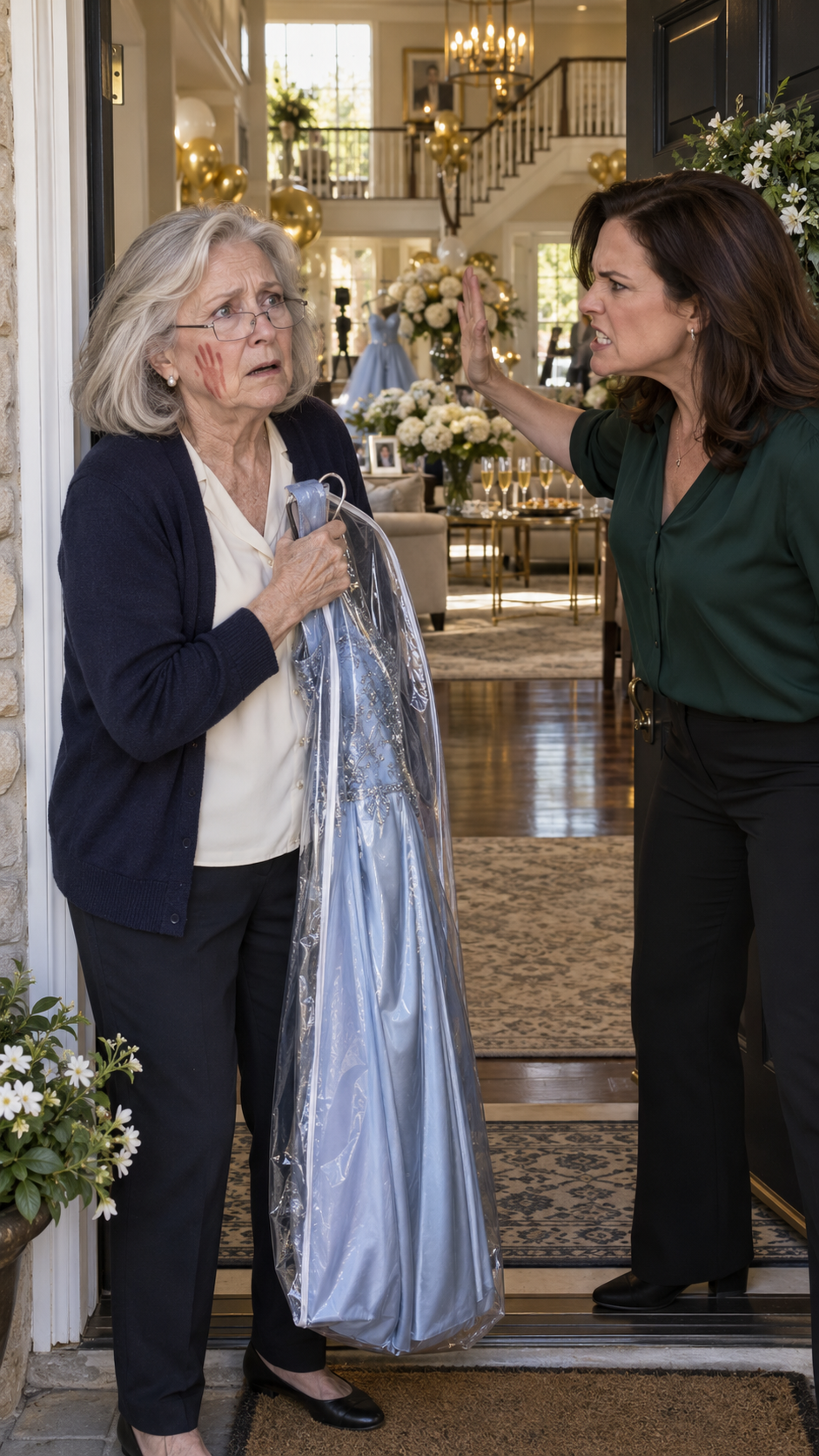
My daughter-in-law slapped me across the face before I had even stepped fully inside her house.352My daughter-in-law slapped me across the face before I had even stepped fully inside her house. MY DAUGHTER-IN-LAW SLAPPED ME OVER MY GRANDDAUGHTER’S PROM DRESS—THEN LILY UNLOCKED HER PHONE PART 1: THE SLAP My daughter-in-law slapped me across the face before I had even stepped fully inside her house. I was still holding my seventeen-year-old granddaughter’s prom dress. One second, I was standing…
MY CHILDREN THREW ME OUT OF MY OWN EIGHTIETH BIRTHDAY PARTY. THEN OUR ACCOUNTANT OPENED A BRIEFCASE AND TOLD THEM WHO HAD REALLY BEEN PAYING FOR THEIR LIVES.352
PART 1 — THE GLASS ON THE FLOOR At eighty years old, I had imagined many ways my children might eventually break my heart. I had never imagined my daughter would do it with a glass of champagne in front of seventy people. The champagne struck me across the face before I had time to turn away. It was cold, sharp, almost absurdly sweet as it ran through my silver hair, over my cheeks, and down the n…
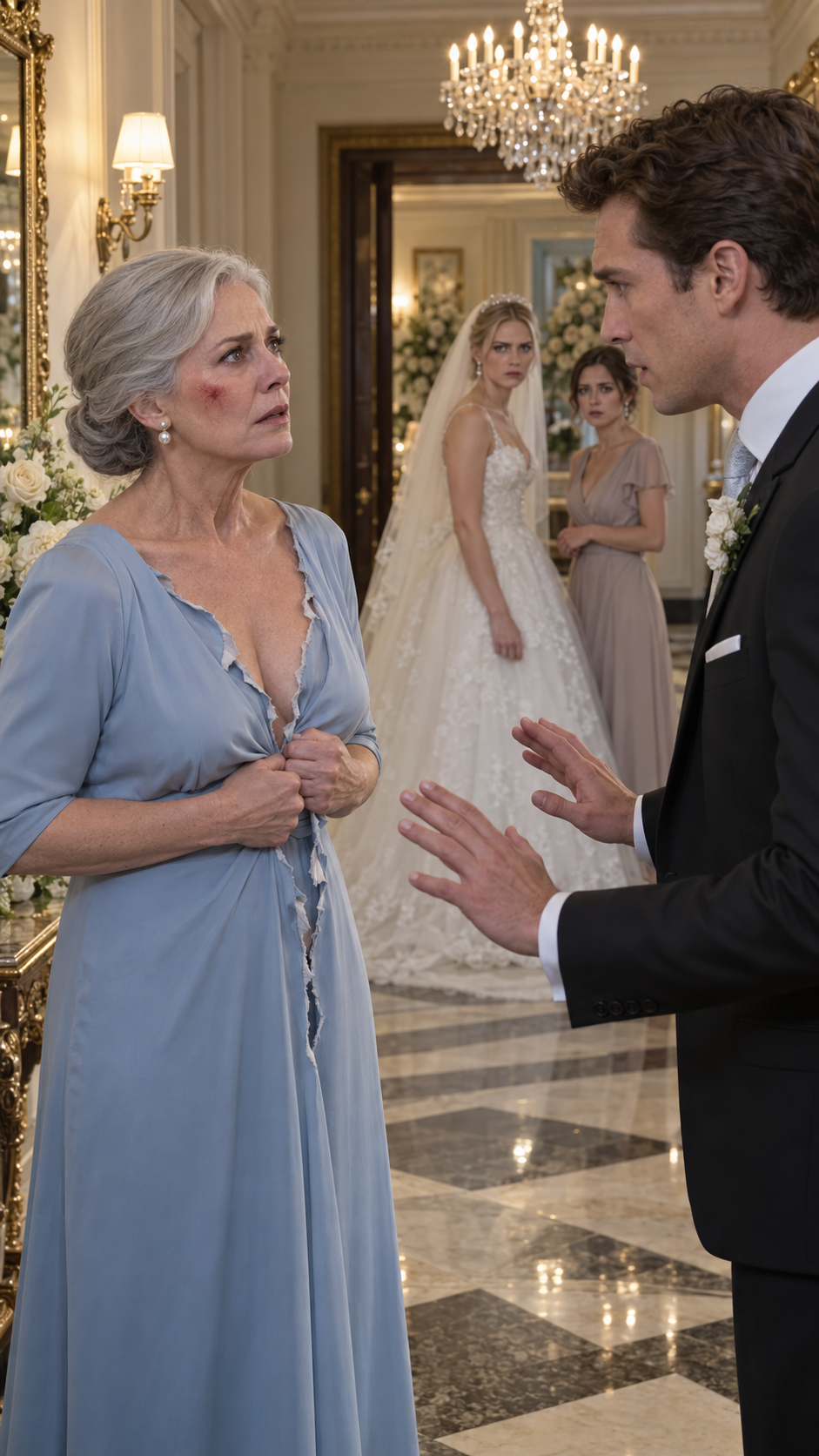
My future daughter-in-law slapped me across the face, grabbed the front of my pale blue gown, and tore it open fifteen minutes before my only son was supposed to get married.352
My future daughter-in-law slapped me across the face, grabbed the front of my pale blue gown, and tore it open fifteen minutes before my only son was supposed to get married. FIFTEEN MINUTES BEFORE MY SON’S WEDDING, HIS BRIDE SLAPPED ME—THEN THE COORDINATOR OPENED THE CONTRACT PART 1: THE SAFE PERSON TO HURT My future daughter-in-law slapped me across the face, grabbed the front of my pale blue go…
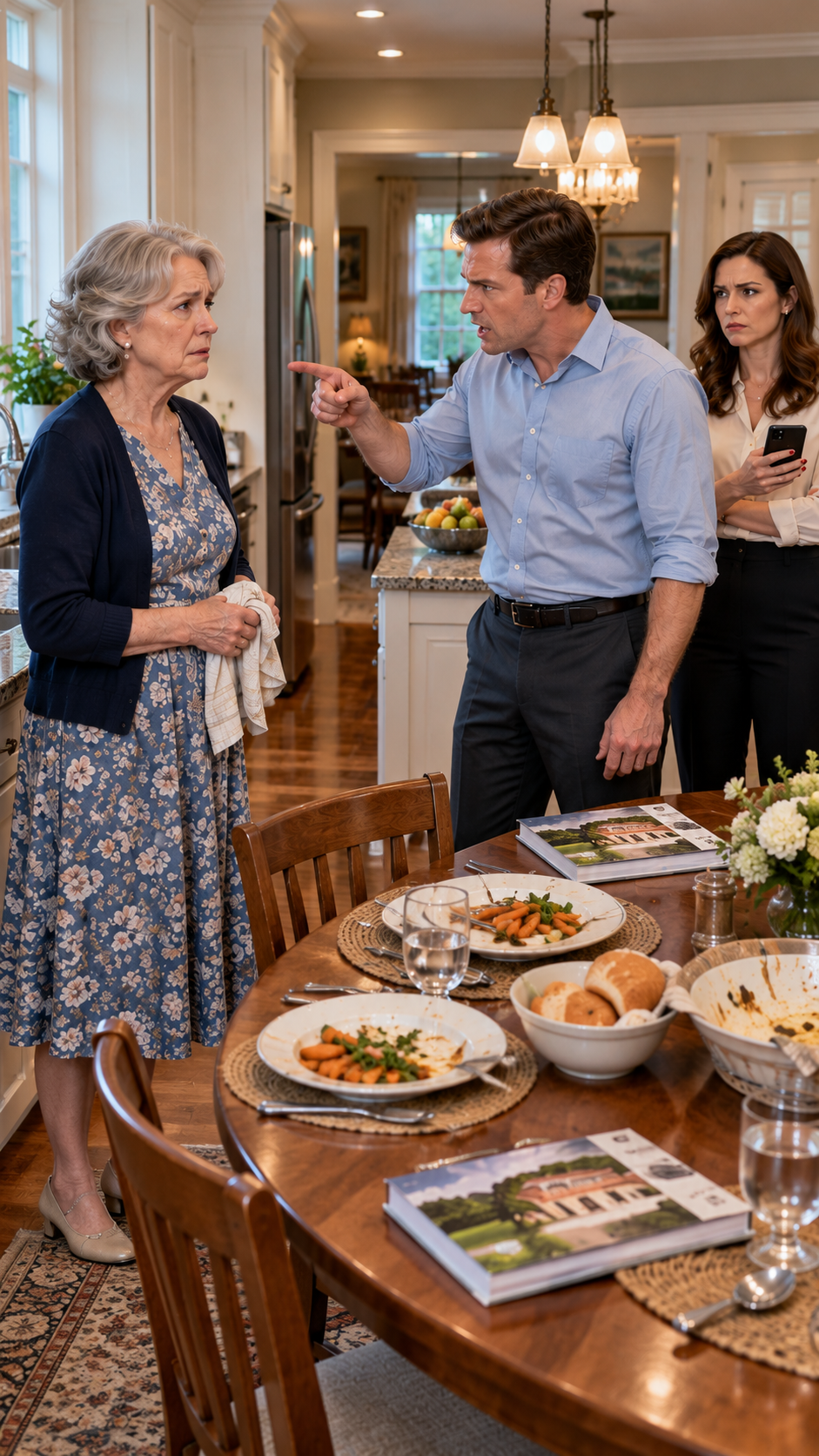
MY SON THREW ME OUT—THEN HENRY REVEALED WHO REALLY OWNED THE HOUSE.352
MY SON THREW ME OUT—THEN HENRY REVEALED WHO REALLY OWNED THE HOUSE PART 1: THE DAY MY SON CALLED IT HIS HOUSE “Get out of my house.” My son said those words while I was still wearing the faded floral dress I had cooked his Sunday dinner in. For three years, I had washed his clothes, cleaned his floors, packed his children’s lunches, sat beside their beds when they were sick, remembered every birth

Comments 0