The day my daughter-in-law announced that twenty-five people were coming to my house for Christmas, she smiled as though she were doing me a favor.
She didn’t ask.
She didn’t hesitate.
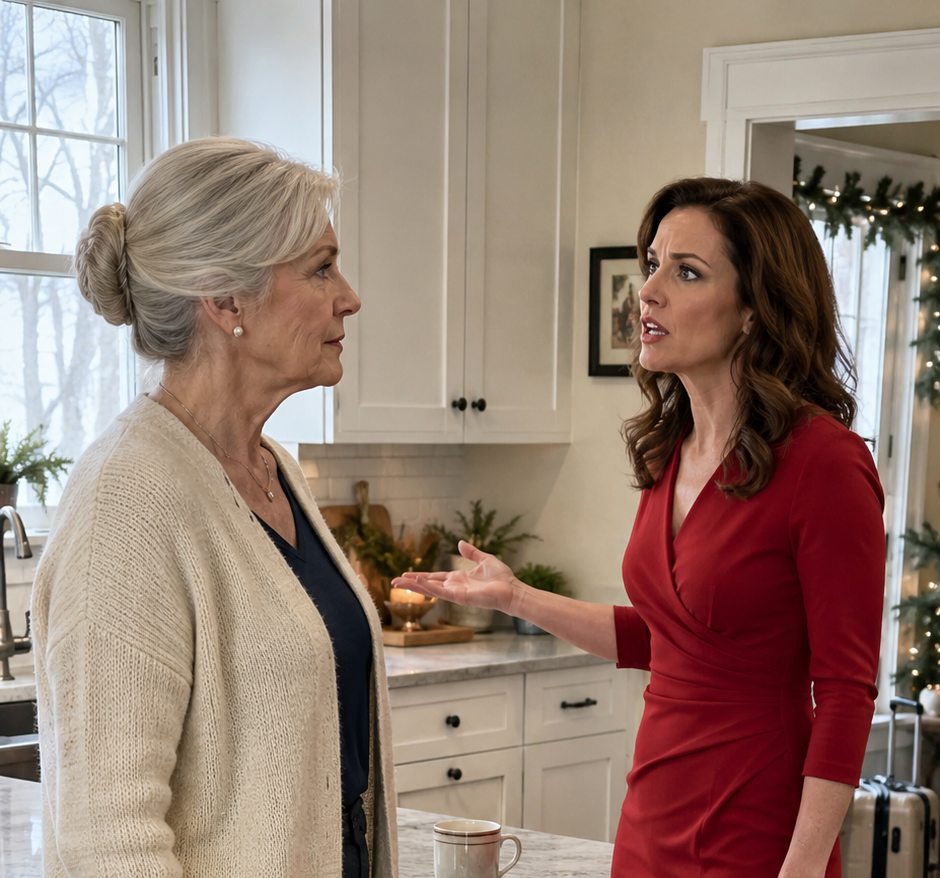
She simply stood in my kitchen, wearing an elegant crimson dress, tapping one manicured fingernail against my granite countertop, and declared, “Everyone’s excited. It’ll be wonderful.”
Then she looked around the room the way a realtor inspects a property before a sale.
As if it already belonged to her.
I smiled politely.
Then I said the six words that changed every one of our lives.
“I won’t be here for Christmas.”
The silence that followed was so complete that I could hear the old clock in my dining room ticking.
Whitney’s smile froze.
“…What?”
“I said,” I answered calmly, taking another sip of my coffee, “I won’t be here.”
For the first time in nearly ten years…
Whitney had absolutely nothing to say.
—
My name is Carolyn Beck.
I’m sixty-eight years old.
For thirty-three years I was the woman who made every holiday happen.
Not because anyone appreciated me.
Because everyone expected me.
Every Thanksgiving turkey.
Every Christmas dinner.
Every Easter brunch.
Every birthday cake.
Every family reunion.
Every extra blanket.
Every polished silver fork.
Every wrapped gift.
Every grocery bill.
Every overflowing sink full of dirty dishes after everyone else had gone home smiling.
I was never the guest.
I was the unpaid staff.
People complimented the decorations.
They praised the roast.
They admired the sparkling windows.
Then they thanked my son, Trevor, for “hosting.”
Trevor always smiled awkwardly.
Whitney accepted the compliments gracefully.
Meanwhile I was already washing pans.
Nobody noticed.
Eventually…
I stopped expecting them to.
—
Trevor hadn’t always been this way.
After my husband Daniel died from a heart attack fourteen years earlier, Trevor became my whole world.
He visited every weekend.
He fixed broken cabinets.
He shoveled my driveway.
He called every evening.
Then he married Whitney.
Nothing changed overnight.
It happened one tiny compromise at a time.
“Mom, Whitney prefers…”
“Mom, Whitney already promised…”
“Mom, can we just do it her way?”
Every sentence began with “Whitney.”
Eventually my opinions disappeared.
Then my choices.
Finally…
My home.
Whitney began volunteering it before speaking to me.
“We’ll use Mom’s house.”
“Mom has more room.”
“Mom loves hosting.”
No.
Mom hated hosting.
Mom simply loved her family enough to keep saying yes.
—
The first Christmas after Whitney married Trevor had actually been lovely.
She helped cook.
She washed dishes.
She laughed with me while frosting cookies.
I thought I’d gained a daughter.
Then her mother complimented my dining room.
Whitney smiled.
“Someday it’ll all be ours anyway.”
Everyone laughed.
I laughed too.
I shouldn’t have.
Because after that…
She stopped pretending.
—
Five years later I found myself standing barefoot at midnight, scrubbing roasting pans while Whitney posted photographs online.
“My favorite Christmas tradition ❤️ Family is everything.”
Thousands of likes.
Not one picture showed me.
I was standing just outside the frame.
Exactly where I’d always been.
—
The following summer I overheard something that settled into my heart like ice.
Whitney and Trevor were sitting on my back porch while they thought I was upstairs.
Whitney asked casually, “Have you thought about knocking down the kitchen wall after…”
She didn’t finish.
Trevor did.
“After Mom passes?”
Whitney answered quietly.
“We’d finally have our dream home.”
Dream home.
My home.
I stood motionless on the stairs.
Trevor didn’t correct her.
Didn’t say, “Hopefully not for many years.”
Didn’t defend me.
He simply said…
“It’ll cost a fortune.”
That hurt more than anything.
Not because they imagined life after me.
Everyone does eventually.
But because I realized…
They’d already moved into my future while I was still living in it.
—
Three weeks later I made an appointment with attorney Margaret Holloway.
She greeted me warmly.
“What brings you in, Carolyn?”
“I’d like to change everything.”
She blinked.
May you like

“Everything?”
“Everything.”
For two hours we reviewed every account.
Every deed.
Every insurance policy.
Every investment.
Every memory attached to them.
Margaret finally looked at me.
“May I ask why?”
I smiled sadly.
“I’d like my family to remember I was alive before they inherit me.”
—
Originally Trevor received everything.
The house.
My savings.
My lake property.
The small orchard my parents left me.
Instead…
I created a trust.
Margaret carefully explained every option.
“Do you want to leave everything elsewhere?”
“No.”
“I still love my son.”
“So what’s changing?”
“I want him to earn what he’s already counting.”
She nodded.
Then we built something unusual.
Not cruel.
Not impossible.
Just…
honest.
—
Christmas arrived wrapped in icy winds and gray skies.
Three days before the holiday Whitney entered without knocking.
She never knocked anymore.
“Carolyn!”
I looked up from wrapping a single gift.
“My knitting club exchange.”
She barely glanced at it.
“So everyone is coming.”
“I heard.”
“Twenty-five people.”
“Wonderful.”
“You’ll need another folding table.”
“I won’t.”
She frowned.
“What do you mean?”
“I won’t be here.”
That’s where everything began.
—
She laughed.
“No, seriously.”
“I am serious.”
“You can’t leave.”
“I can.”
“But Christmas is at your house.”
“Yes.”
“So…”
“So enjoy it.”
Whitney blinked repeatedly.
“You’ll cook before you leave?”
“No.”
“At least decorate?”
“No.”
Her voice sharpened.
“Carolyn.”
“Whitney.”
“People are counting on you.”
“No.”
I met her eyes.
“They’re counting on someone they stopped seeing years ago.”
—
The front door opened.
Trevor walked inside carrying his work bag.
He immediately sensed something was wrong.
“What’s happening?”
Whitney answered first.
“Your mother says she isn’t hosting Christmas.”
Trevor laughed uncertainly.
“What?”
“I’ve rented a small cabin by the ocean.”
His eyebrows rose.
“For Christmas?”
“For myself.”
“You’ve never missed Christmas.”
“I’ve never celebrated one either.”
—
Whitney crossed her arms.
“This is selfish.”
The word hung between us.
Selfish.
After thirty-three years.
I almost smiled.
“Perhaps.”
Trevor rubbed his forehead.
“Mom…”
“No.”
He looked surprised.
“I haven’t heard what I was going to say.”
“I’ve heard it for years.”
He fell silent.
—
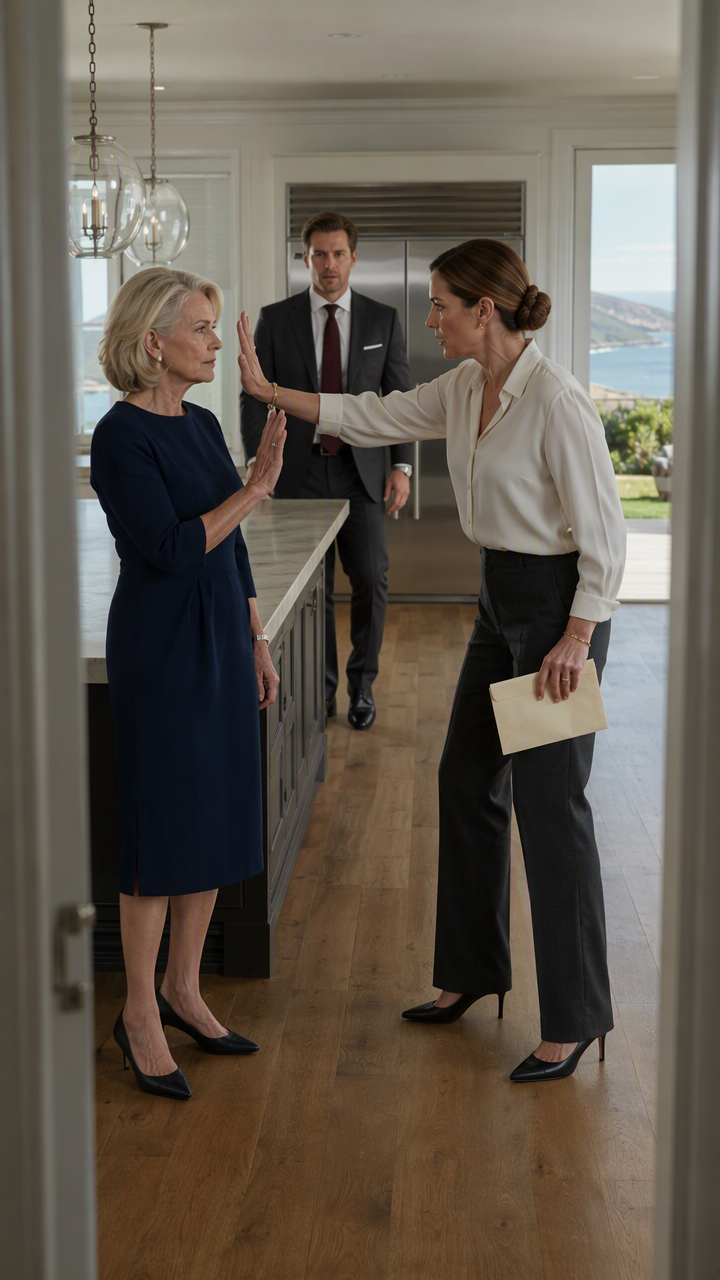
Then Whitney noticed the cream-colored envelope beside my coffee mug.
Attorney Holloway’s name was printed neatly across the corner.
Her confidence faltered.
“What’s that?”
“My paperwork.”
“What paperwork?”
I slid it toward myself.
“Personal paperwork.”
Trevor stared.
“Mom…”
“I updated my estate plan.”
Whitney’s face lost color.
—
“What exactly did you change?”
I looked directly at her.
“Enough.”
—
That evening they left furious.
Trevor called three times.
I didn’t answer.
Whitney texted sixteen messages.
Half guilt.
Half anger.
One simply read:
You are punishing everyone.
I stared at it for several minutes.
Then deleted it.
—
Christmas morning arrived peacefully.
No alarms.
No frantic cooking.
No overflowing sink.
I drove three hours to a quiet cottage overlooking the Atlantic.
The owner had decorated it with white lights and evergreen branches.
A tiny fireplace crackled.
Snow drifted across empty dunes.
I made myself pancakes.
Burned the first batch.
Laughed.
Nobody complained.
Nobody expected perfection.
I spent the afternoon reading a mystery novel beneath a blanket.
It was…
the happiest Christmas I’d experienced since Daniel was alive.
—
Meanwhile…
My phone remained silent.
Until 8:43 that evening.
Trevor called.
His voice sounded exhausted.
“Mom.”
“Hello.”
“We need to talk.”
“I imagine we do.”
—
Apparently the dinner had been a disaster.
The turkey remained half frozen.
Nobody knew how long stuffing should bake.
Three casseroles burned.
Children cried.
Someone spilled cranberry sauce across Whitney’s cream rug.
Her brother accidentally broke a dining chair.
Her aunt clogged the guest bathroom.
Nobody cleaned.
Everyone assumed someone else would.
By midnight…
Whitney was standing alone washing dishes.
Exactly where I had stood every Christmas.
—
Trevor whispered quietly.
“I never noticed.”
“No.”
“I should have.”
“Yes.”
“I’m sorry.”
I believed him.
But apology wasn’t enough.
Not anymore.
—
When I returned home two days later, Trevor was waiting on my porch.
Alone.
He looked older.
He held a toolbox.
“The porch railing was loose.”
“I know.”
“I fixed it.”
“Thank you.”
He swallowed.
“Can we start over?”
“I’d like that.”
Then he asked the question he’d clearly rehearsed.
“Can I know what changed in the will?”
I smiled gently.
“You’ll know someday.”
—
Whitney refused to speak to me for weeks.
Then months.
She complained to relatives.
Some agreed with her.
Others quietly admitted they’d assumed Whitney had been helping all these years.
She hadn’t.
Not really.
Truth spreads slowly.
But it spreads.
—
Spring arrived.
Then summer.
One Saturday Trevor appeared unexpectedly carrying grocery bags.
“For dinner.”
“You cooking?”
He grinned nervously.
“I’m trying.”
The meal was terrible.
We laughed anyway.
When dinner ended…
He reached for the dishes automatically.
Without asking.
Without being told.
That tiny moment healed something inside me.
—
Whitney never apologized.
Instead she became polite.
Coldly polite.
She visited less often.
When she did, she watched my house carefully.
Measured rooms with her eyes.
I noticed.
I said nothing.
—
One rainy October afternoon Attorney Holloway called.
“The annual trust review is ready.”
I drove into town.
She poured tea.
“Everything remains exactly as you requested.”
“Good.”
She hesitated.
“I’ve never drafted one quite like yours.”
I smiled.
“I hoped you hadn’t.”
—
Because the trust contained one condition nobody knew.
Not Trevor.
Not Whitney.
No one.
It wasn’t about money.
Or age.
Or marriage.
Or grandchildren.
It was something Margaret initially warned might create controversy.
I insisted.
“If they truly love each other,” I told her, “it won’t matter.”
She finally agreed.
—
Another Christmas approached.
This time nobody volunteered my house.
Trevor asked.
Actually asked.
“Would you like to host?”
“No.”
“Would you like us to?”
“No.”
“So…”
“So let’s rent the community hall.”
Everyone contributes.
Everyone cooks.
Everyone cleans.
Whitney looked horrified.
Then realized nobody supported her objection.
The hall became our new tradition.
—
To everyone’s surprise…
It worked beautifully.
Children decorated cookies.
Teenagers washed dishes.
Adults folded tables.
Nobody collapsed from sharing responsibility.
Imagine that.
—
Three years passed.
Life became gentler.
Trevor visited often.
Whitney remained distant but civil.
Then everything changed again.
I was diagnosed with an aggressive heart condition.
Not immediately fatal.
But serious enough.
Margaret suggested updating final instructions.
I agreed.
—
One snowy February evening I invited Trevor and Whitney over.
“I’ve arranged everything.”
Trevor looked stricken.
“Mom…”
“I’m not dying tonight.”
I smiled.
“But someday.”
Whitney sat unusually quietly.
Perhaps for the first time…
She looked frightened.
Not about the house.
About mortality.
—
I passed away peacefully eleven months later in my sleep.
The funeral overflowed.
Neighbors came.
Former coworkers.
Church friends.
Women from my knitting club.
People Trevor hadn’t realized knew me.
One after another they described kindnesses I’d never mentioned.
Meals delivered anonymously.
Scholarships secretly funded.
Hospital visits.
Quiet generosity.
Trevor cried harder with every story.
He whispered, “I didn’t know.”
No.
He hadn’t.
—
A week later the family gathered in Margaret Holloway’s office.
Whitney wore black.
Trevor held her hand.
Margaret opened the trust.
She began reading.
“The estate of Carolyn Beck shall remain intact until the following condition has been fulfilled.”
Whitney leaned forward.
Trevor looked confused.
Margaret continued.
“The beneficiaries must jointly complete one task.”
Whitney relaxed.
“That’s all?”
Margaret nodded.
Then continued reading.
—
“For one full calendar year, the beneficiaries shall operate Carolyn’s Community Table.”
Silence.
Trevor frowned.
“What’s that?”
Margaret smiled softly.
“It doesn’t exist yet.”
Whitney looked puzzled.
“It does now.”
—
Carolyn had left detailed instructions.
Her savings would purchase an abandoned downtown building.
The building would become a free community kitchen.
Every evening it would provide hot meals for lonely seniors, struggling families, veterans, and anyone unable to afford dinner.
Trevor and Whitney personally had to volunteer there.
Not donate money.
Not hire employees.
They themselves.
Every week.
For one entire year.
Cooking.
Serving.
Cleaning.
Washing dishes.
Greeting strangers.
Listening.
Working together.
If they completed the year…
They inherited everything.
If they quit…
The entire estate transferred automatically to the city charity foundation.
Whitney stood speechless.
Trevor stared at the papers.
“She…she planned all this?”
Margaret nodded.
“Years ago.”
—
Whitney whispered bitterly, “She manipulated us.”
Margaret looked directly at her.
“No.”
She slid one final sealed envelope across the table.
“She anticipated you might think that.”
Whitney opened it.
Inside was Carolyn’s handwritten letter.
—
*”If you’re reading this, then I’ve already had my final Christmas.”*
*”I could have left you money.”*
*”Instead, I’m leaving you an opportunity to become the people I always believed you could be.”*
*”A house can shelter a family.”*
*”Service creates one.”*
*”If one year of helping others feels too expensive, then perhaps you never wanted my home.”*
*”But if you finish…”*
*”You’ll understand why I never regretted a single meal I cooked.”*
*”Only the silence that followed.”*
—
Whitney quietly folded the letter.
For several minutes nobody spoke.
Finally Trevor stood.
“We’re doing it.”
Whitney looked at him.
“You can’t be serious.”
“I’m completely serious.”
“And if I refuse?”
Trevor answered gently.
“Then I lose the house.”
Whitney waited.
He continued.
“But I’d rather lose the house than lose what Mom spent thirty-three years trying to teach us.”
—
The kitchen opened that spring.
At first Whitney hated every minute.
The heat.
The dishes.
The endless cleanup.
The tired faces.
The gratitude that couldn’t be purchased.
One afternoon an elderly woman hugged her after receiving a bowl of soup.
“I haven’t eaten with another person in six days.”
Whitney stood frozen.
Later she cried alone in the pantry.
Not because she was tired.
Because for the first time…
She understood what hospitality actually meant.
—
Months passed.
Trevor learned recipes from old volunteers.
Whitney organized food drives.
Children drew holiday cards for strangers.
The kitchen became famous across the county.
Local businesses donated produce.
Teenagers volunteered after school.
Retirees baked bread.
Nobody was paid.
Nobody wanted to leave.
—
Exactly one year later Margaret arrived carrying the final paperwork.
“You’ve fulfilled every condition.”
Trevor smiled.
Whitney looked around the bustling dining room.
Families laughed together.
Steam rose from fresh soup.
An old veteran played piano in the corner.
Someone hung a framed photograph above the serving counter.
It was Carolyn.
Smiling.
Apron covered in flour.
Hands busy.
Eyes joyful.
Whitney stared at it for a very long time.
Then she turned to Margaret.
“I don’t want to close this place.”
Margaret smiled knowingly.
“You don’t have to.”
Whitney shook her head.
“I don’t mean because of the inheritance.”
She looked around the room.
“I mean…ever.”
—
Margaret handed Trevor the deed to Carolyn’s house.
He accepted it.
Then quietly placed it back on the table.
“I have another idea.”
Within six months the house had become something no one expected.
Not a luxury renovation.
Not a vacation property.
Not an investment.
Trevor donated it to expand Carolyn’s Community Table into a shelter for elderly people who had nowhere to spend holidays.
The bedrooms became guest suites.
The dining room served free Christmas dinners.
The kitchen never stopped cooking.
Every December twenty-five strangers gathered around Carolyn’s old table.
Every one of them left feeling like family.
And only then did Whitney discover the final surprise Carolyn had hidden inside the trust.
Years before changing her will, Carolyn had quietly purchased the abandoned building that became the community kitchen for almost nothing.
Within a decade, the surrounding neighborhood flourished, businesses returned, and the property became worth far more than the family home had ever been. The inheritance Trevor eventually received was substantially larger because Carolyn had invested in compassion before anyone realized it would transform the town.
The greatest gift she left behind was never the money.
It was the lesson that the surest way to inherit a home is to deserve one first. And by the time Trevor and Whitney finally understood that truth, they no longer cared which building legally belonged to them—because Carolyn had given them something infinitely more valuable: the ability to build a family wherever they chose to serve.