My daughter-in-law invited twenty-five people to spend Christmas in my house without asking me.
Not suggested. Not requested. Invited.
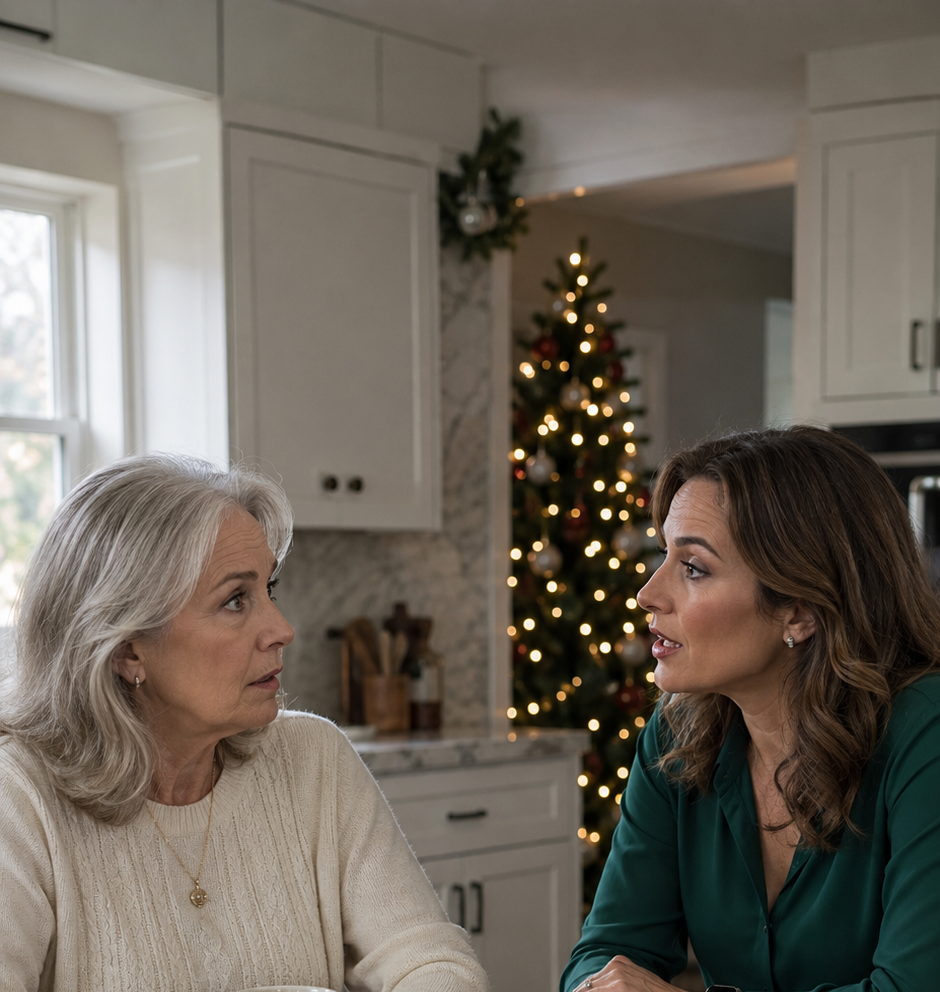
She told me over coffee, smiling like she had just solved a minor scheduling problem.
“Your whole family is coming here for Christmas,” she said brightly. “It’s only twenty-five people.”
Only.
I remember staring at her across my kitchen table with my hands around a mug I suddenly did not want to drink from. The tree lights were blinking in the living room. Walt’s old wooden angel sat on the mantel with one wing chipped from 1987, when Andrew knocked it off a shelf with a Nerf ball.
For one peaceful minute before Bree walked in, the house had felt like mine.
Then she reminded me what everyone else had turned it into.
A hotel. A restaurant. A free holiday service run by a woman they called Mom when they wanted comfort and treated like staff when they wanted convenience.
My name is Ruth Callahan. I am sixty-eight. Walt and I bought this house in Delaware County, Ohio, in 1984, when it had bad wiring and a dirt basement and a maple out front that was shorter than I was. Walt rewired it himself over two winters. I painted every room in it twice.
He died four years ago in February, in the downstairs bedroom, in the afternoon, holding my hand and complaining about the Browns.
Since then, I have hosted five Christmases.
Let me tell you what hosting means, since nobody in my family has ever needed to know.
It means starting on December 18. It means two turkeys, because Bree’s father does not eat dark meat and her mother does not eat white, and a ham because Andrew’s cousins expect one. It means the twenty-two-pound bird that I lift alone into a wall oven at a height that was designed in 1984 for a woman who was not sixty-eight.
It means four hundred and ten dollars at Kroger, and another ninety at the liquor store because somebody always wants the good bourbon, and eighty dollars in emergency gift cards wrapped in advance for the three or four people who will “forget” that I exist as a recipient.
It means seventeen sets of sheets. It means buying towels in September. It means being awake at 6:40 on Christmas morning because someone’s toddler is awake, and being awake at 12:50 on Christmas night because someone’s dishes are not.
Five years running, I scrubbed roasting pans after midnight while the laughter came through the wall from the living room. I could tell you which floorboard in that hallway creaks. I have listened to my family enjoy Christmas through drywall more times than I have sat down at my own table.
Nobody ever asked if I was tired.
Nobody ever asked what Christmas looked like for me.
They just arrived.
So when Bree leaned back in my chair and added, “You’ll handle the cooking, cleaning, and hosting like always,” something inside me went perfectly still.
Like always.
That was the part that cut deepest. Not the guests. Not the work. The assumption.
I looked at her carefully. Her hair was freshly done. Her nails tapped my table. She was completely relaxed, because in her mind there was no possibility that I would say no. Not a small possibility she had considered and dismissed. No possibility at all.
I smiled.
A real one.
“Perfect,” I said.
Her shoulders loosened. “Great. I knew you’d—”
“Because I won’t be here.”
The room dropped.
Her smile froze, then slid off her face. “What?”
I put my cup down slowly. “I leave on the twentieth. You and your family are welcome to cook, clean, decorate, and host yourselves.”
She blinked like I had spoken a language she had never studied. Then she laughed once, sharp and nervous.
“Wait. You’re joking.”
“No.”
“But everyone already booked tickets.”
“You probably should have asked before inviting twenty-five people into my home.”
Her mouth opened and no sound came out. For six years she had only known the version of me who adjusted, absorbed, and apologized for needing anything. She had never met the woman sitting across from her.
“But Christmas is supposed to be here,” she said.
“According to who?”
“You’ve always hosted.”
“Yes,” I said. “And I’ve always been treated like unpaid staff.”
Her eyes widened. Offended, not because I was wrong, but because I had finally said it out loud.
Then she crossed her arms and muttered the sentence that changed the temperature of the entire house.
“This house will be ours one day anyway.”
For a second I thought I had misheard her.
Then I realized I hadn’t.
May you like
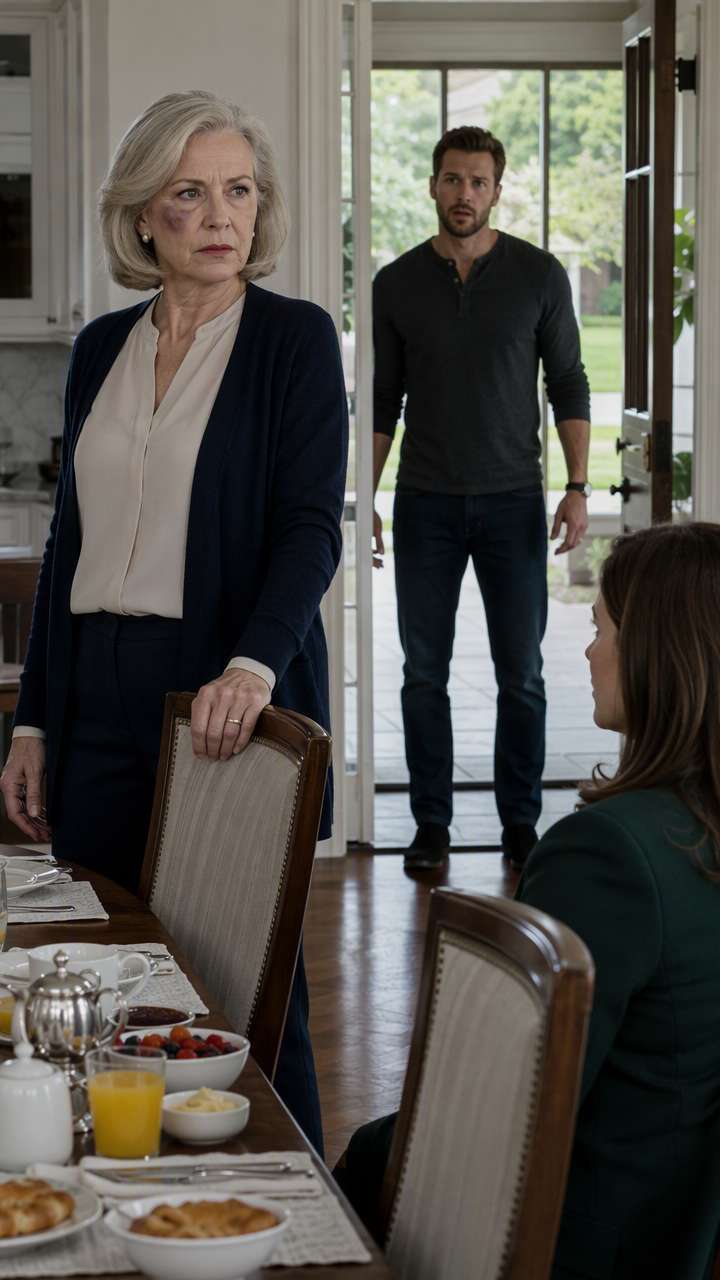
The words sat between us, ugly and honest.
And suddenly every ignored boundary made sense. Every suitcase dropped in my hallway without warning. Every remark about my “old-fashioned” kitchen and my “dated” guest rooms and how the downstairs bedroom was “just sitting there.” The renovation ideas. The way she measured the pantry with her eyes.
They had not been treating my home like a place I built with my husband over four decades.
They had been treating it like property in waiting.
And I was the woman standing in the way.
I expected anger to rise in me.
It didn’t. What came instead was clarity. Cold, clean, and final.
The front door opened and Andrew came into the kitchen. He stopped when he saw our faces.
“What happened?”
Bree exhaled like the cavalry had arrived. “Your mother is refusing to host Christmas.”
My son turned to me wearing the expression I know too well. Confusion first. Then irritation. Then expectation.
“Mom. Come on. People have tickets.”
“I have plans.”
“What plans?”
And there it was. Not where are you going. Not what plans, that sounds nice. What plans, in the tone of a man asking a child to justify a lie.
Neither of them had noticed the travel folder on the counter, six inches from Bree’s elbow. Neither of them knew about the tickets. Neither of them knew I had been preparing since September.
And neither of them knew that Christmas was not the real surprise.
The real surprise was what I had already done with the house.
Let me back up.
In August, I had a small thing happen to my heart. Atrial fibrillation. Not dangerous, entirely manageable, and I spent one night at Riverside for observation. I did not tell Andrew until the next afternoon, and when I did, his first question was whether I had updated my paperwork.
Not are you okay.
Have you updated your paperwork.
I said I would look into it. Then I hung up and sat in my kitchen for a very long time.
In September I did three things.
The first was that I went to see a woman named Gwen Adeyemi, who does estate work in Worthington, and I asked her a question that had been sitting in my chest since Walt died.
I asked: does a house have to go to a child?
She said no. She said it more gently than that, and she asked me a lot of questions, and at the end of ninety minutes she said something I have thought about every day since.
“Ruth, you keep saying they’ll get the house. Has anyone in your family ever asked you what you want to do with your life? Not your estate. Your life.”
I could not answer her.
The second thing I did was book a flight.
Three weeks in Portugal. Lisbon for eight days, then a train down to a town called Tavira where my friend Marguerite has an apartment she rents cheap to people she likes. Departing December 20. Returning January 4.
Walt and I had talked about Portugal for thirty years. We had a jar. We used the jar in 1996 for a transmission, and in 2003 for Andrew’s wedding, and in 2011 for a roof.
The jar is on my dresser. It is empty. I kept it.
The third thing I did was put the house on the market. Quietly. No sign in the yard. An agent named Beth who understood the words “no sign in the yard.”
We had an offer in eleven days from a couple named the Okafors, who have two small children and who walked through my kitchen and did not say a single word about updating it. The wife, Ifeoma, stood at the window over the sink for a long moment and said, “You can see the whole backyard from here. Whoever put that window in was thinking about somebody.”
Walt put that window in. In 1991. Because I said I wanted to watch Andrew in the yard while I did dishes.
I accepted their offer that night.
Closing was set for January 8.
So when Bree told me twenty-five people were coming to my house for Christmas, she was, technically, incorrect in more ways than she knew.
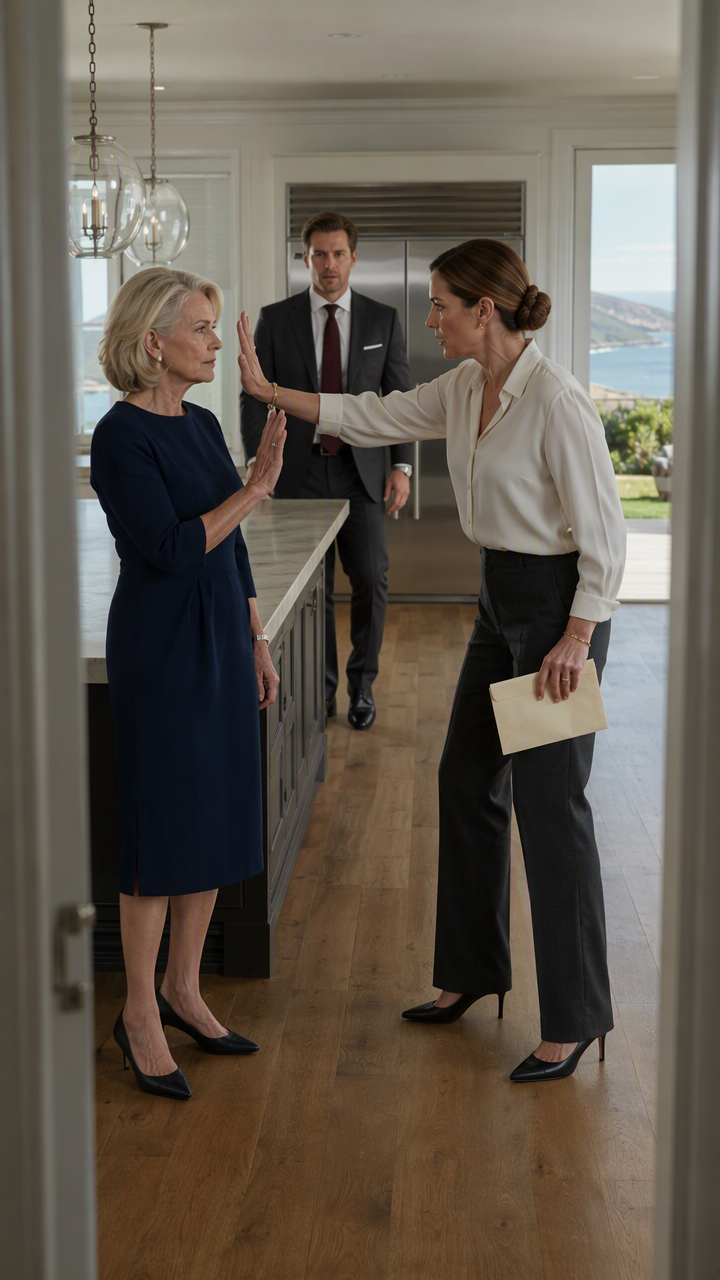
Andrew stood in my kitchen and said, “Mom, what plans,” and I picked up the travel folder and handed it to him.
He opened it. He looked at the itinerary for probably fifteen seconds.
“Portugal? Alone?”
“Yes.”
“For three weeks?”
“Yes.”
Bree said, “You can’t be serious. During Christmas?”
“I’ve done twenty-two Christmases in this kitchen,” I said. “Forty-one if you count the ones with Walt. I’m going to spend one of them somewhere where nobody knows what I’m good at.”
Andrew set the folder down. And then my son said the thing that finished it.
“This is manipulative. You’re doing this to make a point.”
I looked at him for a long moment.
“Andrew,” I said. “Do you know what I ate last Christmas?”
He blinked.
“I ate standing up, at the counter, at ten past four, off a paper plate, because there were no chairs left. Turkey and one roll. Your aunt Carol took a picture of the table and posted it and wrote ‘family is everything,’ and I’m not in the picture because I was in the kitchen carving the second bird.”
Bree said, “That’s not our fault. You could have sat down.”
“Where?”
Neither of them answered.
Then I said, “I’m going to tell you both something, and then I’m going to ask you to leave my house, and I want you to understand I’m not being dramatic. I just want to say it in my own kitchen while it’s still my kitchen.”
That last phrase caught. I watched it catch on Andrew’s face.
“What does that mean,” he said.
“It means the house sold in September. Closing is January eighth. The buyers have two children and they’re keeping the maple.”
I have never seen two people go quiet so fast.
Bree recovered first, and what came out of her was not sadness. It was arithmetic in a raised voice.
“You sold it? Without telling us? That was our—”
She stopped.
She actually stopped herself, halfway through the word, and I watched her realize what the rest of the sentence was going to be, and I watched her decide not to say it, about nine seconds too late.
“Say it,” I said.
She didn’t.
Andrew said, “Mom, where are you going to live?”
Which, I want to be fair, was a better question than his wife’s. It was the first thing he had asked about me in a very long time.
“I bought a place in Granville,” I said. “Two bedrooms. A porch. Four blocks from Ellen.”
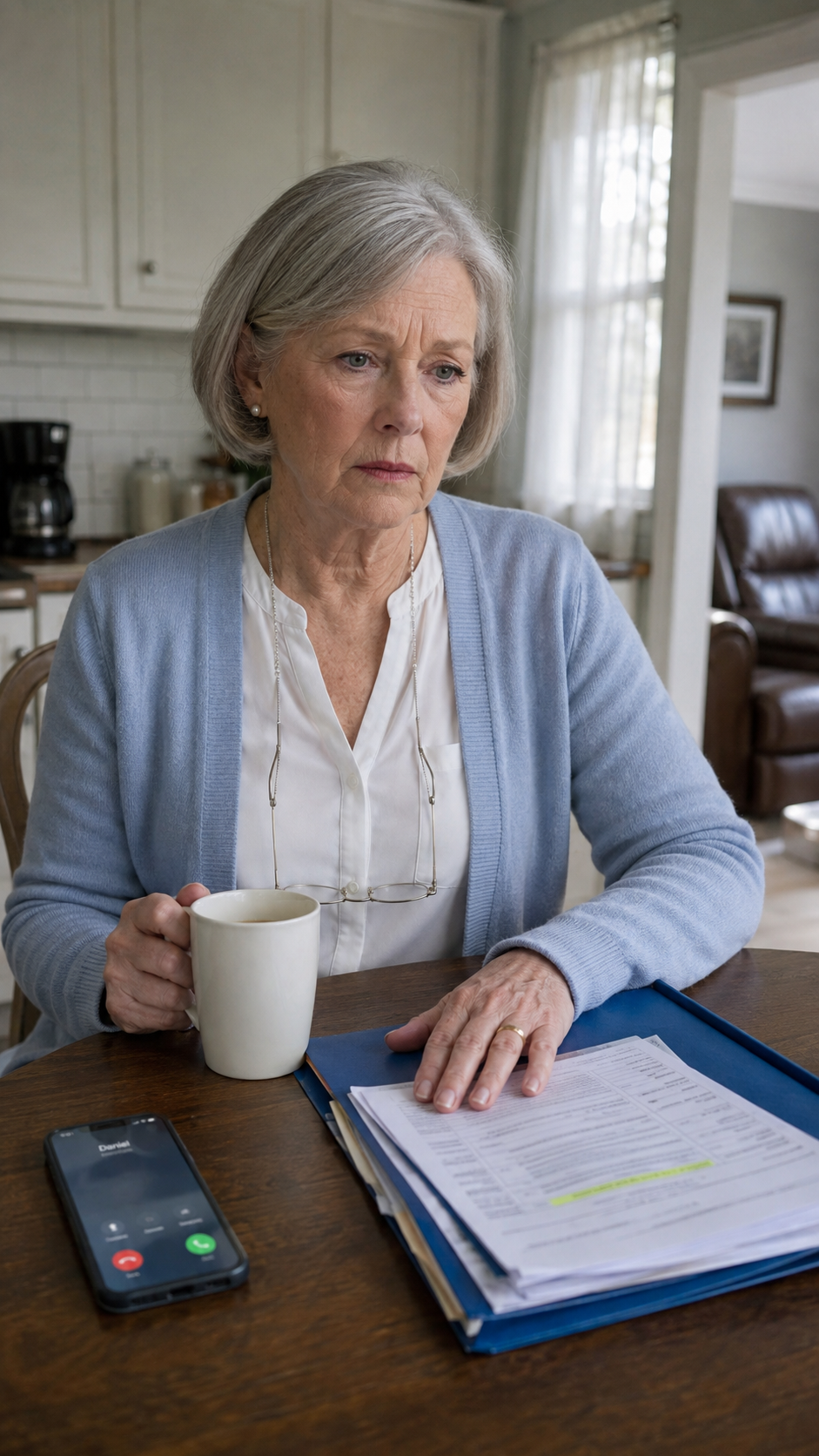
THE BLUE FOLDER
“That old woman is only useful when the bills are due.” My daughter-in-law said it with a laugh. My son laughed too. I was three steps away at my own kitchen sink, rinsing the dinner plates they had just eaten from. Warm soap covered my hands, but everything inside me went cold. Lisa thought the running water hid her voice. It didn’t. My name is Nancy Whitfield. I am sixty-eight years old and I li…
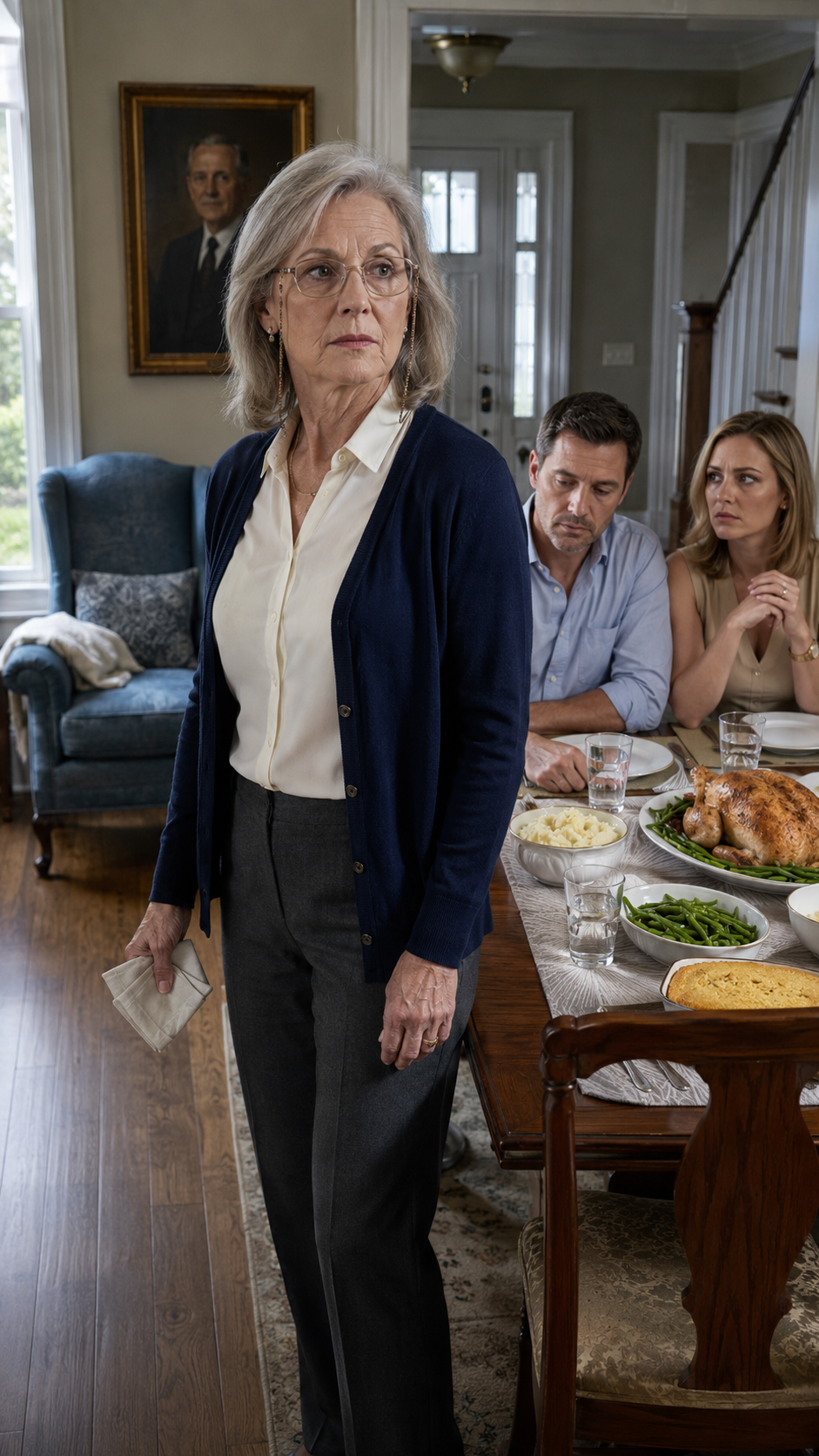
THREE WHITE ENVELOPES
They tried to push me out of my own home over Sunday lunch, while chewing the roast chicken I had cooked for them. My daughter-in-law, Lauren, smiled like she was offering kindness instead of exile. “Helen, senior living could be wonderful. Safe. Comfortable. Less responsibility.” Her mother, Denise, nodded beside her, already picturing my bedroom empty. Then my son Mark lowered his fork and said,…
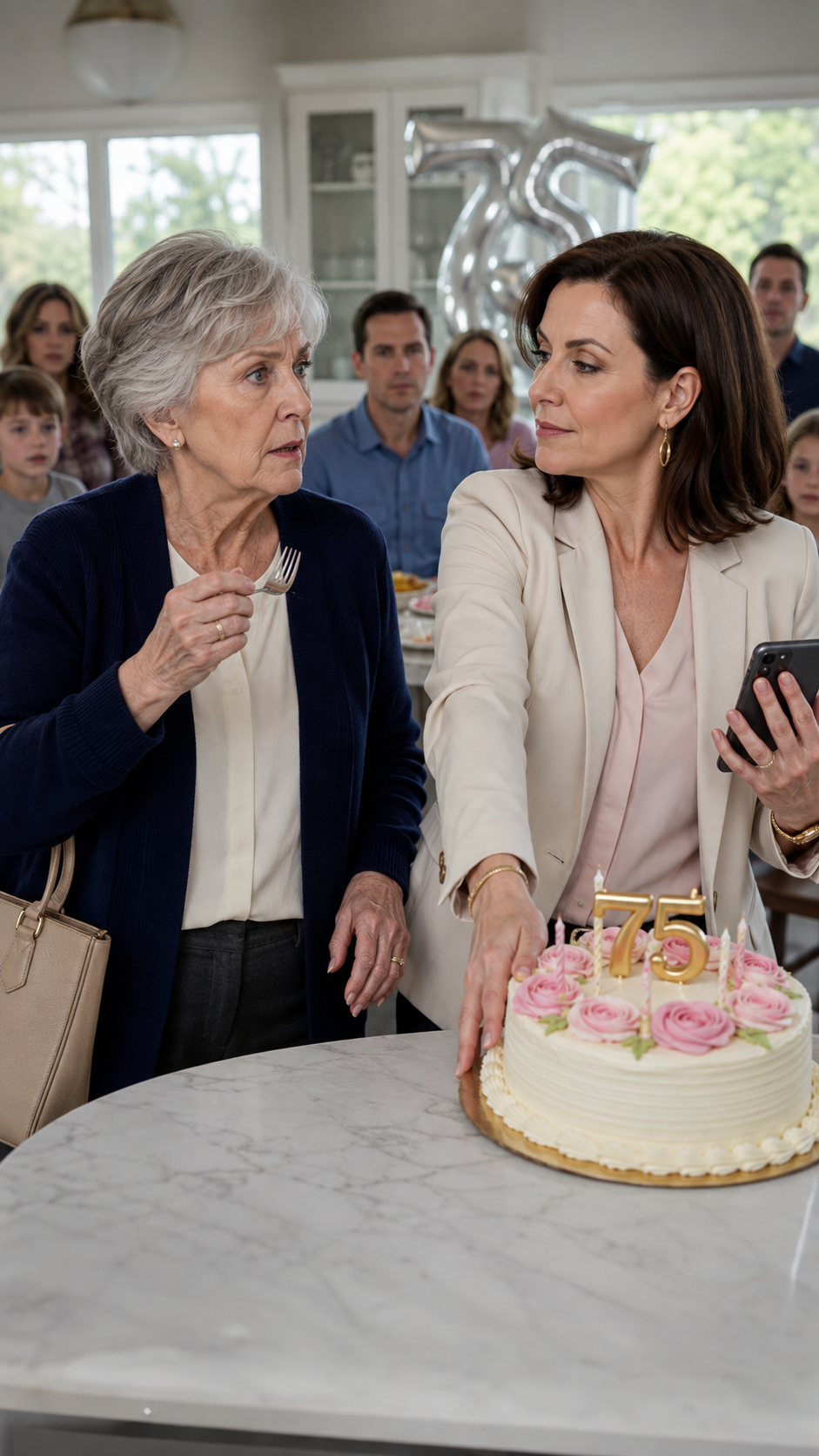
COUNTING MY DAYS
“You’re counting your days anyway,” Tina said, sliding my birthday cake away from my fork. “Let the kids have it first.” For one second, the whole kitchen went silent. Then they laughed. I stood beside the island in my son’s house with my hand still lifted and my fork hovering over empty air. The cake was vanilla with pink frosting roses and a gold 75 tucked between the candles. I knew every detai…
THE KEYCHAIN WAS A LIE
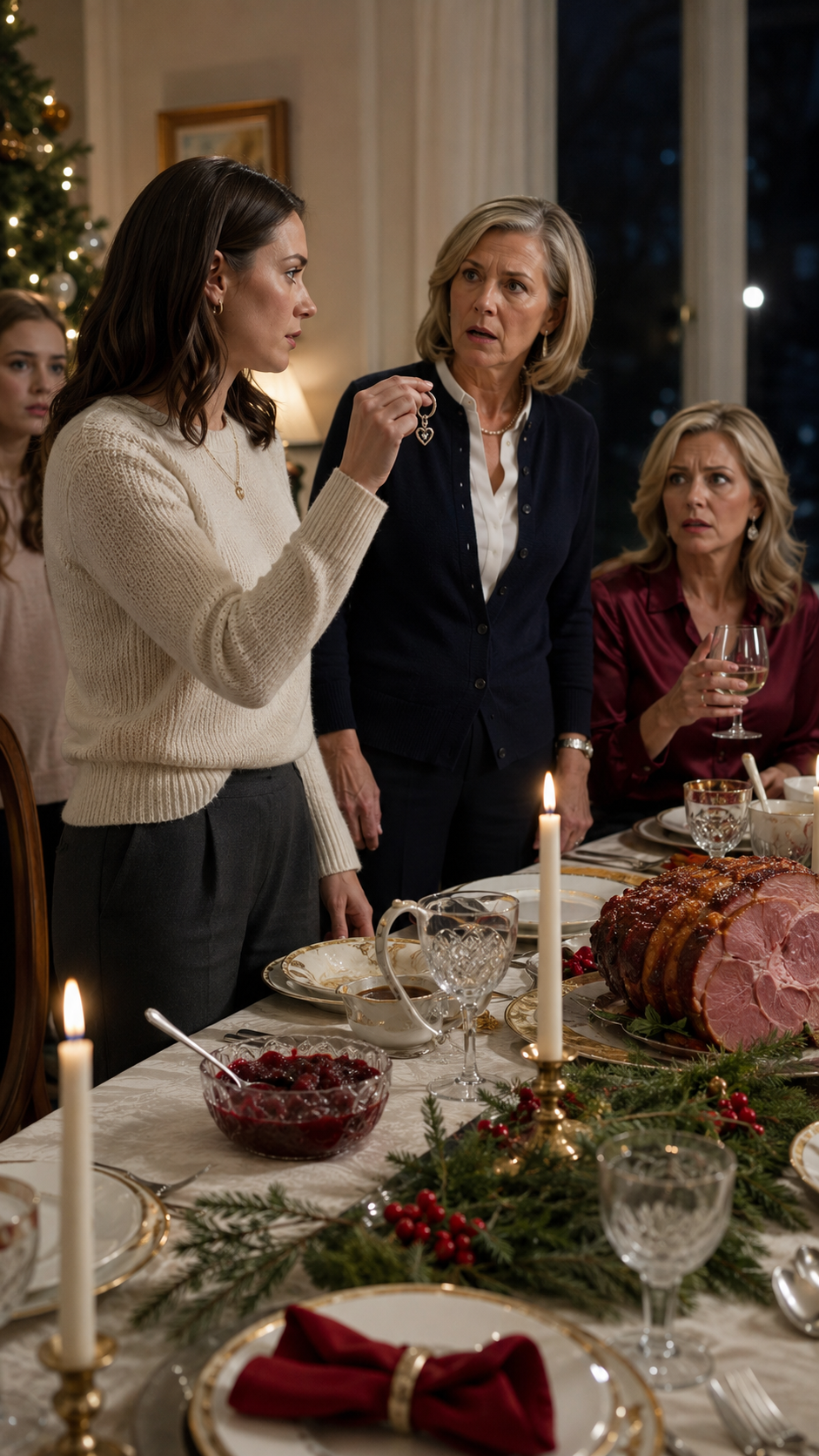
At Christmas dinner, I thanked my aunt for a cheap silver keychain, and she looked at me like I had just exposed a crime. Then she said, “Lydia, sweetheart. I didn’t send you a keychain. I bought you an apartment.” For one second, the whole dining room froze. My father’s carving knife hovered over the Christmas ham. My stepmother Linda’s perfect holiday smile went stiff. And my half-sister Emma sa…
TO KNOWING YOUR PLACE
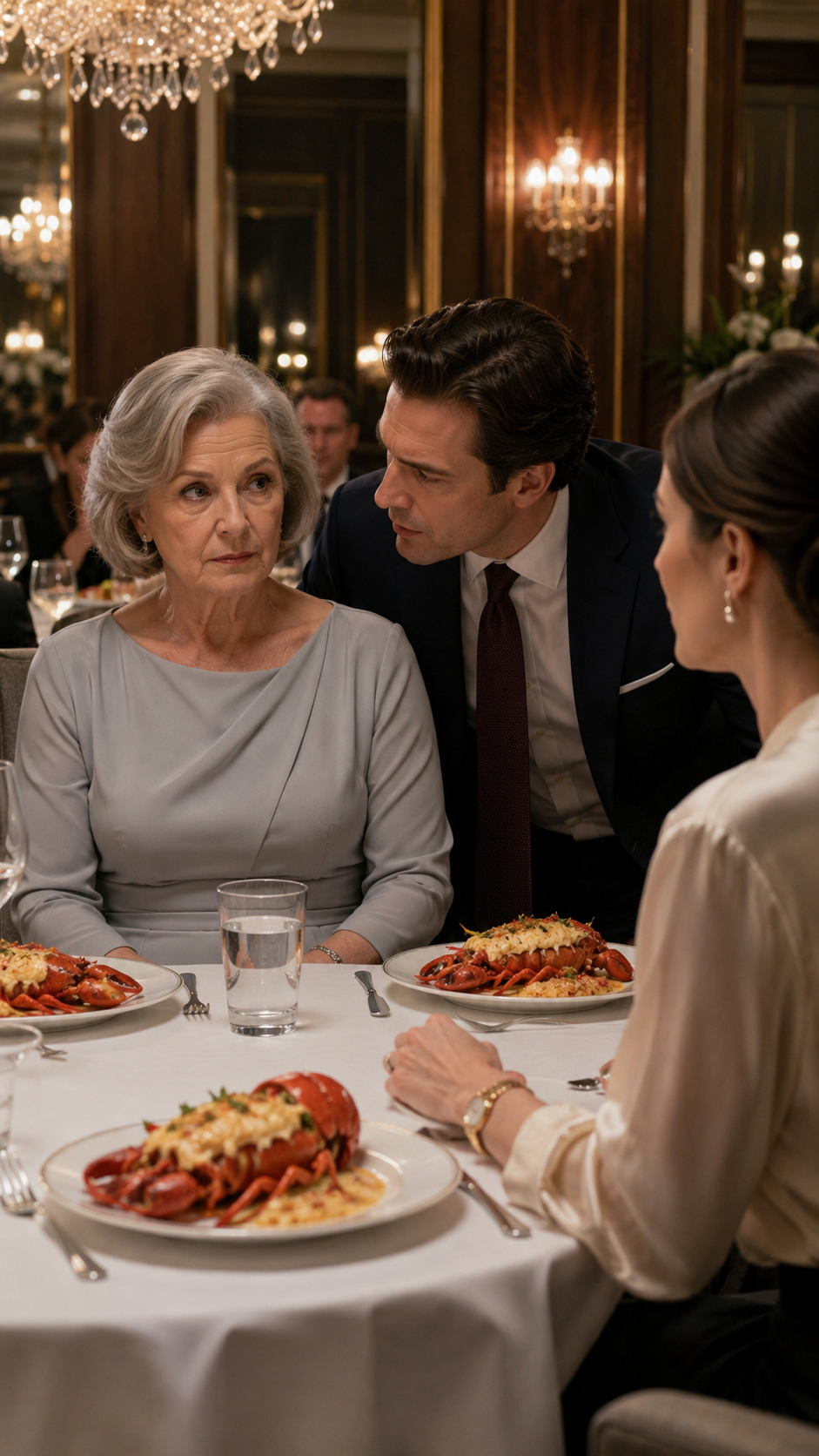
“We don’t serve extra food,” my daughter-in-law said, sliding a glass of water in front of me while four lobster Thermidors steamed under the chandelier. Then my son leaned close and whispered, “Mom, please. Don’t embarrass us. Just remember your place.” For a second I thought grief had made me hear him wrong. Daniel. My only child. The boy I raised after his father walked out with nothing but a n…
THE SHOEBOX AND THE FOLDER
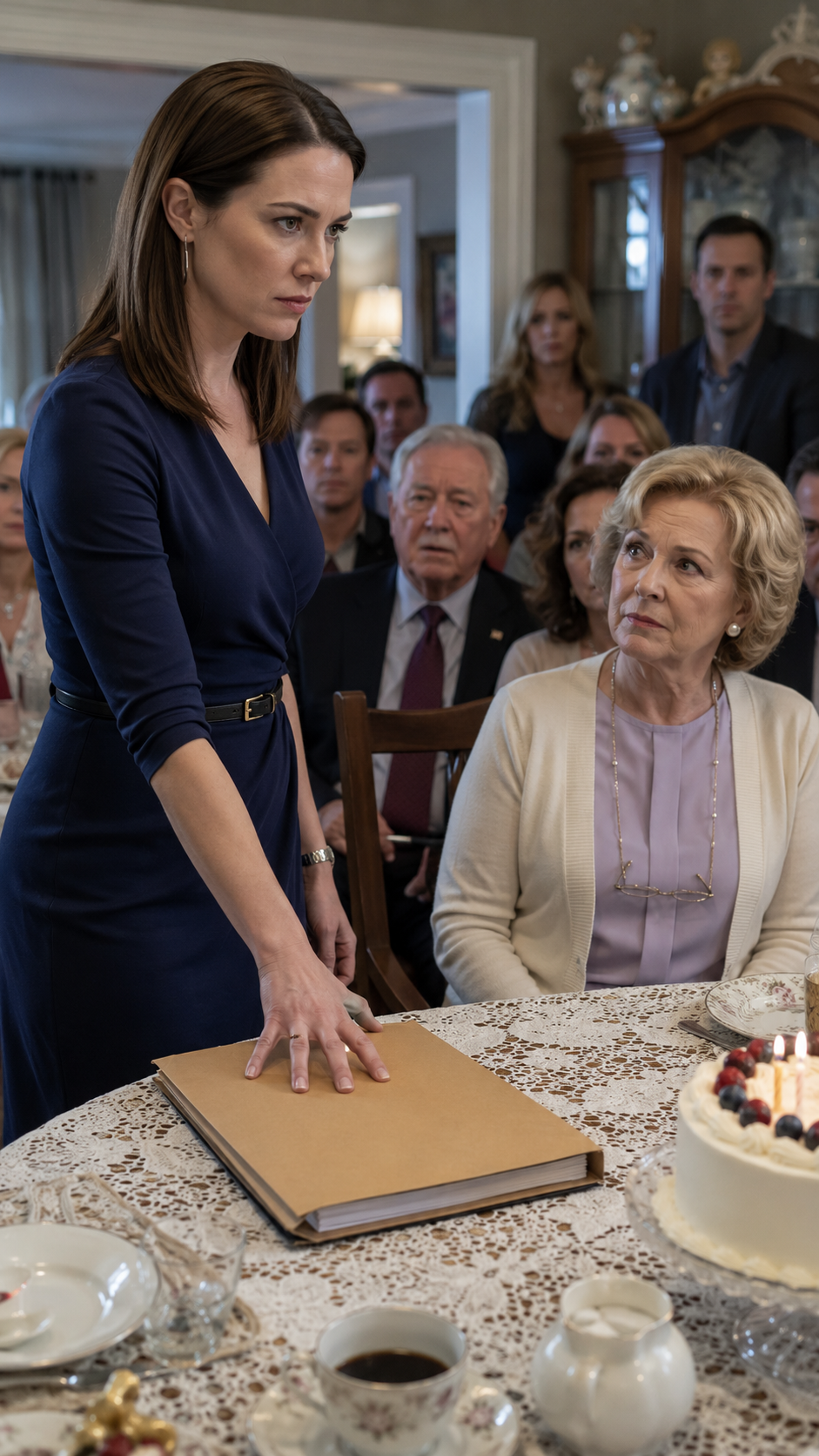
My family had promised my house to my sister before I even bought it. I found out because my eight-year-old niece was choosing paint colors for a bedroom