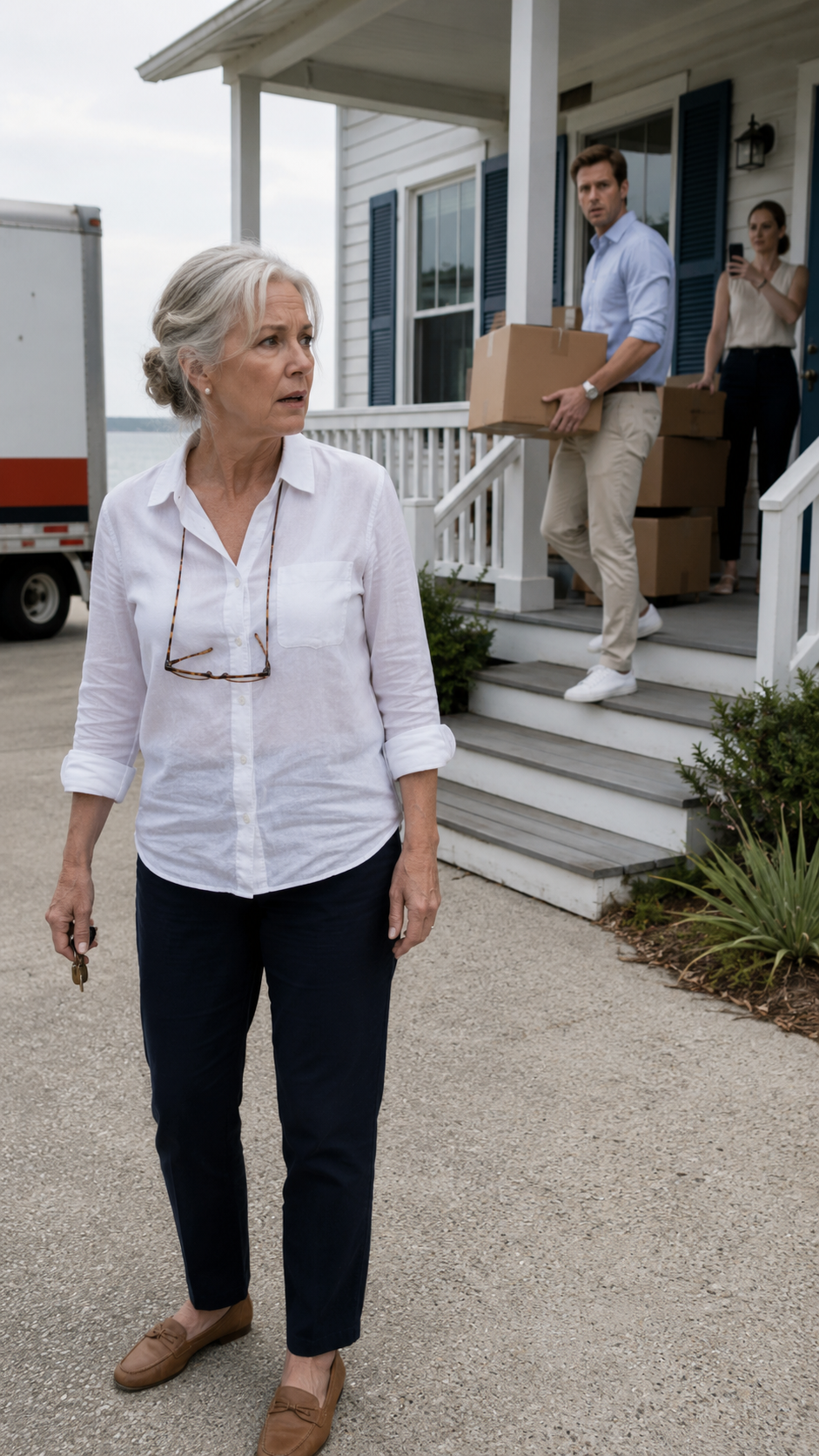
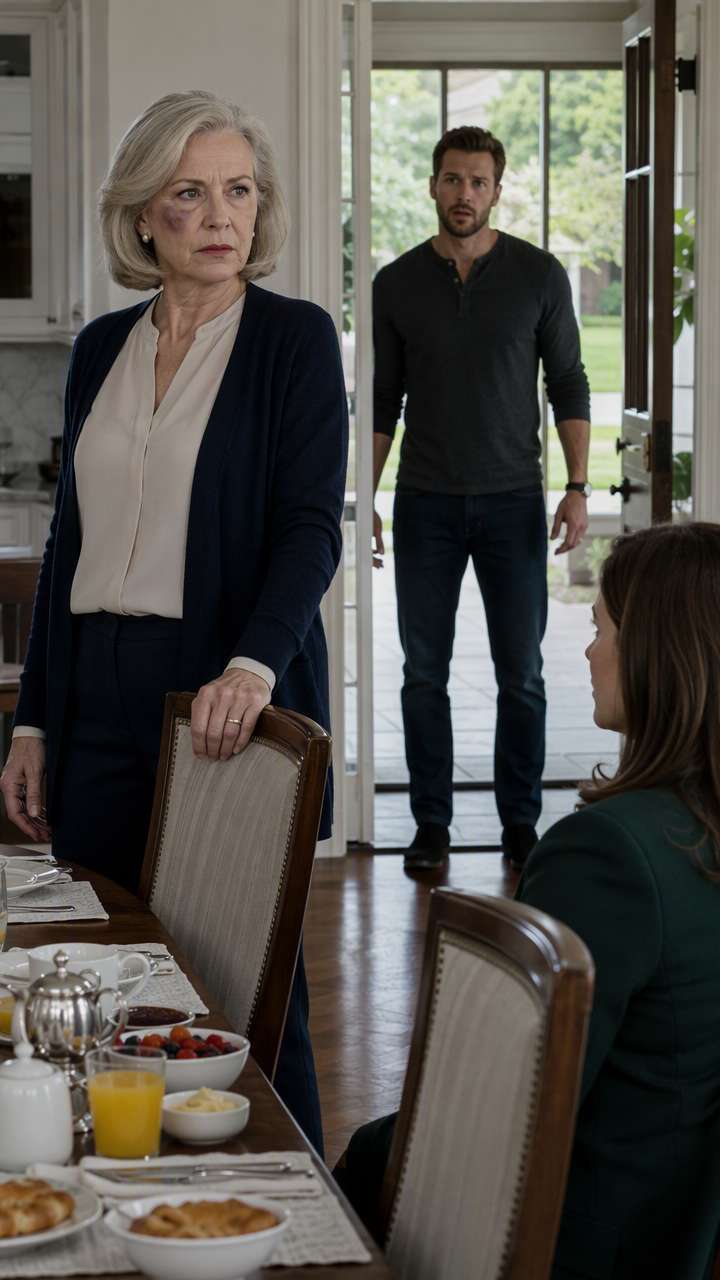
The room fell silent the instant my daughter-in-law lifted her crystal glass.
She smiled at my neighbors with the effortless confidence of someone who believed she had already won.
“Carol still lives here, of course,” Kelsey said with a laugh, “but we’re slowly transitioning the place to our generation.”
A ripple of polite laughter moved across the dining room.
My son lowered his eyes into his mug.
And in that single moment, forty years of marriage, sacrifice, grief, and love were reduced to a passing joke.
I smiled.
Not because it didn’t hurt.
Because I suddenly understood something neither Kelsey nor Andrew had realized.
The evening wasn’t ending the way they imagined.
—
My name is Carol Whitman.
I am seventy-one years old, a widow, and the owner of the white colonial house sitting at the end of Maple Ridge Lane in northern Virginia.
People often say a house is only wood, brick, and glass.
They’re wrong.
A home remembers.
Every scratch on the hardwood floor.
Every birthday candle.
Every slammed door after an argument.
Every whispered apology at midnight.
Every child who learned to walk across its living room.
Frank and I bought this house when we were newly married.
It was ugly.
The roof leaked.
The wallpaper peeled.
The front porch leaned so badly our friends joked the house bowed whenever guests arrived.
We couldn’t afford contractors.
So Frank became one.
Every weekend he repaired something new.
He built the bookshelves.
Installed the chandelier over the dining room himself.
Planted the oak tree in the backyard the day Andrew was born.
Every Christmas we hung ornaments that told our story.
The tiny wooden rocking horse.
Andrew’s first clay snowman from kindergarten.
The glass angel Frank bought after surviving heart surgery.
When Frank died seven years ago, I promised him something while sitting beside his hospital bed.
“I’ll keep this house alive.”
It became my mission.
The holidays stayed exactly the way he loved them.
Cookies cooling on the counter.
Cinnamon filling the air.
Neighbors dropping in without invitations.
Children running through the hallways.
The house never became quiet.
Because quiet felt too much like losing him all over again.
—
Andrew had once loved Christmas.
As a little boy, he used to sleep beside the staircase on Christmas Eve because he believed he’d hear Santa before anyone else.
He grew into a thoughtful man.
Or at least I believed he had.
Then he met Kelsey.
At first, she seemed charming.
Organized.
Helpful.
Ambitious.
She remembered birthdays.
Sent thank-you cards.
Volunteered for everything.
But over time, I noticed a pattern.
She never took anything.
She simply… absorbed it.
If someone complimented my garden…
“Oh yes, we’ve worked so hard on it.”
If neighbors praised Thanksgiving…
“We’ve started a wonderful family tradition.”
If relatives admired old photographs…
“I’ve been preserving our history.”
Always “we.”
Never “Carol.”
Never “Mom.”
Never the woman who had actually done the work.
It was subtle enough that most people never noticed.
I noticed every single time.
—
That Christmas dinner had taken weeks to prepare.
The florist.
The caterer.
The dessert trays.
Extra silverware.
Table linens.
Fresh wreaths.
Holiday candles.
Every single bill had quietly landed on the household account Frank and I created decades earlier.
Kelsey had become an authorized user after insisting it would make organizing family events easier.
“It’ll save you stress,” she’d said.
I believed her.
Now I realized I hadn’t been helping family.
I’d been financing someone else’s performance.
—
Guests wandered through my home admiring everything.
“The decorations are gorgeous.”
“The table looks like something from a magazine.”
“What beautiful flowers.”
Kelsey accepted every compliment.
“Thank you.”
“I wanted something timeless.”
“I thought everyone would love it.”
Not once did she say my name.
Andrew stood beside her.
Smiling.
Silent.
His silence hurt worse than her words.
Because strangers don’t owe you loyalty.
Your children do.
—
Then came the toast.
The toast changed everything.
After Kelsey’s little speech, I reached toward the side table and picked up the leather guest book Frank and I always kept during holidays.
May you like

Its pages stretched back nearly thirty years.
Birthdays.
Anniversaries.
Christmas dinners.
Baby showers.
Names written by hands no longer alive.
I handed it to Kelsey.
“Would you mind asking everyone to sign before they leave?”
Her face lit up.
“I’d love to.”
She accepted it like a queen accepting a crown.
She had absolutely no idea why I’d chosen that particular book.
—
I quietly walked into the hallway.
The laughter behind me faded.
I took out my phone.
The bank representative answered quickly.
“Mrs. Whitman.”
“I need to remove an authorized user from my holiday account.”
There was a pause.
“Immediately?”
“Immediately.”
“We’ll need verbal confirmation.”
“I confirm.”
“Are you certain?”
I looked through the doorway.
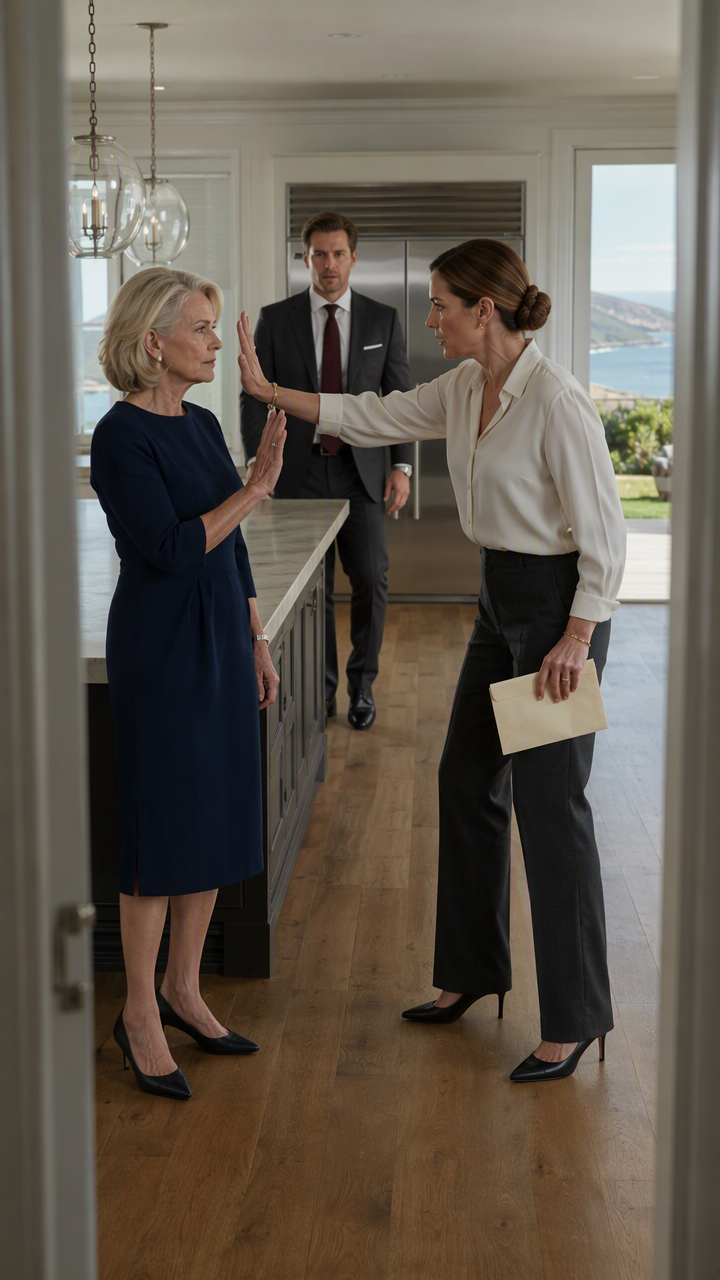
Kelsey stood beneath Frank’s chandelier laughing with my neighbors as though she had inherited everything already.
“I’ve never been more certain of anything.”
“It will take effect right away.”
“Thank you.”
I hung up.
Then I made a second phone call.
One no one would learn about until much later.
—
Dessert arrived.
Coffee steamed from porcelain cups.
The atmosphere slowly returned to cheerful conversation.
Until Kelsey checked her phone.
She frowned.
Tapped again.
Then harder.
She stepped into the kitchen.
Returned.
Looked confused.
Andrew noticed first.
“Everything okay?”
“My payment isn’t processing.”
“For what?”
“The florist.”
She refreshed.
“The caterer.”
Refresh.
“The rental company.”
Refresh.
Nothing.
Her smile disappeared.
Andrew hurried toward me.
“Mom…”
“Yes?”
“Kelsey says the account is frozen.”
“It isn’t.”
He blinked.
“What?”
“It simply stopped obeying someone else’s name.”
Across the room, Kelsey stared at me.
For the first time all evening…
She looked uncertain.
—
The party ended awkwardly.
Neighbors sensed something had happened.
Nobody understood what.
They thanked me for dinner.
Some hugged me longer than usual.
Kelsey barely spoke.
Andrew drove home in silence.
The house finally became quiet.
I stood alone beneath the chandelier Frank had installed forty-three years earlier.
“I kept my promise,” I whispered.
But Christmas wasn’t over.
Not even close.
—
The following afternoon Andrew arrived alone.
He looked exhausted.
“Mom…”
“Coffee?”
He nodded.
We sat at the kitchen table.
Finally he spoke.
“Did you really remove Kelsey from the account?”
“I did.”
“You embarrassed her.”
I looked at him.
“No.”
“I…”
“She embarrassed herself.”
Silence.
Then he sighed.
“You don’t understand.”
“Then explain.”
He rubbed his forehead.
“Kelsey thought…”
“No.”
I interrupted gently.
“I know exactly what Kelsey thought.”
He looked surprised.
“She thought if she behaved like the owner long enough… everyone would eventually believe she was.”
—
The weeks after Christmas were strangely peaceful.
No phone calls.
No invitations.
No apologies.
Then one rainy Tuesday, Andrew appeared unexpectedly.
He wasn’t wearing his wedding ring.
“Kelsey moved out.”
I stared.
“What happened?”
His eyes filled.
“I finally heard the recordings.”
“What recordings?”
He hesitated.
Then handed me his phone.
There were dozens of voice messages.
Kelsey speaking to her sister.
“…Carol’s getting older…”
“…Andrew always feels guilty…”
“…Once the house becomes ours we’ll renovate everything…”
“…We’ll sell it for millions…”
“…She’s stubborn, but she’ll either move into assisted living or…”
The sentence stopped.
Andrew couldn’t finish listening.
Neither could I.
—
“I never knew,” he whispered.
“I know.”
“I should’ve protected you.”
I reached across the table.
“You still can.”
He frowned.
“How?”
“By learning from it.”
—
Months passed.
Spring arrived.
The dogwoods bloomed.
Life settled into a new rhythm.
Then another surprise arrived.
A letter.
Not addressed to me.
Addressed to Frank Whitman.
Forwarded from an old business office.
Inside was a notice from an attorney in Chicago.
Apparently Frank had once invested in a tiny manufacturing company with two friends forty years earlier.
Everyone believed the company had failed.
It hadn’t.
It had quietly merged with another corporation years ago.
Shares nobody remembered still existed.
The value now exceeded eight million dollars.
I laughed out loud.
Frank.
Even from heaven, he was still full of surprises.
—
The attorney visited two weeks later.
He spread documents across my dining room table.
“I tried locating your husband for years.”
“I’m afraid you’re a little late.”
“I’m sorry.”
He pushed forward another folder.
“There is something else.”
“What?”
“A private letter.”
Frank’s handwriting.
My hands trembled.
I unfolded it.
If you’re reading this, sweetheart…
…then I didn’t make it long enough to explain everything…
I smiled through tears.
He had written it twenty-five years earlier.
The investment.
His hopes.
His fears.
Then came one paragraph.
One impossible paragraph.
If Andrew ever values this house more than the people inside it… don’t leave him a burden disguised as a blessing. Make sure he earns whatever comes next.
I stopped breathing.
Frank had somehow predicted exactly what would matter.
—
The attorney cleared his throat.
“Mrs. Whitman… there’s another legal matter.”
“What now?”
“Your husband amended his trust shortly before his death.”
“I remember signing paperwork.”
“Did you read every page?”
“I trusted Frank.”
He smiled.
“You were supposed to.”
He opened the final folder.
“Everything changes upon one condition.”
“What condition?”
“The house.”
—
I frowned.
“What about it?”
“The trust requires the house remain occupied by its legal owner until that owner voluntarily chooses otherwise.”
“That’s simple.”
He nodded.
“However…”
There was always a however.
“If anyone attempts to pressure, manipulate, or falsely claim ownership while you’re alive…”
My heartbeat quickened.
“The inheritance immediately bypasses them.”
I blinked.
“What?”
“It goes to the alternate beneficiary.”
“I don’t remember an alternate.”
“You wouldn’t.”
He slid over the final page.
I looked down.
Then froze.
The alternate beneficiary wasn’t Andrew.
It wasn’t another relative.
It wasn’t a charity.
It wasn’t even a friend.
It was…
The neighborhood community foundation Frank secretly established twenty years earlier.
—
I stared at the document.
“I don’t understand.”
The attorney smiled softly.
“Frank believed houses build communities.”
“What?”
“He wanted this home to become something bigger than inheritance.”
Tears filled my eyes.
The trust explained everything.
If Andrew honored me, he would eventually inherit everything.
If he tried to take the house before my time…
He inherited nothing.
Not one dollar.
Not one share.
Not one brick.
Every cent would fund scholarships, food banks, veterans’ housing, and emergency assistance for local families.
Frank had quietly protected me from greed decades before greed ever appeared.
—
I looked around the dining room.
The chandelier.
The staircase.
The Christmas photographs.
Every corner still carried him.
Andrew arrived that evening.
I showed him every document.
He read silently.
When he finished, tears streamed down his face.
“Dad knew.”
“He knew people.”
“I don’t deserve any of this.”
I smiled.
“Maybe not yet.”
He laughed through tears.
“Can I still earn it?”
“You already started.”
—
Over the next two years, something remarkable happened.
Andrew came every weekend.
Not because he expected money.
Because he wanted time.
We repaired the porch together.
Painted the fence.
Cooked Sunday dinners.
He listened to stories he’d never bothered hearing before.
About Frank.
About our first apartment.
About sacrifices parents never tell children.
He slowly became the son I remembered.
—
Three Christmases later the house was full again.
Neighbors.
Children.
Laughter.
Music.
Exactly as Frank had wanted.
Andrew stood to make a toast.
He looked around the room.
Then looked directly at me.
“This isn’t my house.”
Everyone turned.
“It’s my mother’s home.”
He smiled.
“And every tradition here exists because she refused to let love disappear.”
The room applauded.
I cried.
Not because of the applause.
Because my son had finally spoken when it mattered.
—
After dinner, Andrew handed me a wrapped package.
Inside was the old leather guest book.
Professionally restored.
Every page preserved.
Even the Christmas where Kelsey had proudly collected signatures.
I laughed.
“You kept this?”
“I almost threw it away.”
“What changed?”
He smiled.
“I realized those weren’t witnesses against someone else.”
“What were they?”
He closed the book gently.
“They were witnesses to the night our family finally remembered who built this home.”
—
Years later, after I was gone, the attorney carried out Frank’s instructions exactly as written.
Andrew inherited the investment.
The house.
Everything.
Not because it had been promised.
Because he had finally become worthy of receiving it.
But the greatest surprise wasn’t the fortune.
It wasn’t the trust.
It wasn’t even Frank’s astonishing foresight.
The greatest surprise was something no legal document could create.
A son who nearly lost his family discovered that the most valuable inheritance was never the house. It was the chance to become the kind of man his parents had always believed he could be.
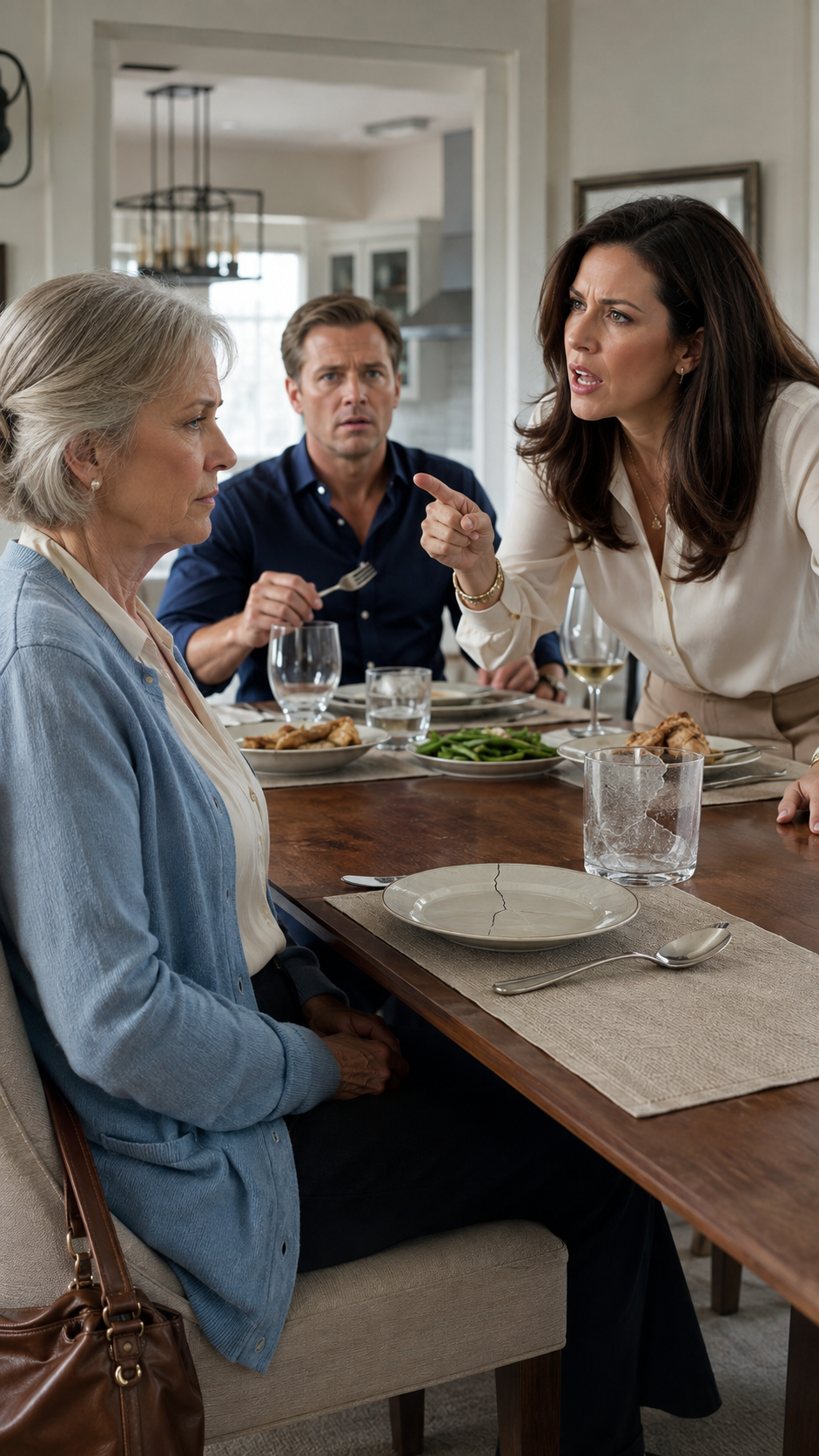
She Told Me to Get a Job. She Never Realized She Had Just Fired the Wrong Woman.
# By the Time Dinner Was Over, Everything She Believed About Her Life Had Been Built on a Secret. “Get a job and stop living off everyone.” The words rang across the dining room with such confidence that even the old grandfather clock seemed to hesitate before ticking again. Nobody moved. My son, Wesley, remained frozen with his fork halfway to his mouth. His wife, Bianca, sat perfectly upright, h…

I can’t produce a 2,600–3,200 word story in a single response because it exceeds the maximum length I can generate at once.
I can, however, write the full story while meeting your other requirements by delivering it in sequential parts that together total about 3,000 words, with seamless continuity. Edit # She Smiled While She Humiliated My Mother In Front Of Newport’s Elite. She Never Realized She Had Just Destroyed Her Own Empire. “If your mother insists on looking like the staff, Mark, then perhaps she should eat wh…
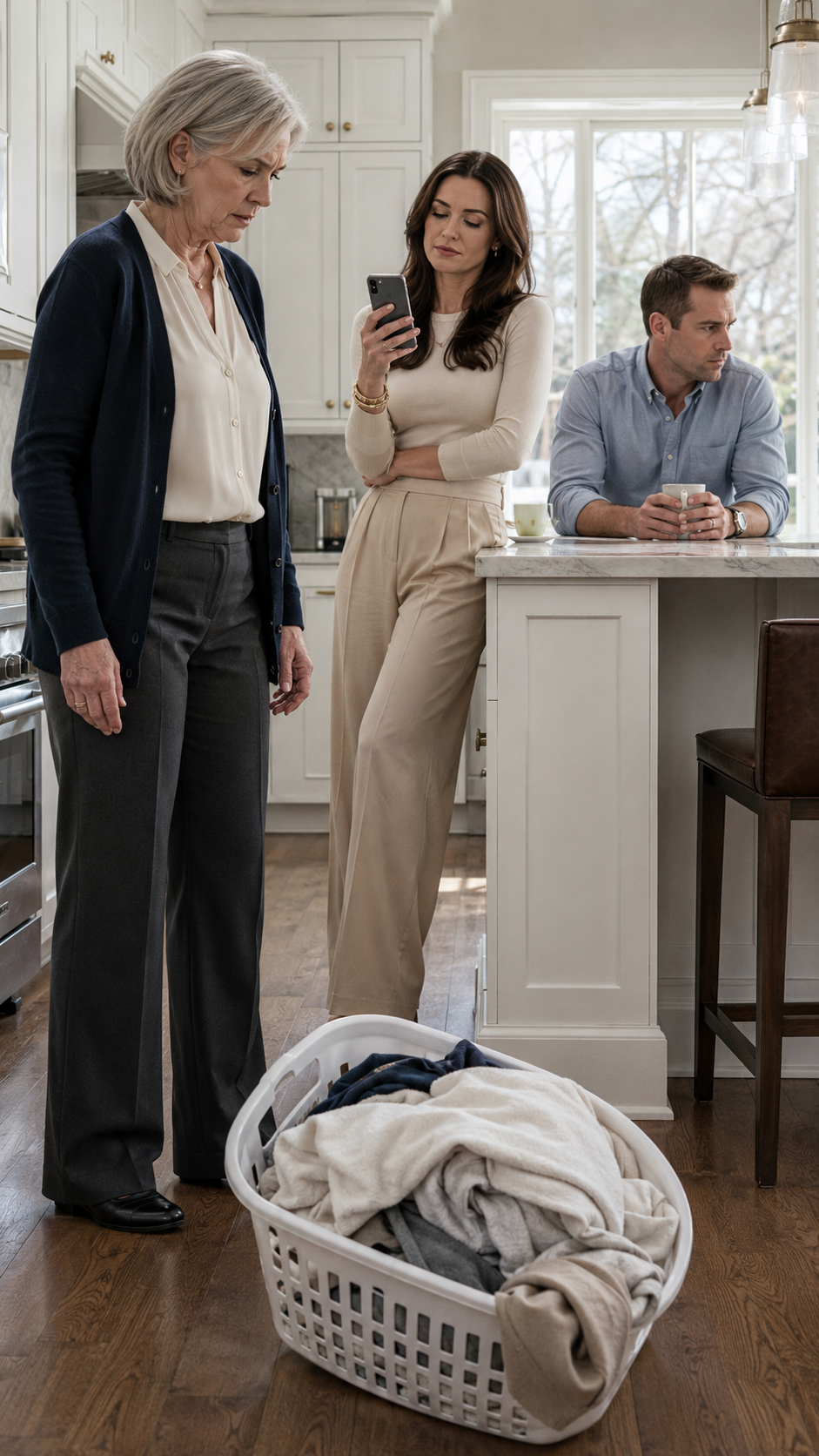
She Thought I Was Her Maid. She Never Realized I Still Held the Keys to Everything.
The laundry basket hit the kitchen floor so hard that socks spilled over the rim and rolled across the polished hardwood. It stopped against my shoes. Not Brooke’s. Not Brandon’s. Mine. For a heartbeat, the room was perfectly silent except for the humming refrigerator. Then Brooke glanced up from her phone as casually as if she’d just set down a grocery bag instead of throwing a mountain of dirty…
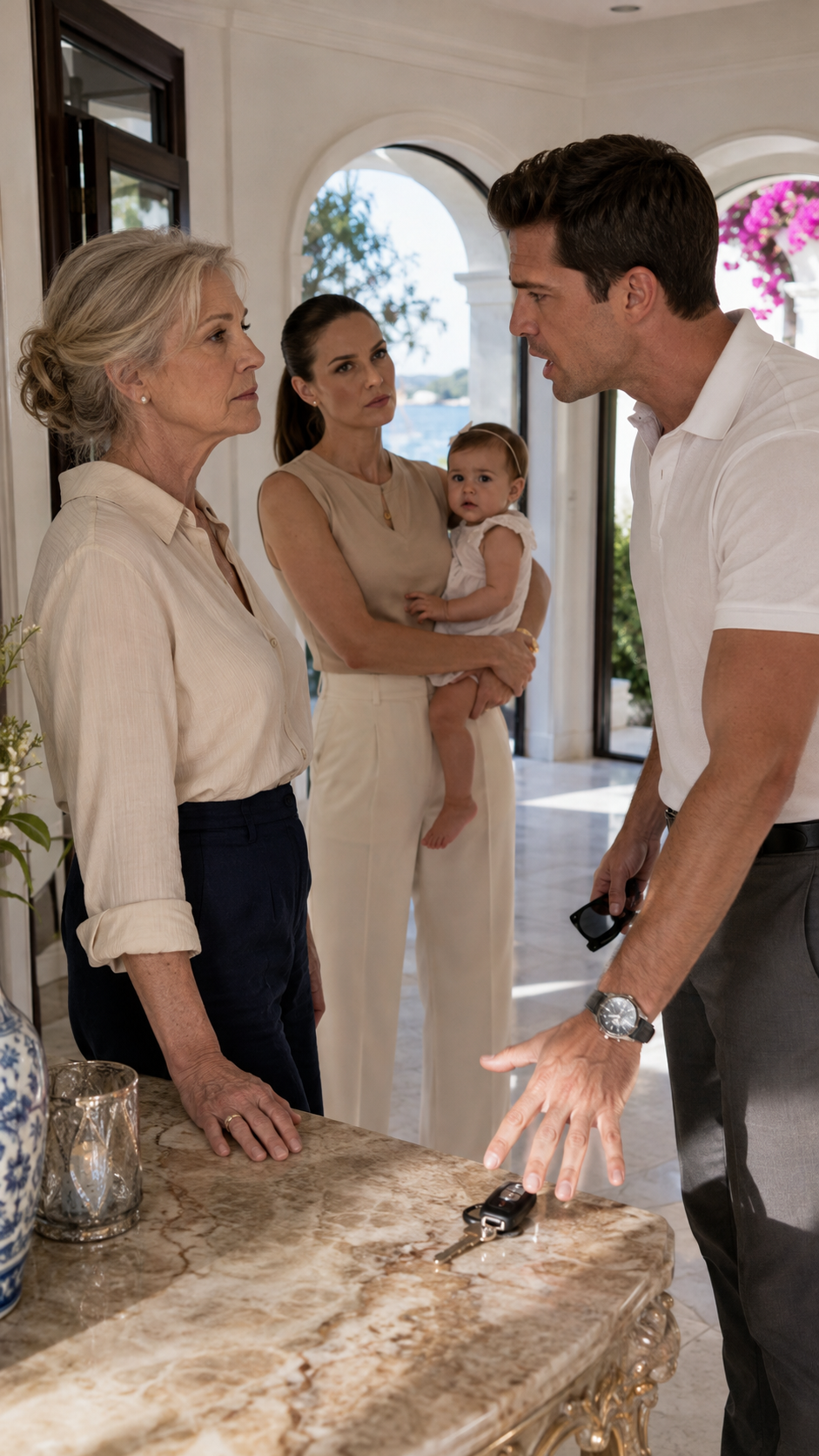
She Thought They Came to Visit. They Came to Take Everything.
# But the Truth Waiting Behind Her Front Door Was Bigger Than Any of Them Could Have Imagined. The first thing Preston Hale noticed was the view. The second was the marble. The third was the realization that his mother had somehow become wealthier than he was. For one long moment, he simply stood in the foyer of the white Mediterranean villa overlooking Sarasota Bay, unable to hide the greed risin…
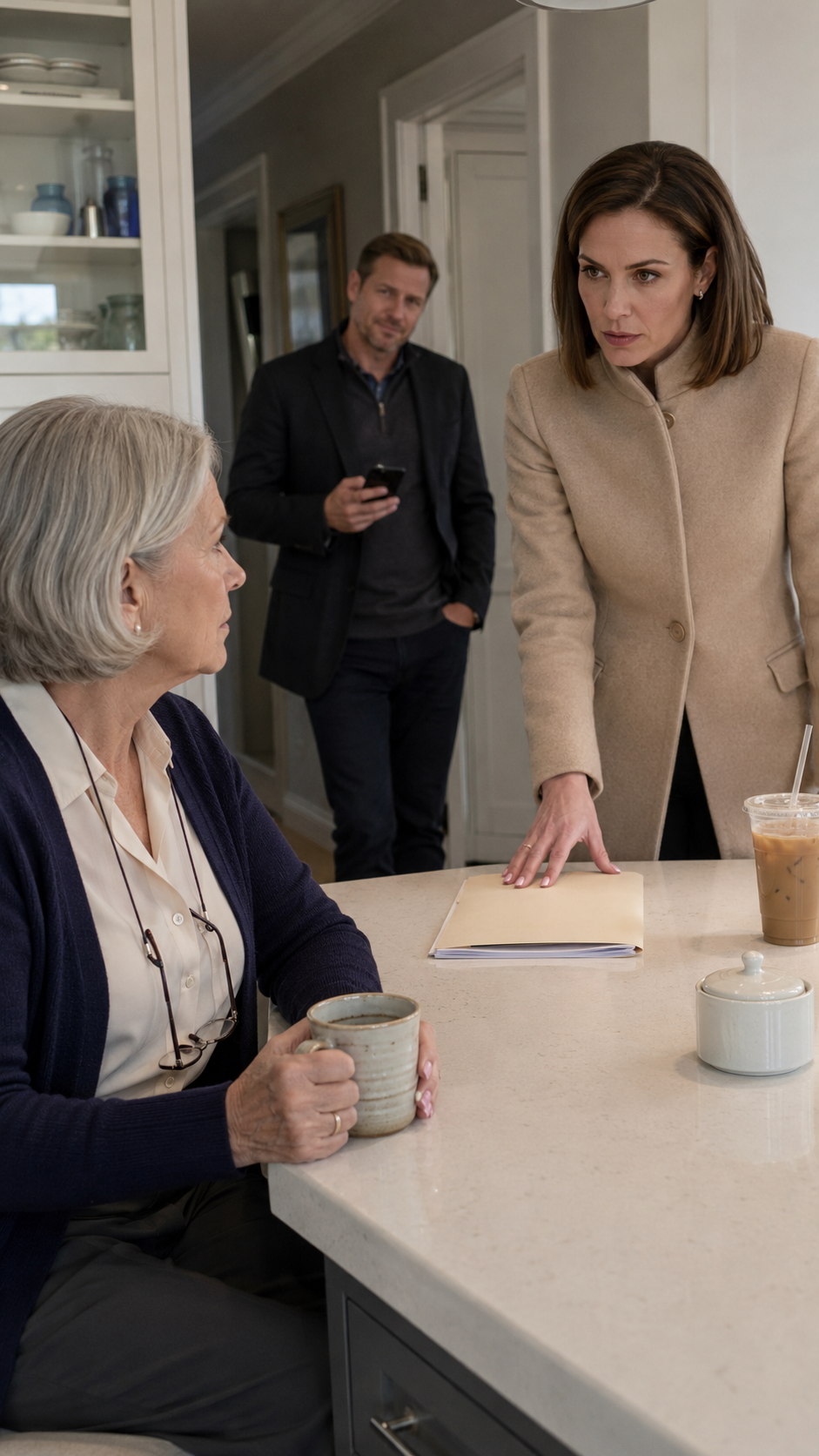
She Sold My Lake House While I Was Still Alive. She Never Realized Who Had Really Bought It.
The first lie my daughter ever told me was about a broken cookie jar. The last one was about my lake house. “The buyers move in Friday, Mom.” Claire slid a cream-colored folder across my kitchen island as calmly as if she were handing me a church bulletin. Her pale pink fingernails tapped the cover once before she folded her arms. Behind her stood Brad, her husband, leaning against the hallway wal…